Sandisk and SK hynix want HBF to break the AI memory bottleneck
Sandisk and SK hynix have released the first open High Bandwidth Flash specification through the Open Compute Project, aiming to create a new memory tier for AI inference systems.


Kioxia has unveiled the GP1 Series, a specialized PCIe 6.0 SSD that delivers up to 10 million random read IOPS using second-generation XL-FLASH memory. Unlike the company’s recently announced CM10 Series, the GP1 is designed to act as a flash-based extension of GPU memory for demanding AI workloads.
OpenAI says it disrupted a Cambodia-based criminal network that used ChatGPT to support romance scams, fake investments, gambling schemes, and law enforcement impersonation.
OpenAI says its enormous spending on data centers, GPUs, and infrastructure will eventually make artificial intelligence cheaper and more widely available. For now, abundant intelligence sounds like expensive branding for a very large gamble.
OpenAI says it plans to label AI-generated text as Europe tightens its rules, but making those labels survive copying, editing, and sharing may be nearly impossible.
OpenAI has dramatically reduced pricing for GPT-5.6 Luna and Terra, raising an obvious question. Why would a company cut prices on AI models when demand is stronger than ever? The answer says a lot about where the AI industry is headed.
MakuluLinux released AI-OS on July 28 with Electra, an integrated AI system for coding, writing, Linux management, automation, memory, and remote access.
Kioxia has unveiled its first PCIe 6.0 enterprise SSDs, combining faster performance, 332-layer BiCS FLASH, and optional liquid cooling for AI servers.
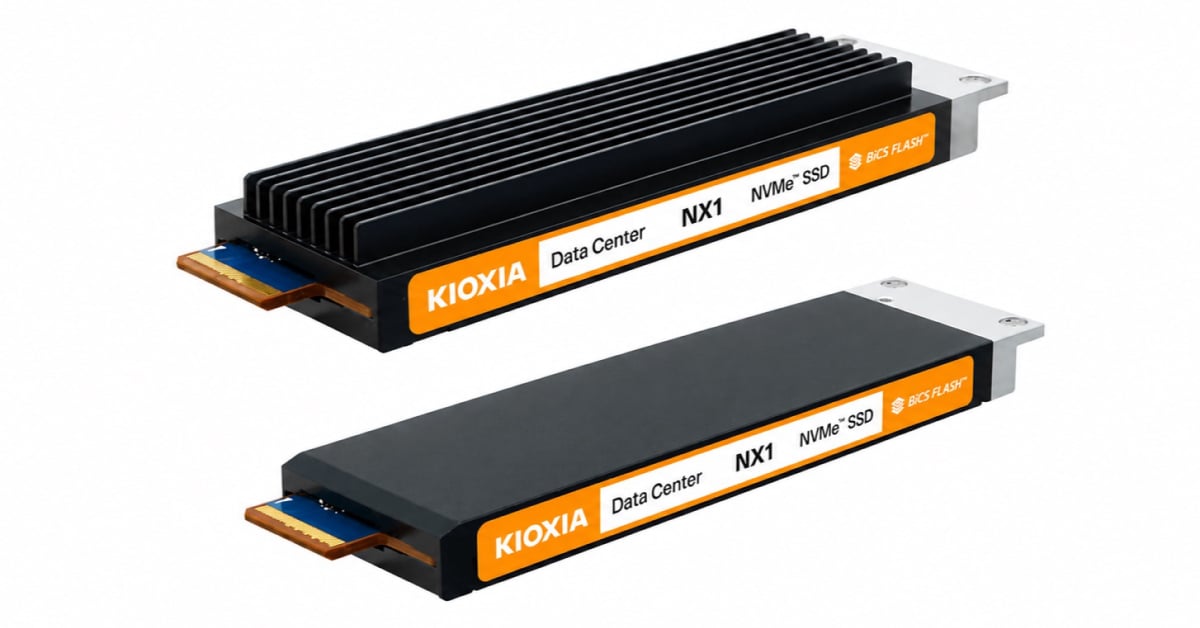
Kioxia’s new NX1 Series brings faster PCIe 5.0 storage and direct liquid-cooling support to dense AI servers and hyperscale data centers.
OpenAI has released an open source CLI and TypeScript SDK for Codex Security giving developers new ways to scan repositories validate vulnerabilities and add security checks to CI workflows
Students appear interested in AI as a study assistant, but most still prefer to take their own notes and use technology to organize them afterward.
A new survey from 1Password suggests many developers are giving AI agents long-lived access to systems and credentials, highlighting growing security and governance concerns as enterprise AI adoption accelerates.