Mozilla is spending $5 million to change how AI companies get their data

Mozilla is putting $5 million into Mozilla Data Collective as it tries to build an alternative to the scraping-heavy approach that has fueled AI training.

 Brian Fagioli
Mozilla is putting $5 million into Mozilla Data Collective as it tries to build an alternative to the scraping-heavy approach that has fueled AI training.

AlmaLinux 9.9 Beta is available with GCC 16, Node.js 26, PHP 8.4, updated virtualization tools, and a major fapolicyd upgrade administrators should test.

iPresence explains how kubi 2.0 lets remote students look around classrooms, how its Physical AI ambitions work, and what backers should know.

ASUS and Poesis tested autonomous AI agents that researched investments, managed risk, and traded real money in live markets, all from a single NVIDIA-powered deskside supercomputer.

AI can eliminate tedious entry-level work and cut costs, but companies may be creating a much bigger problem. New Talogy research suggests automation could weaken the pipeline that produces future business leaders.

Traditional TV is showing signs of life. J.D. Power says cable and satellite satisfaction jumped 18 points while live TV streaming slipped.
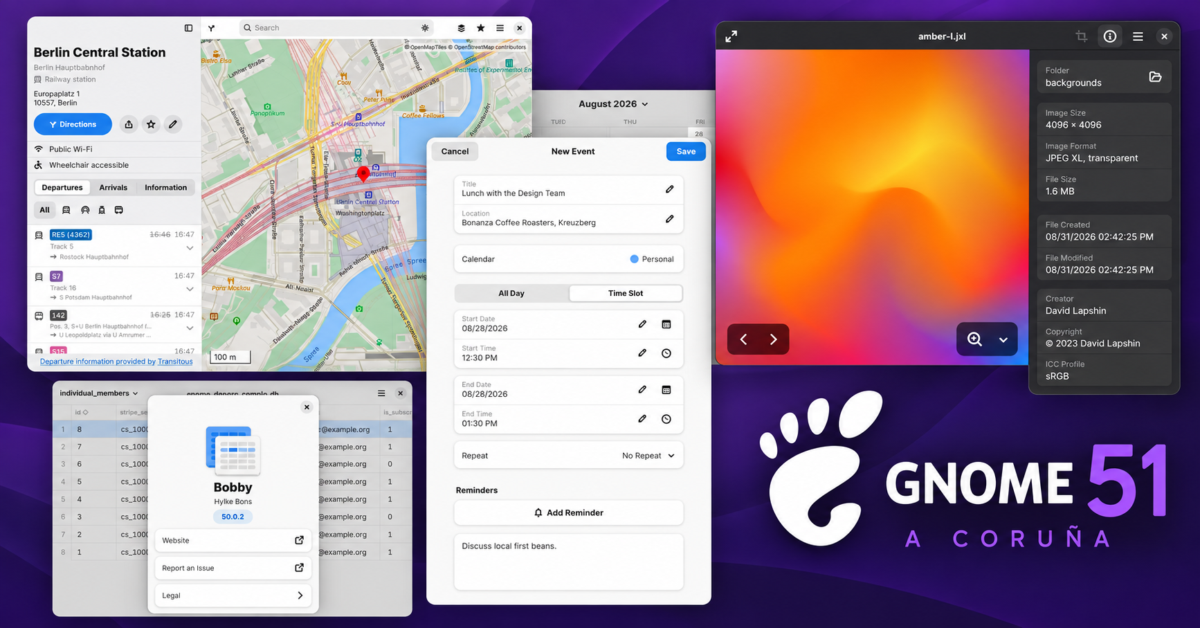
GNOME 51 is here with offline maps, smoother performance, better accessibility, visual document signatures, and plenty of practical Linux desktop improvements.

The US government has finalized a $1 billion CHIPS Act award for IBM company Anderon as it builds out quantum wafer manufacturing in Albany New York.

Americans increasingly use AI for financial questions, but most aren’t ready to trust a chatbot with their money without checking somewhere else first.

Fedora Linux 45 Beta is now available with a new console, tighter security defaults, updated developer tools, and expanded support for Apple Silicon Macs.

The Gates Foundation is getting involved in agentic AI. As the first philanthropic member of AAIF, it will gain a board seat and a voice in the open technologies and standards being built for AI agents.

The Linux Foundation is bringing companies and researchers together to build an open defensive stack for securing AI models, agents, and infrastructure.