
The AI boom is creating a strange new reality in the semiconductor industry. GPUs may still get most of the attention, but memory is quickly becoming just as important. Without extremely fast memory feeding those AI accelerators, even the most powerful chips can end up waiting around for data.
That is why Samsung’s latest announcement matters.
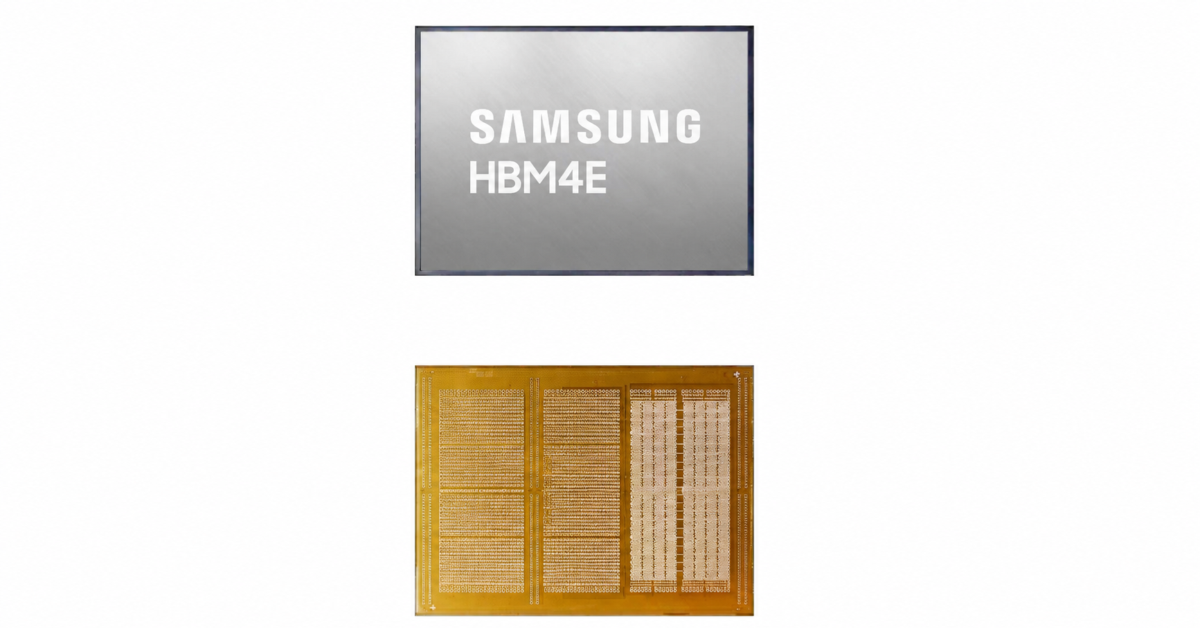
The South Korean tech giant says it has begun shipping samples of its new 12 layer HBM4E memory to major global customers, making it the first company to do so. The new memory is designed specifically for the increasingly demanding workloads tied to artificial intelligence, large language models, and hyperscale data centers.
Samsung says the new HBM4E can reach speeds up to 16Gbps, while delivering bandwidth as high as 3.6TB/s per stack. Those are massive numbers, even by modern AI hardware standards. The company also says the memory offers over 20 percent better performance compared to its existing HBM4 products.
Folks outside the AI and server world may not realize how critical HBM, or High Bandwidth Memory, has become. Modern AI systems are hungry for memory bandwidth. It is no longer enough to simply build faster GPUs. Those accelerators also need enormous amounts of ultra fast memory sitting close to the processor to keep data flowing efficiently.
That is where HBM comes in.
Samsung’s latest HBM4E product is available in a 48GB 12 layer configuration, with plans for future 32GB and 64GB versions. The company says it is using its 6th generation 10nm class DRAM process alongside a 4nm logic base die built using Samsung Foundry technology.
Beyond raw speed, Samsung is also focusing heavily on power efficiency and heat management. According to the company, the new memory improves energy efficiency by 16 percent while also improving thermal resistance by more than 14 percent compared to the previous generation. That matters because AI infrastructure is rapidly becoming a power and cooling nightmare for data centers around the world.
Every new generation of AI models seems to demand more compute, more memory bandwidth, and more electricity. Companies building these systems are now facing very real physical limitations involving heat, rack density, and power consumption. Faster and more efficient memory could help reduce at least some of those pressures.
Of course, Samsung is not operating in a vacuum here. SK hynix has become a dominant force in the HBM market thanks to its close relationship with NVIDIA, while Micron is also aggressively pushing into AI memory products. Samsung clearly wants to remind the industry that it intends to remain a major player in the AI hardware race.
The company says mass production of HBM4E will begin based on customer schedules following the current sampling phase.
Even if consumers never directly buy HBM4E memory, there is a good chance the next wave of AI services they use will eventually run on it behind the scenes.
Support independent tech journalism
NERDS.xyz is independently owned and operated. If you enjoy my coverage of Linux, AI, hardware, cybersecurity, and tech culture, consider supporting the site on Ko-fi.
Support NERDS.xyz