
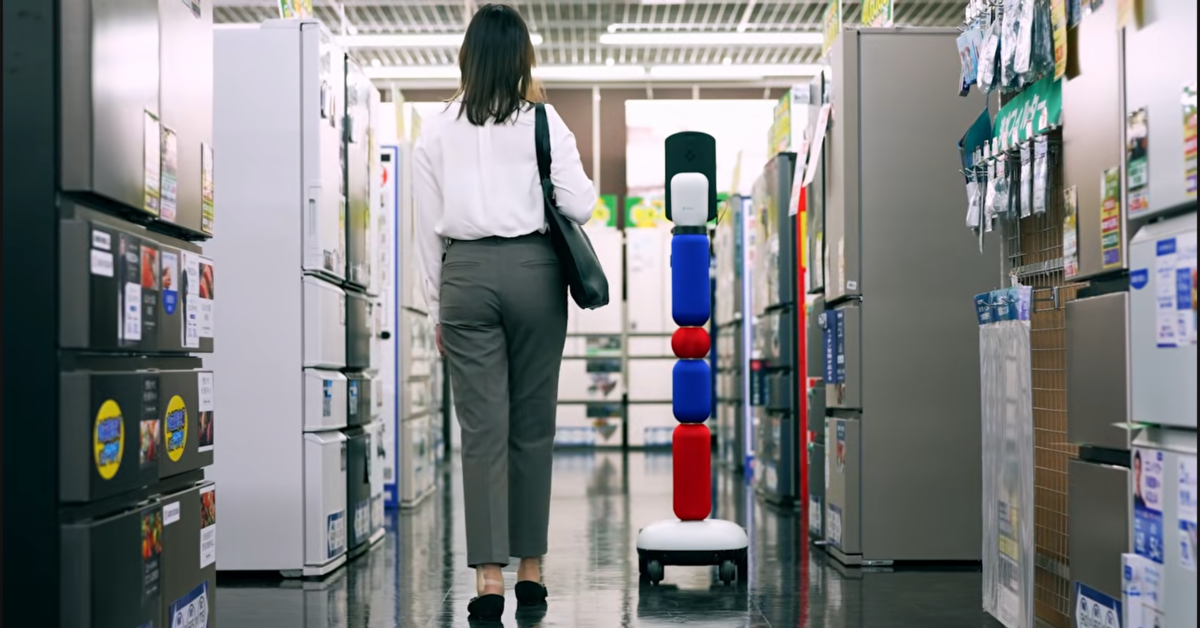
Artificial intelligence is rapidly moving beyond chatbots and web searches. Now, companies want AI interacting with customers in the physical world too. That is exactly what is happening with a new partnership between Avaya and avatarin, a robotics and AI company spun out of ANA Holdings in Japan.
The two companies say they are expanding their collaboration to connect AI agents, robots, kiosks, signage, and human workers into a shared customer experience system. In other words, the same AI helping you on a website today could eventually assist you at an airport gate, retail store, or service counter tomorrow.
I have many years of customer service experience myself, and I have a ton of respect for customer service representatives. Folks working those jobs deal with stressed out, impatient, and sometimes downright rude people every single day. It is not easy work. Because of that, I am actually pretty interested in technology like this if it genuinely helps CSRs do their jobs better rather than simply replacing them.
That distinction matters.
The companies are pitching this as a system where AI handles the repetitive discovery and information gathering while humans step in for the more nuanced conversations. One example given is a shopper trying to build a smart home security setup at a home improvement store. An AI robot or kiosk could help identify compatible products and inventory availability, but once the conversation shifts into electrical work, warranties, or installation concerns, a human expert would take over with the full context already available.
Another example involves airline travelers dealing with delays. According to the companies, an AI-powered robot could greet passengers at the gate with multilingual support and updated itinerary information before escalating complicated issues to a human agent who already has the customer’s history and travel details.
Frankly, that second scenario sounds far more compelling to me. Airports are stressful enough already. If AI can reduce the need for travelers to repeatedly explain their situation to different employees, that could be a real improvement.
Of course, there is also reason for skepticism here. Corporate AI announcements often sound far smoother than the actual real-world experience ends up being. Plenty of folks already get frustrated screaming “representative” into automated phone systems. Whether customers will actually enjoy interacting with robots in physical spaces remains to be seen.
Still, I think the broader direction is obvious. AI is no longer staying trapped inside chat windows and call centers. Companies increasingly want it embedded into the real world alongside human employees.
The big question is whether these systems end up empowering customer service workers or simply making their jobs more difficult. If the technology removes repetitive tasks and gives CSRs better information before interacting with customers, that could be genuinely helpful. But if companies use it mainly as a cost-cutting tool, people are going to notice pretty quickly.
For now, though, it is fascinating to watch AI move from digital assistant to physical presence. Whether folks are ready for robot customer service reps is another story entirely.
Support independent tech journalism
NERDS.xyz is independently owned and operated. If you enjoy my coverage of Linux, AI, hardware, cybersecurity, and tech culture, consider supporting the site on Ko-fi.
Support NERDS.xyz