
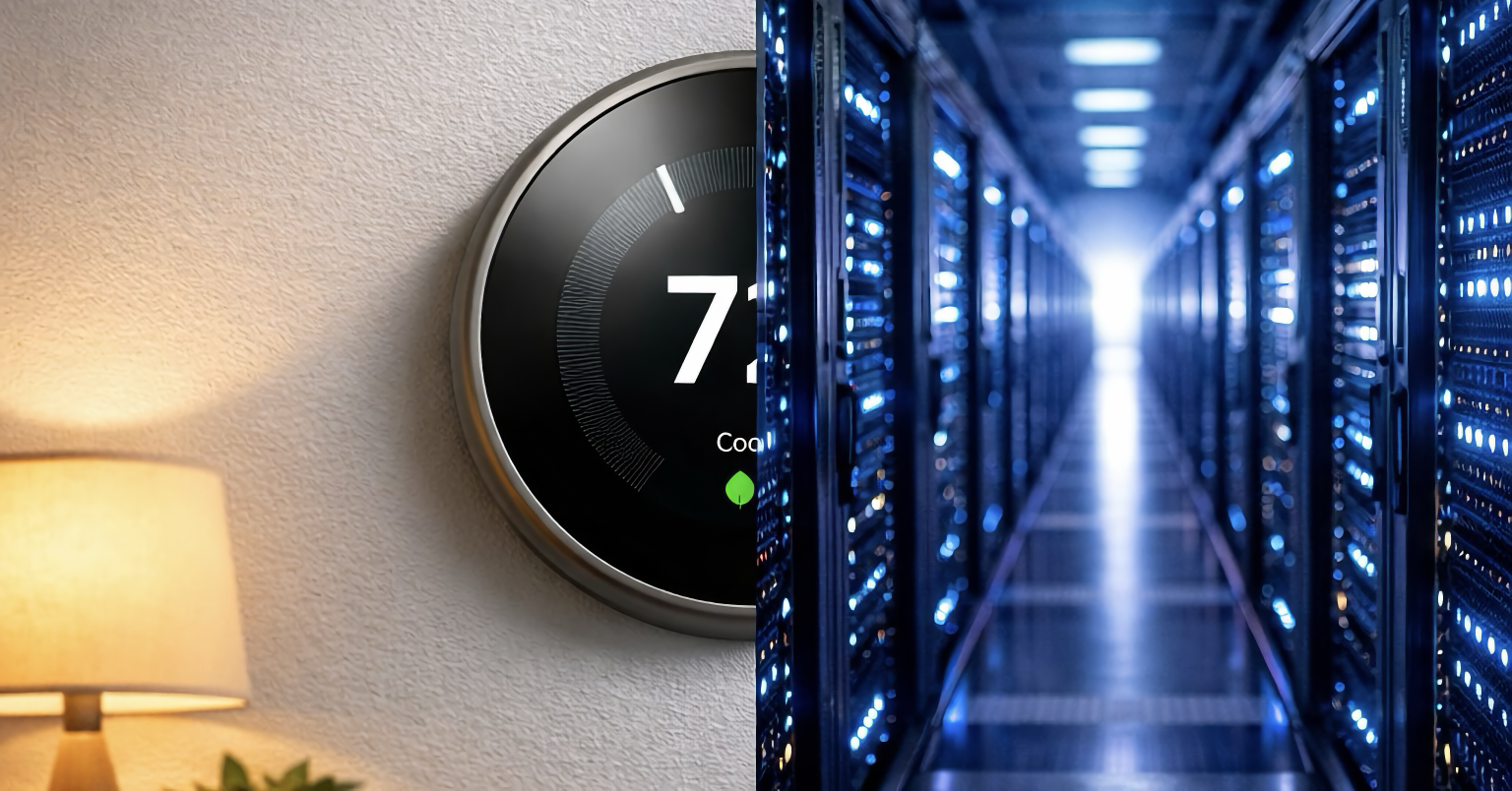
Google wants you to feel good about your thermostat. And honestly, you probably should. The company says Nest devices have helped users save more than 200 billion kilowatt hours of energy since 2011, which it claims adds up to about $14 billion in savings. That is not nothing. For regular folks dealing with rising utility bills, that kind of tech actually matters.
I get the appeal. You install a Nest Thermostat, it learns your habits, tweaks temperatures when you are out, and before long you are wasting less energy without even thinking about it. Features like Auto Eco and Nest Renew make it feel like your house is doing the right thing on its own. It is simple, it is practical, and it is easy to market.
But then you take a step back, and things start to feel a little… off.
Because while Google is out here celebrating energy savings in your living room, it is also going all in on AI with Gemini. And AI is not exactly known for being energy-friendly. These models run in massive data centers packed with power-hungry hardware that needs constant cooling. Training them is expensive. Running them nonstop for millions of users is even more demanding.
So now we have this weird situation.
Google is helping you save a few bucks and some electricity at home, while at the same time building systems that burn through huge amounts of power behind the scenes. Both things are true. They just do not sit comfortably next to each other.
To be fair, Google would argue it has a plan. It talks a lot about clean energy, carbon-free goals, and how AI might eventually help optimize energy use across industries. Maybe it will. That is the long game.
But right now, the messaging feels a bit one-sided.
Nest savings are easy to measure and easy to celebrate. AI energy use is harder to explain and, frankly, less fun to talk about in a feel-good blog post. That does not mean it is not worth talking about. If anything, it probably deserves more attention.
And this is bigger than just Google. The entire tech industry is heading in the same direction. Companies are pushing efficiency on the consumer side while ramping up infrastructure that demands more power than ever. It is not hypocrisy, exactly. It is something messier.
Still, it is hard not to wonder.
If AI keeps scaling the way it is, will all those smart home energy savings even matter in the long run? Or are we just shifting where the electricity gets used?
That is the part nobody seems eager to highlight.
Support independent tech journalism
NERDS.xyz is independently owned and operated. If you enjoy my coverage of Linux, AI, hardware, cybersecurity, and tech culture, consider supporting the site on Ko-fi.
Support NERDS.xyz