
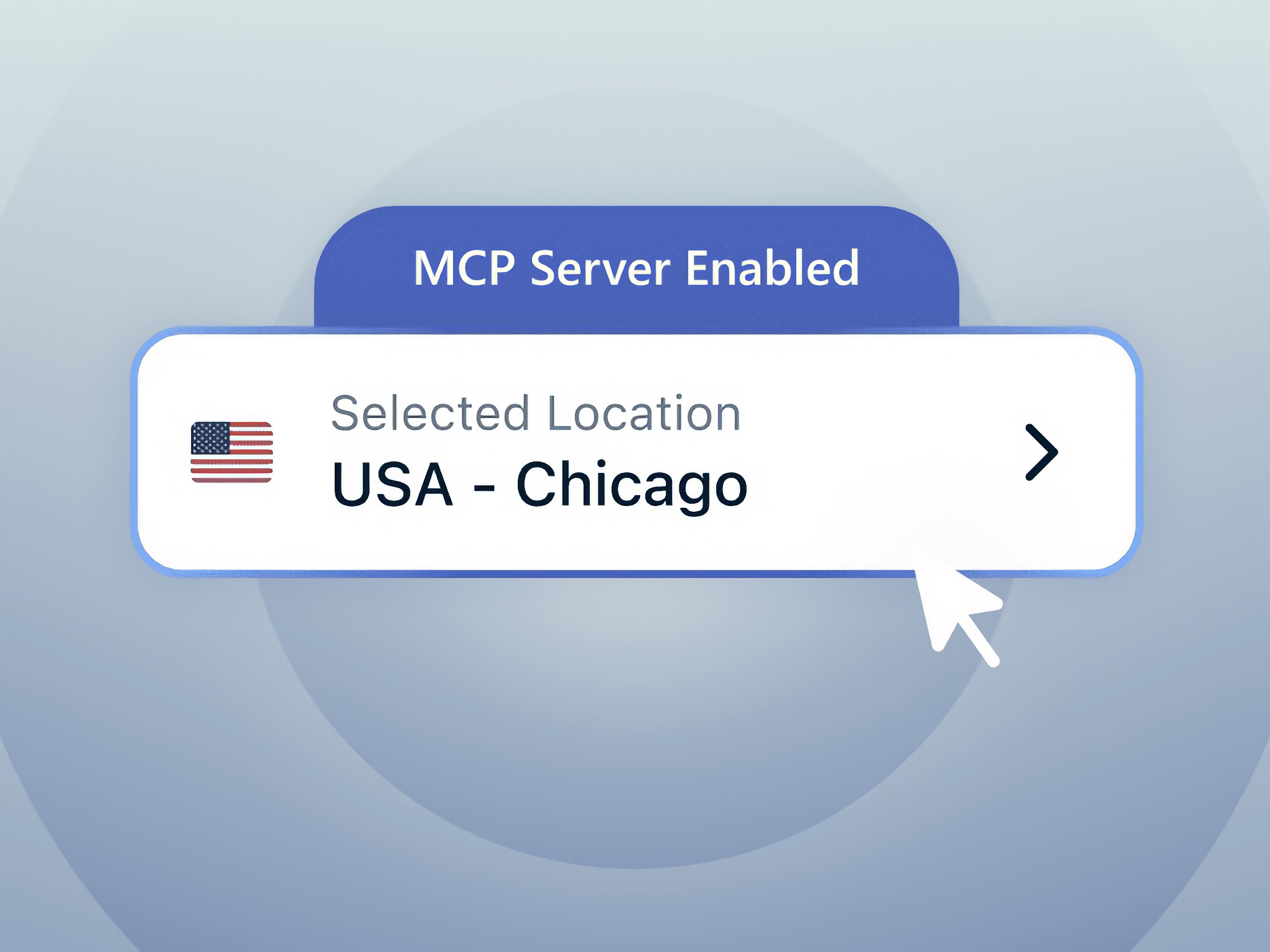
ExpressVPN has announced the beta launch of what it calls the industry’s first VPN Model Context Protocol (MCP) server, making it the first VPN provider to let AI tools read and configure VPN settings directly.
MCP is an open standard introduced by Anthropic back in November 2024. It gives AI systems a standardized way to connect with external tools and data sources. The protocol has been picked up across a lot of developer platforms since then, but VPN infrastructure had stayed out of that ecosystem entirely… until now.
The idea here is pretty straightforward. Developers who rely on AI assistants as part of their workflow have still had to handle network stuff manually. Switching server regions, verifying a secure connection is active, troubleshooting connectivity problems; all of that had to be done outside whatever automated workflow they had going. ExpressVPN’s MCP server is meant to change that.
The server works as a local bridge between MCP-compatible AI tools and ExpressVPN’s desktop apps. Through that connection, developers can use natural language to check whether a VPN is connected, switch server locations, change protocols, and run diagnostics, all without stepping outside their workflow. Compatible tools at launch include Anthropic’s Claude Code and OpenAI’s Codex, and the desktop apps that support it cover macOS, Windows, and Linux.
The whole thing operates through a fixed command allowlist, which keeps things limited to specific, defined actions. AI tools can read VPN status, switch regions, change protocols, and run diagnostics, but they cannot access account credentials or session information. ExpressVPN says the server runs entirely on the user’s device and falls under its existing no-logs policy, meaning activity logs, connection logs, and destination data are not collected or stored.
Shay Peretz, COO of ExpressVPN, put it this way: “Developers are increasingly relying on AI agents to automate complex tasks, yet their network environment has remained manual.” He added that the company sees MCP becoming a foundational standard for how AI systems interact with external tools going forward.
Is this genuinely useful or just AI feature-chasing? Honestly, for the right kind of developer, this seems like it could be legitimately handy. If you are writing scripts that need to verify a secure connection first, testing geo-sensitive APIs across different regions, or diagnosing network issues with AI assistance, having VPN control baked into that workflow makes real sense. For most folks, though, connecting to a VPN is not exactly the bottleneck in their day.
The integration is opt-in, disabled by default in the ExpressVPN desktop app, which is the right call on the privacy front. You have to actively turn it on.
The beta is available starting today, March 5, 2026, but access is limited to subscribers on specific plans. You will need a 1-year or 2-year subscription on ExpressVPN’s Basic, Advanced, or Pro tier, or you can access it through ExpressVPN for Teams. Pricing for those plans varies, so check ExpressVPN’s site for current rates.
Support independent tech journalism
NERDS.xyz is independently owned and operated. If you enjoy my coverage of Linux, AI, hardware, cybersecurity, and tech culture, consider supporting the site on Ko-fi.
Support NERDS.xyz