

ATOTO’s CB7 Pro is being pitched as a wireless CarPlay and Android Auto upgrade, but that description does not really capture what this thing is doing. Yes, it can turn a wired connection into a wireless one, and that alone will appeal to a lot of drivers. But the more interesting part is that CB7 Pro is designed to benefit people who already have wireless CarPlay or Android Auto too. The difference is in how it treats your factory screen. It does not replace it. It builds on top of it.
For drivers stuck with wired projection, the upgrade is immediate. Plug CB7 Pro into the USB port your car already uses for CarPlay or Android Auto, and the cable goes away. That alone makes a car feel newer, especially for models that are only a few years old but already feel dated. No dash work, no install drama, no rewiring. Just wireless.
For drivers who already have wireless CarPlay or Android Auto, the value comes from expansion rather than convenience. CB7 Pro adds a full Android 13 system that runs independently of your phone. When you want it, the factory screen becomes a standalone Android device with apps, split screen multitasking, navigation, media players, and tools that go far beyond the limits of phone projection. You are no longer stuck inside Apple’s or Google’s guardrails.
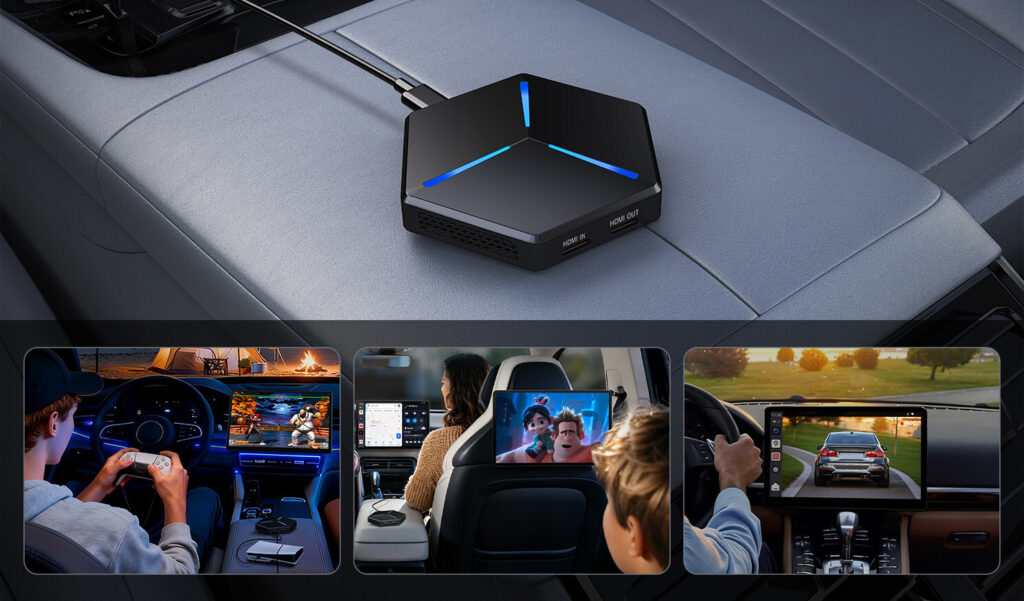
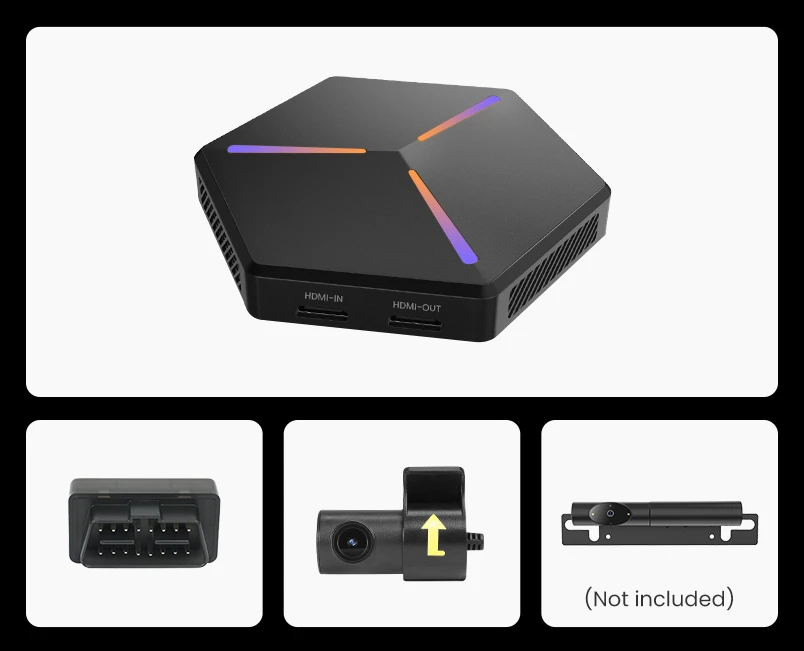
The biggest shift is video. Most factory infotainment systems block video completely unless the car is in reverse. CB7 Pro breaks that rule. In one mode, it can receive wireless video from external cameras, letting drivers add front views, curb cameras, or cargo area checks without running wires through the car. In another mode, it connects to a dedicated 1080p camera and functions as a dash cam recorder. That same camera can also be used for two way video calling, which means a passenger can share a stable view of the road or cabin instead of fumbling with a phone. It sounds strange at first, but it is a capability OEM systems simply do not offer.
There is also HDMI input and output, which opens the door to things factory systems never allow. You can connect a game console, streaming stick, or media player, then send video to a rear screen for passengers. For families, that alone can justify the box, especially for long waits or road trips.
CB7 Pro also adds practical features that have nothing to do with entertainment. With a compatible Bluetooth OBD II adapter, it can show live vehicle data and diagnostics on the factory screen. It adds GPS tracking, trip history, and geofence alerts, which makes sense for shared family cars or anyone who wants basic monitoring without relying on the automaker. A feature called AI ParkFinder uses camera footage to remember where you parked, which sounds unnecessary until you lose your car in a massive parking lot and suddenly wish you had it.
Then there is the AI layer. DriveChat adds voice interaction powered by ChatGPT to the Android system, letting drivers launch apps or ask questions by voice. Future updates promise camera based awareness features like recognizing road conditions or checking on rear seat passengers. Some of this will feel genuinely useful. Some of it may feel like AI clutter. The important part is that it is software driven, so the box can evolve instead of staying frozen in time.
The cleanest way to understand CB7 Pro is this. If your car has wired CarPlay or Android Auto, it modernizes the experience. If your car already has wireless CarPlay or Android Auto, it expands the experience. Either way, it is trying to turn a locked down factory screen into something more flexible without ripping out the dashboard or buying a new car.
That idea clearly resonates. ATOTO launched CB7 Pro on Indiegogo, and the campaign blew past its funding goal in under two days. That does not happen unless a product is hitting a real frustration point. People are keeping their cars longer, and they want the screens they already have to feel modern again. CB7 Pro is betting that software, not hardware replacement, is the right answer.
Support independent tech journalism
NERDS.xyz is independently owned and operated. If you enjoy my coverage of Linux, AI, hardware, cybersecurity, and tech culture, consider supporting the site on Ko-fi.
Support NERDS.xyz