
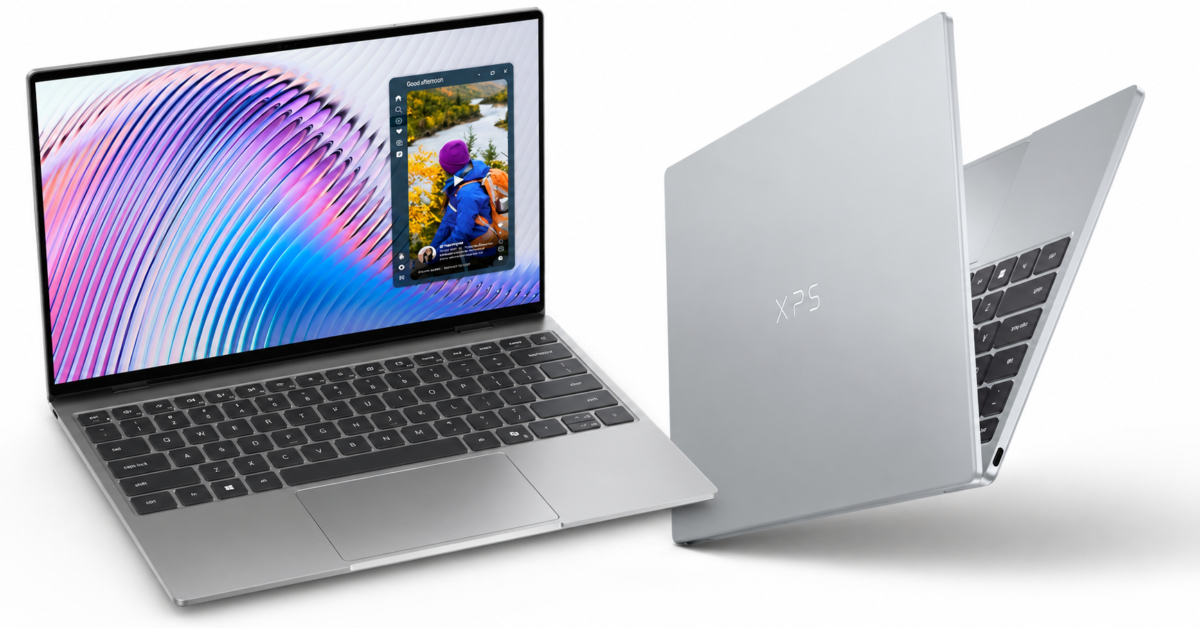
Dell is taking direct aim at Apple’s MacBook Neo with a cheaper and lighter version of the XPS 13, but the company may be running into a problem that specs alone cannot solve… students increasingly prefer macOS.
The new XPS 13 is Dell’s attempt to make the premium laptop experience more affordable without completely gutting the hardware. Starting at $599 for eligible students and $699 for everyone else, the machine undercuts many premium laptops while still offering features Dell says Apple skips on the MacBook Neo.
SEE ALSO: Linux Lite 8.0 arrives with custom gaming kernels and private AI
That includes a 2.5K touchscreen, a backlit keyboard, Intel Wi-Fi 7, quad speakers, Windows Hello, and faster USB-C connectivity. Dell is clearly trying to position the XPS 13 as the better value, especially for students shopping during back-to-school season.
And on paper, it is hard to argue against some of the hardware decisions.
The laptop weighs just 1kg and measures 12.7mm thin, making it the lightest and thinnest XPS ever released. Dell says the aluminum chassis still meets the same standards as the rest of the XPS lineup, rather than feeling like a stripped down budget compromise.
The display also sounds surprisingly good for the money. Dell says the 2.5K panel covers 100 percent of the DCI-P3 color gamut and supports a variable refresh rate between 30Hz and 120Hz. Battery life is rated at up to 17 hours of streaming, although real-world usage will likely vary considerably depending on workload and Windows background activity.
Under the hood, buyers can choose Intel Core Series 3 processors at launch, while Intel Core Ultra Series 3 options are coming later. Configurations will go up to 32GB of LPDDR5X RAM and 1TB of storage.
Still, Dell’s biggest challenge may not be hardware at all.
Among students and younger professionals, Apple has become deeply embedded into campus life. Walk through many college lecture halls today and you will see rows of MacBooks. Some of that comes down to ecosystem lock-in with iPhones and AirPods, while some of it is simply perception. macOS has become the “cool” operating system for younger users in ways Windows arguably no longer is.
That does not mean Windows laptops are bad. Far from it. In many cases, they offer better value and more flexibility. But perception matters when people are spending money on a device they carry everywhere.
Dell seems aware of this too. The company repeatedly compares the XPS 13 against the MacBook Neo throughout its announcement, almost as if it is trying to convince buyers that Windows laptops can still feel premium and desirable.
Whether that works remains to be seen.
What Dell has produced here looks like a legitimately attractive ultraportable. The pricing is aggressive, the specs are solid, and the design still looks unmistakably XPS. But competing with Apple in 2026 is no longer just about hardware specs. It is about culture, ecosystem, and software preference too.
And right now, Windows may still be the biggest hurdle standing in Dell’s way.
Support independent tech journalism
NERDS.xyz is independently owned and operated. If you enjoy my coverage of Linux, AI, hardware, cybersecurity, and tech culture, consider supporting the site on Ko-fi.
Support NERDS.xyz