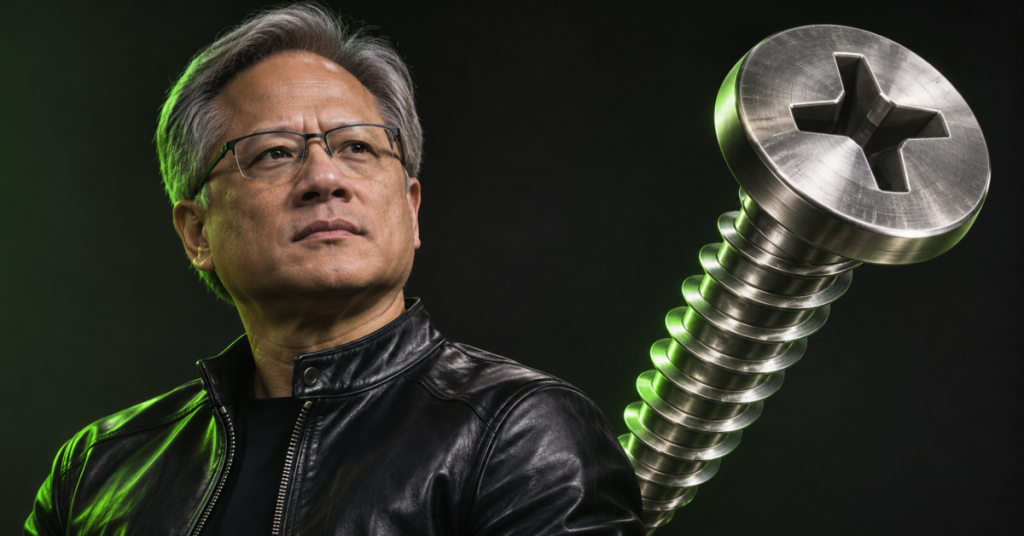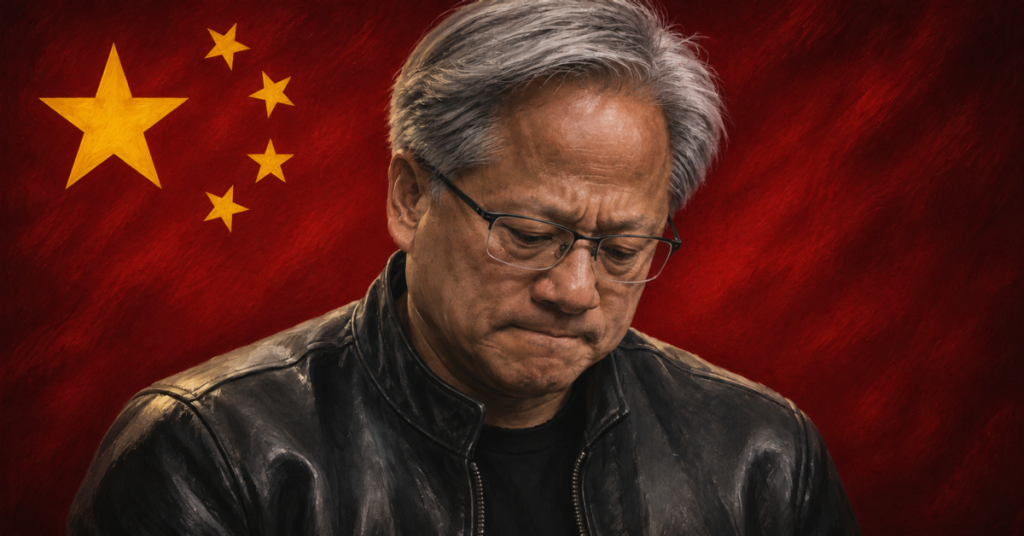

Artificial intelligence can write code, generate images, and help companies automate work. It apparently cannot save the man selling the chips from the consequences of his own very human decisions.
Jensen Huang has resigned as president, CEO, and a member of the NVIDIA board, effective immediately. His departure follows his admission of infidelity and a board investigation into reports that he was targeted by a foreign intelligence effort. For someone whose business revolves around artificial intelligence, this is a remarkably biological downfall.
There is an obvious irony here. A leader who helped build an industry around machine intelligence now leaves behind a reminder that human judgment remains a rather important feature.
NVIDIA announced the leadership change today, naming chief financial officer Colette Kress interim CEO. She will retain her CFO responsibilities while the board searches for a permanent replacement, considering both internal and external candidates.
To be clear, NVIDIA’s announcement does not identify a reason for Huang’s resignation. The biological urges framing is commentary on the scandal surrounding his departure, not an explanation supplied by the board or a finding from its investigation.
Huang had already apologized to employees on November 8, acknowledging that he had been unfaithful to his wife. He accepted responsibility and said he would cooperate with the board’s investigation.
That same day, NVIDIA’s board announced an independent inquiry into reports that Huang had been the target of a foreign intelligence effort. At the time, directors said they had no reason to believe national security or NVIDIA secrets had been compromised.
Those qualifications still matter. An admission of infidelity does not prove espionage, and a resignation does not establish that confidential information changed hands. The transition announcement supplies no findings that would settle those questions.
Still, the reversal is striking. On November 8, the board expressed confidence in Huang and his leadership team. Four days later, it announced his immediate departure from all three positions.
The man who helped build NVIDIA over 33 years is now outside its executive leadership and board. Whatever the investigation eventually establishes, the company has already entered a new chapter without its defining figure at the controls.
Kress brings considerable familiarity with the business to the interim job. She joined NVIDIA in September 2013 and has led its finance organization throughout a period of enormous growth. Before that, she spent nearly 25 years in finance roles at companies including Cisco and Microsoft, according to NVIDIA.
The board also appointed Harvey C. Jones its first-ever chair. Jones previously served as chief executive officer and executive chairman of Synopsys, and NVIDIA describes his background as spanning entrepreneurship, technology leadership, and venture investing.
For customers and developers, the immediate message is continuity. Jones said the board expects operations, customer commitments, and the product roadmap to proceed without interruption.
“The Board has full confidence in Colette and the leadership team, and we expect the company’s operations, customer commitments and product roadmap to continue without interruption,” Jones said.
That is a reasonable message to deliver during an abrupt leadership change. It is also a promise NVIDIA will now have to demonstrate through execution, with Kress holding both the interim CEO and CFO jobs during the search.
Investors will get an early opportunity to hear from the company next week. NVIDIA says its third-quarter fiscal 2027 results remain scheduled for November 17 at approximately 4:20 p.m. Eastern, followed by its earnings call at 5 p.m. Eastern.
There is no need to pretend NVIDIA’s engineers, software, or customer relationships disappear with Huang. The company’s capabilities extend far beyond one executive, even one so closely associated with its identity.
But there is a lesson here for an industry that talks endlessly about making machines smarter. Technical brilliance does not excuse poor personal judgment, and building the hardware behind artificial intelligence does not make anyone immune to ordinary human consequences.
Support independent tech journalism
NERDS.xyz is independently owned and operated. If you enjoy my coverage of Linux, AI, hardware, cybersecurity, and tech culture, consider supporting the site on Ko-fi.
Support NERDS.xyz