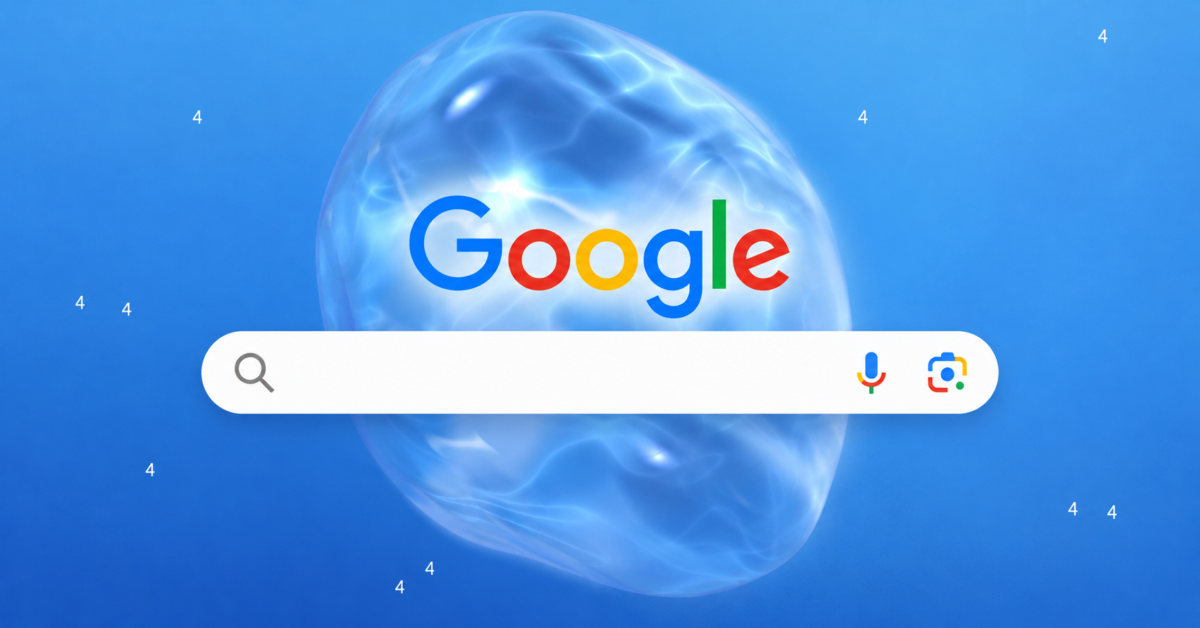
Google Search is getting another dose of AI, and this time, Google is bringing Gemini 4 Hydrogen to users globally. The company calls it the biggest model upgrade to Search yet, promising better answers to complicated questions and more visual ways to present information.
That sounds useful, particularly if you are tired of rewriting a search three times before Google understands what you mean. But for those of us who publish the websites that help make Search useful, there is another question worth asking: Will better AI answers actually give people more reasons to visit us?
In its Search announcement, Google says Hydrogen improves how the service interprets questions with several parts, unusual typos, and very specific requirements. The idea is that you can explain what you need naturally and receive a response that addresses the different pieces of your request.
Google also says it has improved the process of running multiple searches across related topics. That should help it uncover a broader selection of relevant websites, while responses can include more images, comparison tables, and custom tools. The company says the language improvements extend across all languages supported by AI Mode.
For someone comparing products or trying to untangle a complicated subject, better organization could be welcome. A useful table can save time, provided the information inside it is correct and the sources are easy to find.
The publisher side is less straightforward. Showing someone more links is not the same thing as convincing that person to click them, especially when an answer already appears to contain everything they need.
Neither announcement establishes that these changes will send more traffic to publishers. Google’s promise of broader website discovery is encouraging, but publishers will need actual referral data before celebrating.
Search is only part of the release, though. Google’s Gemini 4 Hydrogen announcement positions the model as a faster option for everyday coding and tasks that require an AI system to use tools and complete several steps. Carbon and Argon remain positioned around deeper reasoning, while Hydrogen is designed to handle more of the execution work.
Developers get a 1 million-token context window, with pricing of $1.50 per million input tokens and $7.50 per million output tokens across that window. Hydrogen also offers low, medium, high, and xhigh thinking settings, with high serving as the default.
Google is introducing Orchestrator in Antigravity, too. It can switch between models within a session, assigning work to different models as needed instead of keeping every task on the same one.
In Google’s cited Terminal-Bench 4.0 evaluation, Orchestrator approached Carbon’s task success rate while using 24 percent less quota and finishing 19 percent faster on average. Those are Google’s reported results, and they should not be mistaken for a guarantee that every coding project will see the same savings.
The company also claims improvements in following writing instructions, drawing on connected apps, and building interactive prototypes. Compared with Gemini 3.8 Flash, Google reports fewer fabricated claims and improvements in how Hydrogen handles failed tool calls.
Those are worthwhile priorities for an assistant expected to do actual work. An impressive demonstration is nice, but an assistant that follows your instructions without inventing things or getting stuck halfway through a task is considerably more useful.
There is an access detail worth understanding before opening the Gemini app. Google says free users receive Hydrogen through automatic model selection when it considers the model appropriate for a prompt, while Hydrogen access in Antigravity is available to paid Google AI Pro and Ultra subscribers.
For most people, the Search rollout will probably be the first part of this announcement they notice. The test is whether it makes finding reliable information easier, including reaching the people and websites responsible for that information in the first place.
Support independent tech journalism
NERDS.xyz is independently owned and operated. If you enjoy my coverage of Linux, AI, hardware, cybersecurity, and tech culture, consider supporting the site on Ko-fi.
Support NERDS.xyz