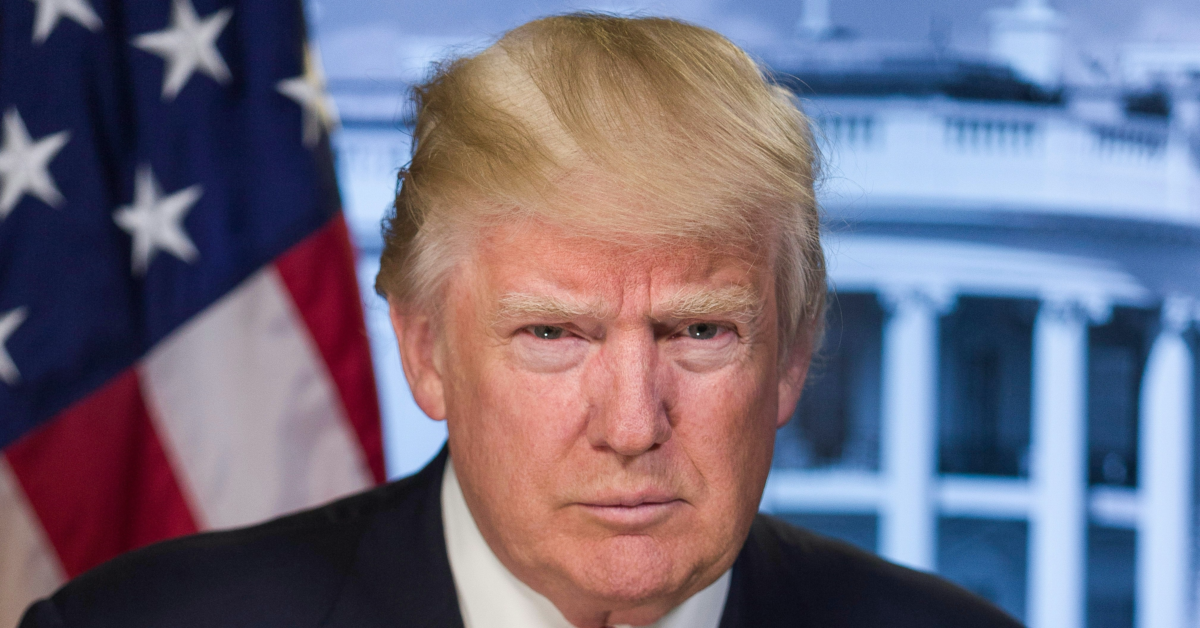
Artificial intelligence apparently isn’t good enough anymore. President Donald Trump has signed an executive order directing the executive branch to start calling it Super Intelligence, or SI, instead.
The change sounds like the White House is declaring the arrival of some futuristic superhuman intelligence, but actually, that is not what happened. You see, under the executive order, Super Intelligence initially uses the existing legal definition of artificial intelligence. In other words, the technology did not suddenly become smarter because the government gave it a more dramatic name.
The terminology change is broad. Federal executive departments and agencies are directed to use “Super Intelligence” and “SI” instead of “Artificial Intelligence” and “AI” in official communications, reports, websites, policy documents, and other applicable materials. The order even says the executive branch should, to the maximum extent permitted by law, stop acknowledging the use of the old terminology in those contexts.
That does not mean every existing government document suddenly needs a search-and-replace operation. The order exempts things such as previously issued regulations, contracts, grants, historical documents, and earlier presidential actions. It also cannot magically erase the term AI from federal statutes passed by Congress.
The change may eventually become more than branding. The Assistant to the President for Science and Technology has 60 days to recommend a formal definition of Super Intelligence and determine whether it should modify, expand, or supersede the existing statutory definition of artificial intelligence. The administration also wants proposed legislative language that could bring the terminology to Congress.
For now, however, SI and AI are effectively talking about the same broad category of technology within the executive branch. That context is particularly important when reading other White House announcements from today.
Trump also launched America.gov, which is intended to become a single digital front door for federal government services. The White House says the service will use Super Intelligence to let Americans ask questions in plain language, receive current answers, and eventually complete certain government transactions without figuring out which agency website they need.
Without knowing about Trump’s terminology order, saying America.gov is powered by “Super Intelligence” could sound like the federal government has access to some new class of superhuman AI. It doesn’t necessarily mean that at all. In this case, the government is using its newly preferred name for AI.
There is still a potentially important question hiding underneath the branding. The administration could ultimately define Super Intelligence differently from today’s AI, particularly after the 60-day review. If that happens, SI could eventually describe something more specific than the familiar collection of machine learning models, generative AI systems, and AI agents we already use.
Until then, calling AI Super Intelligence mostly gives familiar technology a much grander name. Whether the rest of the technology industry follows Washington’s lead is another matter entirely.
AI has become one of the most recognizable technology terms on Earth. OpenAI, Google, Microsoft, Anthropic, Apple, Meta, and countless other companies have spent years putting those two letters everywhere. Getting federal agencies to say SI is possible through an executive order. Getting everyone else to stop saying AI could prove considerably harder.
Support independent tech journalism
NERDS.xyz is independently owned and operated. If you enjoy my coverage of Linux, AI, hardware, cybersecurity, and tech culture, consider supporting the site on Ko-fi.
Support NERDS.xyz