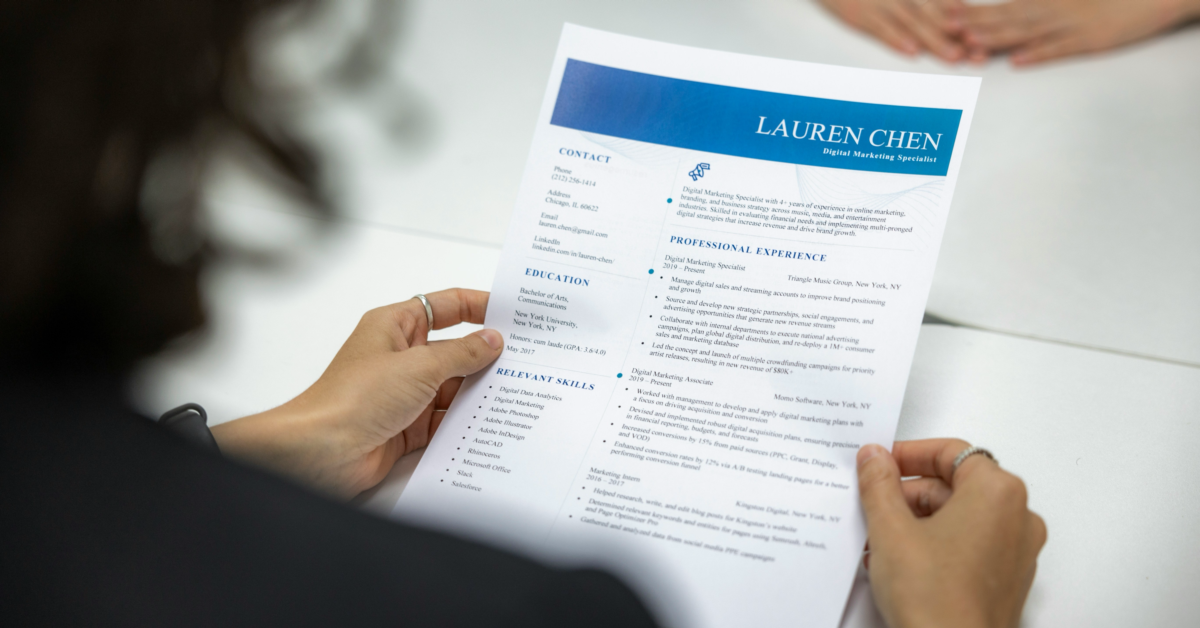
Asking AI to polish your resume should not mean giving it permission to upgrade your work history. Unfortunately, telling a model to stick to the facts may not be enough, even when accuracy is explicitly part of the instructions.
Job-application software company HireFrog has released an exploratory study in which an automated audit flagged unsupported factual claims in 14 of 97 AI-tailored resumes. That is roughly one in seven, despite the model receiving an accuracy-focused instruction. Before anybody treats that as a universal failure rate for AI resume tools, however, the details deserve a closer look.
The research used 100 simulated candidate-job pairs, with synthetic work histories covering account executive, customer success manager, operations analyst, and data analyst roles. It tested one model generating resumes through different workflows, rather than following real applicants through an actual hiring process.
The flagged claims were relatively subtle. Examples included describing “cross-functional collaboration” when the source documented only training colleagues, assigning accumulated skills to a particular employer, and claiming operating guides improved consistency without evidence supporting that benefit.
Those additions might sound like harmless resume language, but they can change what an applicant is claiming to have done. Training a coworker does not automatically establish collaboration across departments, and writing a guide does not prove the guide improved anything. A polished sentence can still promise more than the underlying experience supports.
There is an essential qualification here, though. Another AI model performed the audit, humans did not adjudicate its findings, and the paper acknowledges that some flags involved debatable interpretations of sparse records. All recorded findings were classified as minor, with no material errors flagged among the resumes audited.
That means the study found potential unsupported attributions, not 14 independently confirmed examples of fabricated work histories. It also did not measure how often an interviewer would notice those claims, whether a background check would uncover them, or whether applicants would lose opportunities because of them.
HireFrog compared the single-prompt approach with a more structured process. Its research workflow first mapped job requirements to evidence in the candidate’s record, then drafted from that mapping, and finally checked the resulting statements against the original sources. That approach received an automated flag in one of 99 audited resumes.
The paper also tested ordinary review passes, which complicate any suggestion that HireFrog has demonstrated a uniquely effective solution. A draft followed by one source-aware revision produced flags in four of 98 resumes, while adding another review produced flags in seven of 99.
The structured workflow’s comparison with direct prompting was statistically significant after correction for multiple comparisons. Its comparisons with the generic review approaches were not, so the findings do not establish that its process beats simply asking AI to review a draft against the complete source record.
Perhaps the most revealing detail is that resume accuracy was not the study’s original primary question. The researchers initially wanted to determine whether the tailoring method changed which candidates a simulated screener shortlisted. That test found no difference between methods.
The screening setup could not meaningfully separate qualified applicants, who tied within their respective pools. Presentation order broke those ties, making the result unsuitable for showing that one method produced a better hiring outcome. The favorable accuracy comparison was analyzed afterward, which makes it an exploratory finding that needs further testing.
There is also a product detail prospective customers should understand. According to HireFrog’s announcement, the tested verification workflow is not yet part of its application, and the research used a different model from the deployed service. The application currently generates tailored resumes in a single step with instructions to use documented facts, without the validation stage evaluated here.
HireFrog deserves credit for disclosing those limitations, including its commercial interest in the research. Still, this is a working paper that has not been peer reviewed, built around synthetic records and automated judgments. It does not demonstrate better interview rates, hiring odds, or acceptance by applicant tracking systems.
For job seekers, the useful takeaway is to check what AI has changed, especially when it makes ordinary experience sound more impressive. Compare claims about responsibilities, results, dates, skills, and project ownership with your actual history before submitting anything.
I would be particularly wary of language that upgrades helping into leading or turns an activity into a measurable accomplishment without supporting evidence. AI can help you explain your experience, but you are the person who will have to explain that resume in an interview.
Support independent tech journalism
NERDS.xyz is independently owned and operated. If you enjoy my coverage of Linux, AI, hardware, cybersecurity, and tech culture, consider supporting the site on Ko-fi.
Support NERDS.xyz