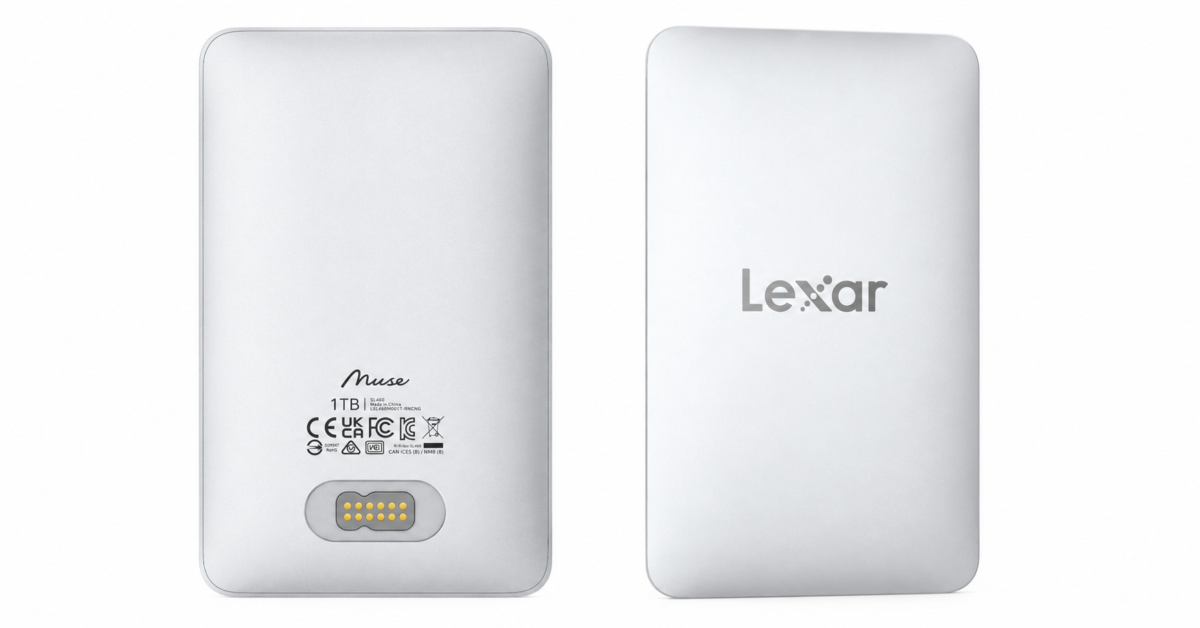
Portable SSDs are useful, but attaching one to a smartphone can turn a simple recording setup into an awkward collection of hardware and cables. At IFA 2026, Lexar introduced the Muse Ultra-Slim Portable SSD, a thin external drive with a magnetic mounting sleeve designed to keep storage close to the back of your phone.
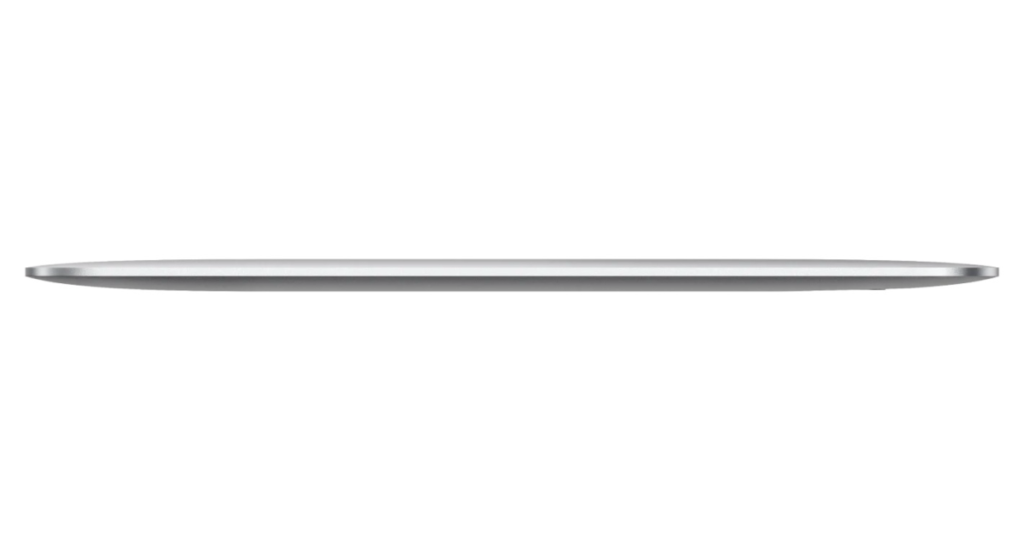
Lexar calls the Muse the world’s thinnest portable SSD. Its metal body measures approximately 3.8mm at its thickest point and tapers to 1mm at the edge. That last measurement makes for good marketing, although the thicker portion is what you should consider when figuring out how much bulk it adds.
The drive measures 80 x 48mm and weighs 26.5 grams, according to Lexar’s specifications. Its enclosure is machined from a single piece of metal, with a custom thin circuit board and high-density NAND stacking inside. The result is a card-like shape that should be easier to carry than a chunkier external drive, though we have not tested it.
Lexar rates the Muse for sequential read speeds of up to 1,050MB/s and write speeds of up to 1,000MB/s. Those are advertised maximums, so your actual experience will depend on the connected device and workload. Buyers will have a choice of 512GB or 1TB capacities.
For mobile video, Lexar says the Muse supports direct external recording of Apple ProRes 4K footage at up to 120 frames per second on compatible iPhones. Pay attention to that compatibility qualification. Having a USB-C iPhone does not automatically mean you can use every advertised recording mode, and Lexar says supported formats, resolutions, and frame rates vary by model and settings.
The mounting arrangement uses a magnetic carry sleeve that holds the SSD against the back of compatible MagSafe iPhones. Data travels through Lexar’s proprietary PogoPin connection using the included SnapLink Magnetic Cable, which connects to the phone over USB-C. The magnetic attachment itself is not a wireless data connection.
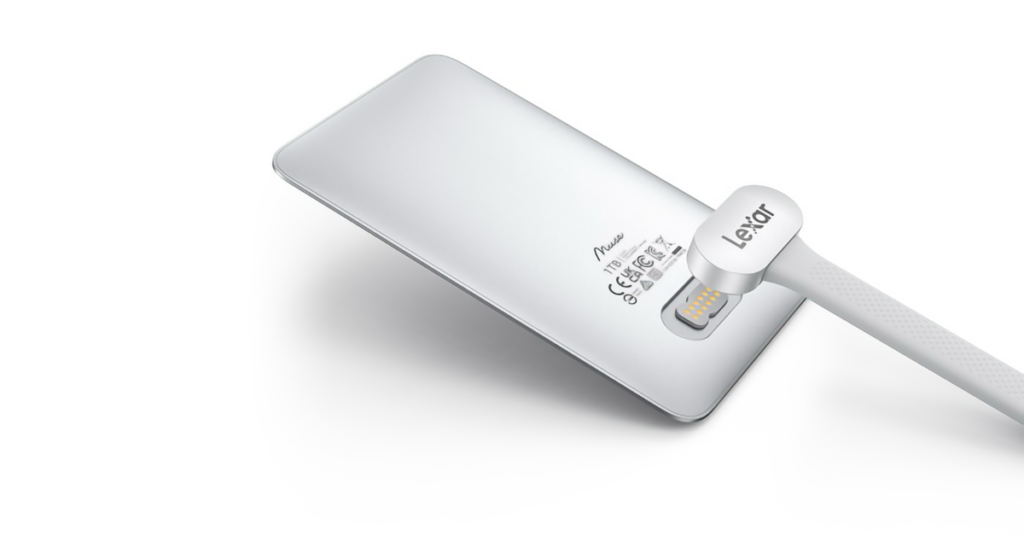
That proprietary cable is the part I would think about before buying. A compact magnetic connector could make the setup more convenient, but it also means a regular USB-C cable alone cannot replace the supplied connection to the drive. Lexar’s announcement does not say how much replacement cables will cost or how readily available they will be. For something intended to travel, those are practical questions.
Along with the cable and carry sleeve, the listed accessories include a USB-C to USB-A adapter, magnetic ring, and cable clip. Lexar lists compatibility with USB-C smartphones, PCs, Macs, tablets, and iPads, so the Muse can also handle file transfers, project storage, and backups beyond phone recording.
The specifications list an operating temperature range of 0°C to 50°C and a five-year limited warranty. Neither the supplied specifications nor the announcement lists an IP water or dust resistance rating, so the metal enclosure should not be taken as evidence of weather protection.
The Lexar Muse is scheduled to become available in the fourth quarter of 2026, with regional availability varying. Pricing has not been announced. The thin body is appealing, but the purchase decision will come down to price, sustained performance, and whether the magnetic cable proves convenient enough to justify depending on a proprietary accessory.
Support independent tech journalism
NERDS.xyz is independently owned and operated. If you enjoy my coverage of Linux, AI, hardware, cybersecurity, and tech culture, consider supporting the site on Ko-fi.
Support NERDS.xyz