
For the past few years, the AI conversation has largely centered on GPUs. Companies like NVIDIA have become household names among investors and technology enthusiasts alike as demand for AI accelerators continues to explode.
But GPUs are only part of the story.
AI workloads also require enormous amounts of fast, power-efficient storage capable of feeding those processors with data. As models grow larger and inference becomes increasingly common, storage is emerging as another critical piece of AI infrastructure.
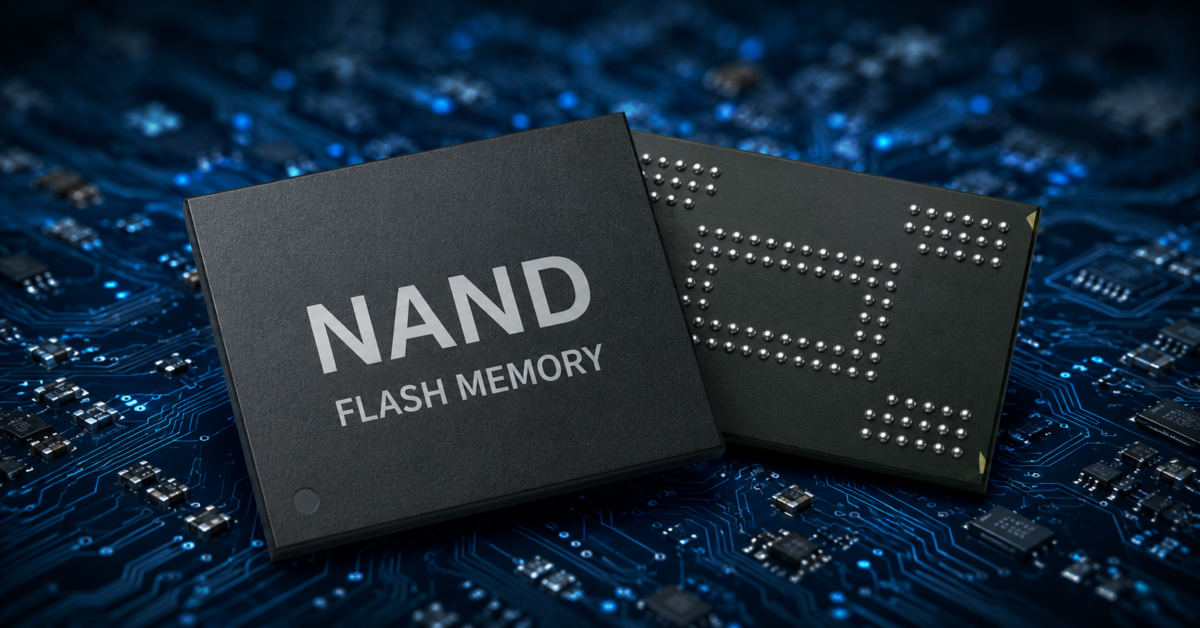
That reality was on full display today as both Sandisk and Kioxia announced their new 10th-generation BiCS10 3D NAND technology.
The two announcements looked remarkably similar because, well… they were. You see, Sandisk and Kioxia jointly develop BiCS flash technology, so both companies are introducing the same core advancements under their respective brands and product portfolios.
BiCS10 brings some impressive numbers to the table. The new flash memory stacks 332 layers and delivers up to 4.8Gb/s interface speeds, representing a 33 percent improvement over the previous BiCS8 generation. Density also increases by 59 percent, allowing more storage capacity in the same physical footprint.
Power efficiency is another major focus. Sandisk says input power consumption drops by 10 percent while output power consumption falls by 34 percent compared to BiCS8. Kioxia reports improvements of 18 percent for write efficiency and 30 percent for read efficiency.
Those gains matter because AI infrastructure consumes staggering amounts of electricity. Every watt saved in storage can translate into significant savings when multiplied across racks of enterprise SSDs inside massive data centers.
Neither company is positioning BiCS10 as a consumer product, at least not yet. The technology is expected to appear first in enterprise and data center SSDs designed for AI training, inference, and large-scale cloud workloads.
While the AI industry remains obsessed with GPUs, memory and storage are quickly becoming the next battleground. Faster and denser flash storage means larger models, quicker responses, lower operating costs, and ultimately more capable AI systems.
The AI boom is creating winners across the semiconductor industry, and it increasingly looks like NAND manufacturers intend to be among them.
Support independent tech journalism
NERDS.xyz is independently owned and operated. If you enjoy my coverage of Linux, AI, hardware, cybersecurity, and tech culture, consider supporting the site on Ko-fi.
Support NERDS.xyz