
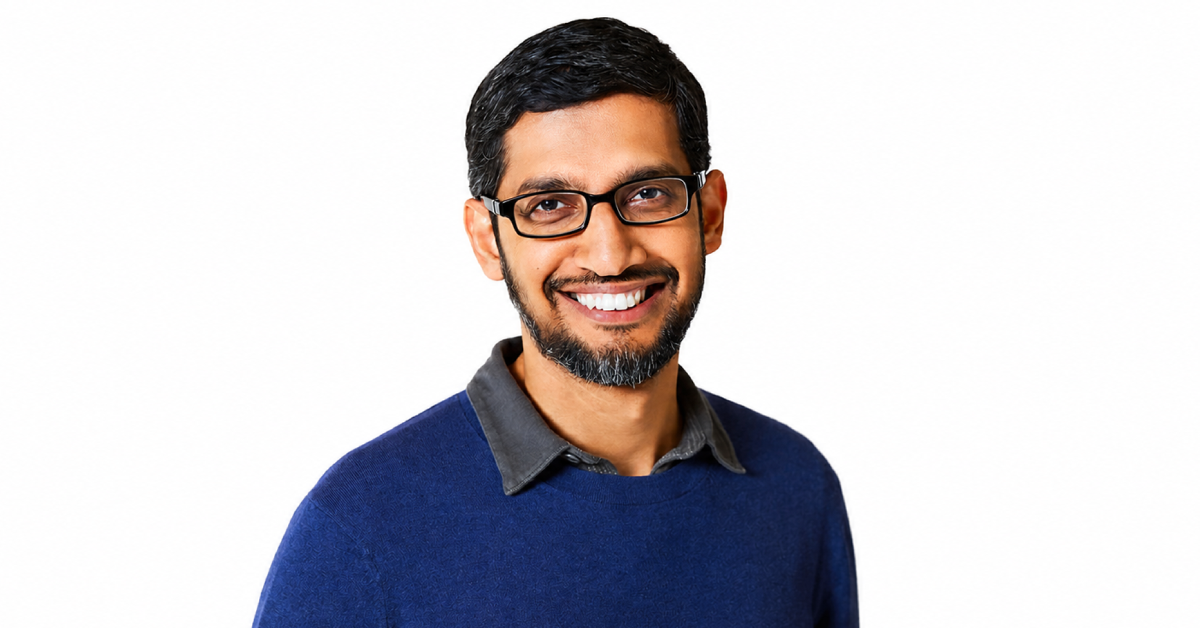
When I saw that Sundar Pichai was delivering Stanford University’s 2026 commencement address, I assumed artificial intelligence would be front and center.
How could it not be?
Pichai is the CEO of Google. The company is spending billions of dollars on AI. It is competing fiercely with OpenAI, Anthropic, Microsoft, Meta, and others. AI is changing how people work, learn, create, and search for information. It is arguably the most important technology story of our time.
Yet after reading the full transcript of his speech, I was struck by how little he actually said about AI.
Instead, graduates got stories about a road trip to Las Vegas, California optimism, working on hard things, and doing what excites you. None of that advice is bad. In fact, much of it is quite good. But it also felt surprisingly detached from the questions many graduates are likely asking themselves right now.
SEE ALSO: Putting all your eggs in one AI basket is a dangerous mistake
Students entering the workforce today face a very different reality than graduates did even a few years ago. AI can already write software, create marketing copy, summarize research, generate images, answer customer questions, and perform many tasks that were once assigned to junior employees. Whether AI ultimately creates more jobs than it eliminates remains to be seen, but the uncertainty is real.
Pichai briefly referenced a “rewiring of technology” before quickly moving on. For a speech delivered by one of the most influential figures in AI, that stood out to me.
I also found some of his advice easier to appreciate from the perspective of a billionaire CEO than from that of a new graduate. Pichai suggested that many life decisions are not as consequential as they seem and that a first job rarely determines the course of a person’s life. There is certainly some truth to that. Looking back, most people can identify opportunities and mistakes that did not end up defining them.
At the same time, it is hard to ignore today’s economic realities. Housing costs are high. Many graduates carry debt. Competition for desirable jobs can be intense. The first job may not determine someone’s entire future, but it can absolutely influence the opportunities available later.
The same goes for his advice to do what excites you. That sounds great, but not everyone has the luxury of choosing passion over stability. Plenty of graduates will take the job that pays the bills rather than the one that sets their heart ablaze.
What I found most interesting, however, was not what Pichai said. It was what he didn’t say.
Over the past year or so, public attitudes toward AI have become increasingly complicated. Some people are excited. Others are nervous. Many workers worry about automation. Artists worry about their livelihoods. Students wonder whether the careers they trained for will look the same five years from now.
At various conferences, public events, and campus appearances, discussions about AI can quickly become uncomfortable. Many such speeches have gone viral when mentions of AI resulted in loud boos. Not everyone wants to hear technology executives tell them that disruption is exciting when they are worried about losing opportunities.
That makes me wonder if Pichai made a deliberate choice.
Rather than directly address AI and risk controversy, he delivered a speech built around timeless themes that almost nobody would object to. Optimism. Hard work. Following your interests. Those are safe topics. They are also the kinds of messages that tend to generate applause rather than difficult questions.
To be clear, I have no evidence that Pichai was worried about being booed or receiving a negative reaction. Maybe he genuinely believed the best commencement speech was one that focused on universal life lessons rather than technology.
But I also find it hard to believe that the omission was accidental.
When the CEO of Google addresses one of the world’s most prestigious graduating classes during the biggest AI boom in history and barely discusses artificial intelligence, people are going to notice.
I certainly did.
By the end of the speech, graduates had received plenty of advice about optimism and pursuing their passions. What they did not receive was much guidance on the issue that may shape their careers more than anything else over the coming decade.
And that, to me, was the most surprising part of all.
Support independent tech journalism
NERDS.xyz is independently owned and operated. If you enjoy my coverage of Linux, AI, hardware, cybersecurity, and tech culture, consider supporting the site on Ko-fi.
Support NERDS.xyz