Nitrux 6.1.0 is now available, and this is not just another Linux distribution update with a pile of package bumps. The project is continuing to push its own desktop vision, for better or worse, with newer components, more MauiKit polish, Hyprland changes, and a clear focus on modern x86-64-v3 hardware.
That hardware focus is worth noting. Nitrux is not trying to be everything for every old machine sitting in a closet. By using x86-64-v3 as a baseline across core libraries and applications, the developers are aiming the distribution at newer CPUs that can actually take advantage of modern instruction sets. Some users will like that. Others may see it as unnecessary. Either way, it makes Nitrux feel a little different from the usual “run it anywhere” Linux pitch.
The update ships with Linux kernel 7.0.8 with CachyOS patches, Hyprland 0.55.1, Qt 6.10.2, KDE Apps 26.04.1, KDE Frameworks 6.23.0, Calamares 3.4.2, Distrobox 1.8.2.5, and NVIDIA Open Kernel Module 595.71.05. Keep in mind, however, that the 595 series only supports Turing and newer NVIDIA GPUs.
A big chunk of this release centers on MauiKit 4.0.3, along with updated MauiKit Frameworks and Maui Apps. The project has cleaned up UI behavior, fixed crashes, improved thumbnail handling, refined browser and tab performance, tightened QML paths, and removed a bunch of old non-Linux code. That last part says a lot about where Nitrux is headed. This is becoming a more focused Linux desktop stack, not a cross-platform experiment chasing every possible target.
Several Maui Apps get real attention here too. Fiery, the web browser, picks up stronger privacy and content-blocking features, better credential isolation, password manager improvements, tab sleeping, session persistence, and tracking parameter stripping. Pix gets a refreshed image viewer and editor flow. Shelf adds PDF table-of-contents support, reading progress, and “Continue Reading.” Nota, Index, VVave, Clip, Buho, and Station all receive interface fixes, cleanup, and usability improvements.
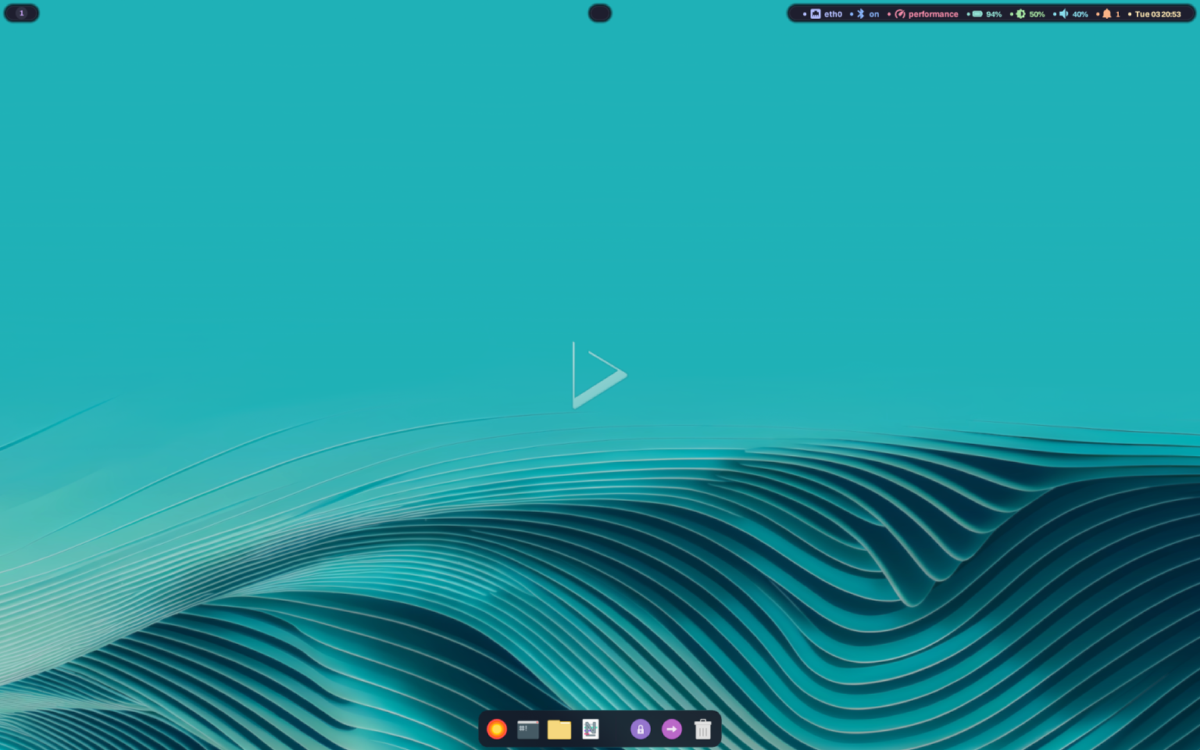
Nitrux also continues its shift deeper into Hyprland. The desktop configuration has been migrated to Lua, Wofi has been replaced by Vicinae, high-DPI scaling behavior has been improved, and Waybar, Hyprlock, WirePlumber, and greetd-related pieces have all been touched. This is still not the kind of Linux desktop I would hand to a Windows user and say, “Here, you’ll figure it out in five minutes.” But for folks who like Wayland, tiling, and a heavily customized environment, it is interesting.
Security gets some attention too, but the developers are careful not to overpromise. They specifically say they are not claiming Nitrux is “impenetrable” or “unhackable,” which is a welcome bit of honesty. The release adds mitigations for several CVEs, improves PAM checks, adds YubiKey two-factor authentication support for LUKS disks, includes PAM support for U2F, and brings in RealtimeKit.
One of the nerdier additions is dmemcg-booster, a fork of Valve’s daemon adapted for OpenRC environments. It includes Hyprland integration, focus tracking, cgroup-based boosting, peer UID validation, stale socket handling, and OpenRC service integration. That will not mean much to casual users, but it is exactly the kind of weird, technical plumbing that makes Nitrux worth watching.
There are removals too. XWayland Video Bridge is gone because KDE deprecated it, KDE Flatpak KCM has been removed, and Wofi has been replaced with Vicinae. The project is clearly cutting loose pieces that do not fit its current direction.
Nitrux 6.1.0 probably will not be everyone’s Linux distribution. That is fine. In a world where many distros feel like slightly rearranged versions of the same desktop, Nitrux still has an identity. It is opinionated, sometimes unusual, and clearly aimed at users who want something more experimental than the usual Ubuntu or Fedora spin.
Users on Nitrux 6.0.0 should use the Nitrux Update Tool System once the OTA update becomes available. New users can download the ISO now here.
Readers coming from the initial release can review the earlier Nitrux 6 coverage for context. Hyprland changes and kernel updates may affect hardware behavior, so testing from removable media is sensible.
Support independent tech journalism
NERDS.xyz is independently owned and operated. If you enjoy my coverage of Linux, AI, hardware, cybersecurity, and tech culture, consider supporting the site on Ko-fi.
Support NERDS.xyz