
Storage hardware keeps getting denser, but this latest setup from Kioxia and Dell Technologies still feels pretty wild. The two companies say they have built a 2U server configuration capable of scaling up to 9.8PB of flash storage, which is honestly the sort of number that would have sounded completely ridiculous not that long ago.
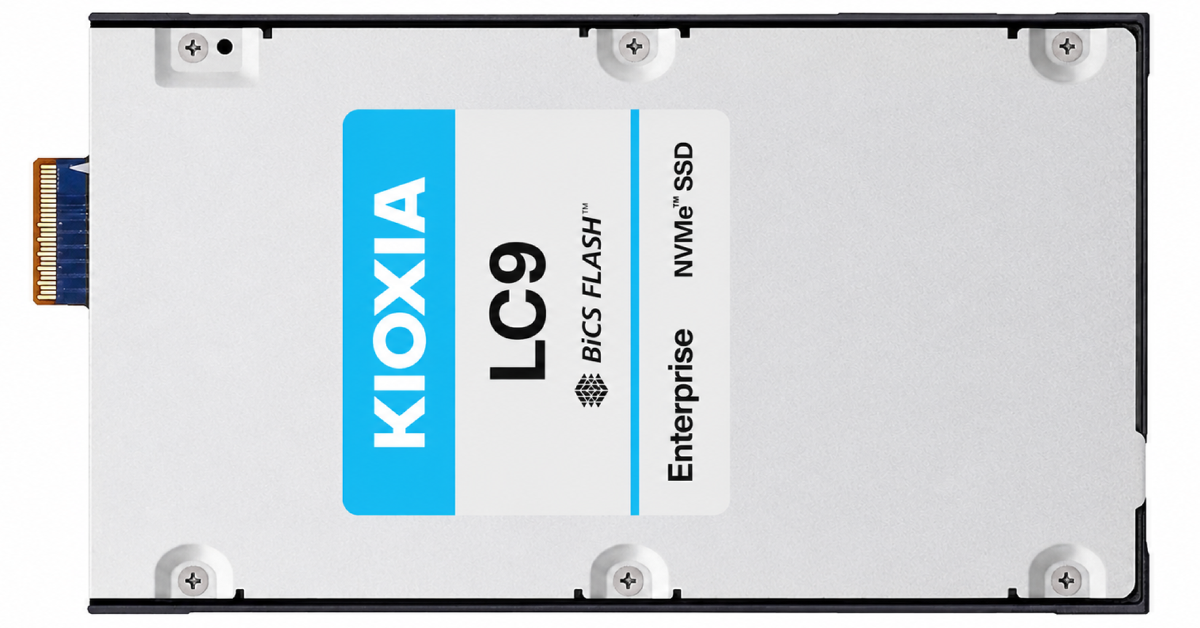
The configuration combines the Dell PowerEdge R7725xd with 40 Kioxia LC9 Series 245.76TB NVMe SSDs and AMD EPYC processors. All of that storage fits into a relatively compact 2U chassis, which is clearly aimed at organizations dealing with massive AI workloads, huge datasets, backups, and large-scale enterprise storage needs.
Kioxia says the LC9 Series SSDs use PCIe 5.0 and are available in multiple form factors, although the massive 245.76TB capacity is exclusive to the E3.L version. According to the company, reaching 9.8PB with more traditional 30.72TB SSDs would require seven additional servers and another 280 drives. That also means far more power usage and much more rack space being consumed inside the data center.
That is really the bigger story here. AI infrastructure conversations usually focus on GPUs, but storage has quietly become a major problem too. Large language models and other AI systems require enormous amounts of data, and all of that information has to live somewhere. Companies are now looking for ways to cram as much storage as possible into smaller physical footprints without completely destroying their power budgets.
Dell is pitching the PowerEdge R7725xd as a platform designed for AI and other data-heavy workloads. The server reportedly supports up to five 400Gbps NICs, which should help move large amounts of data around faster. Because storing nearly 10PB is one thing, but actually feeding that data to AI systems efficiently is another challenge entirely.
What makes this announcement interesting is that the setup remains air cooled. There is no fancy liquid cooling involved here, which could make deployment easier for some organizations already running traditional data center infrastructure.
Naturally, this is not hardware most folks will ever touch personally. Drives measured in hundreds of terabytes are still enterprise products with enterprise pricing attached. Still, the announcement offers a pretty clear look at where high-end storage infrastructure is heading as AI adoption keeps accelerating.
At this point, squeezing almost 10PB into a 2U server no longer sounds like science fiction. Somehow, it is now just another enterprise hardware announcement.
Support independent tech journalism
NERDS.xyz is independently owned and operated. If you enjoy my coverage of Linux, AI, hardware, cybersecurity, and tech culture, consider supporting the site on Ko-fi.
Support NERDS.xyz