
Google has officially launched the Pixel 10a, and at first glance, it reads like a checklist of everything people say they want in a midrange phone. It costs $499, runs the same Google Tensor G4 chip found in pricier models, and promises seven years of operating system and security updates. That alone is going to grab attention in a market where longevity increasingly matters.
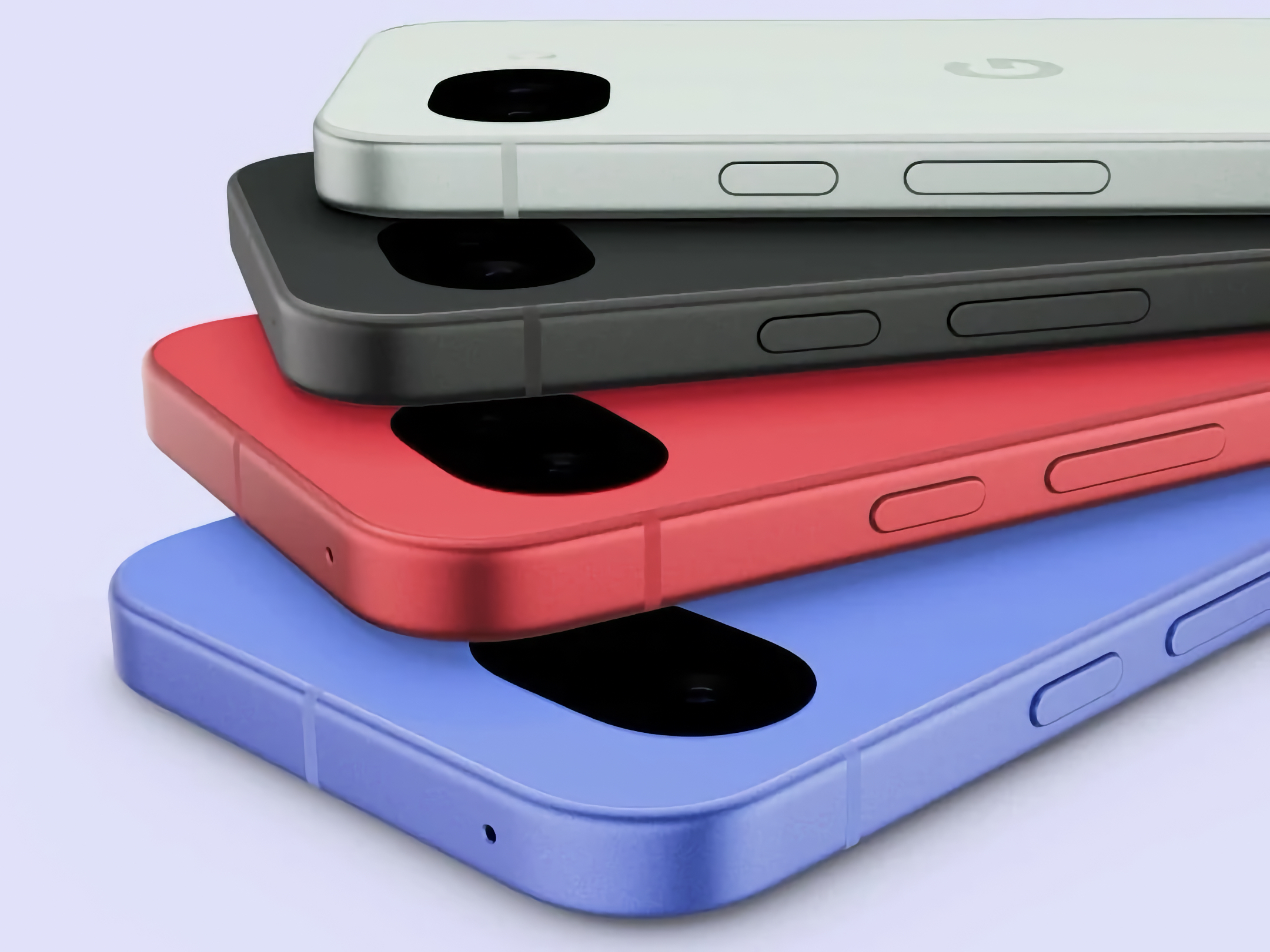
Design-wise, Google flattened things out. The back is completely flat, and the camera bar flows more naturally into the chassis instead of looking like a bolted-on strip. The frame is satin-finish 100 percent recycled aluminum, paired with an 81 percent recycled plastic back. Google is also highlighting the use of recycled cobalt, copper, gold, and tungsten, clearly trying to appeal to buyers who care about sustainability without making it the only talking point.
The Pixel 10a comes in Lavender, Berry, Fog, and Obsidian. As usual, Google mixes safe and playful. None of the colors look wild, but they are distinct enough to avoid feeling generic.
Durability gets a boost this time around. The phone carries an IP68 rating for water and dust resistance, and the front is protected by Corning Gorilla Glass 7i. The 6.3-inch Actua display is said to be 11 percent brighter than the previous generation, which should make outdoor use a bit less frustrating. Battery life is rated at over 30 hours, or up to 120 hours with Extreme Battery Saver turned on. Charging speeds have improved compared to the Pixel 9a, although this is not a phone that is chasing ultra-fast charging headlines.
Where Google really leans in, as always, is the camera. The Pixel 10a features a 48MP main camera and a 13MP ultrawide, and Google claims it is the best camera under $500. Night Sight and Macro Focus are here, but the bigger story is the expansion of AI-driven tools. Auto Best Take blends multiple frames to make sure everyone looks their best in group photos. Camera Coach, powered by Gemini models, offers step-by-step guidance on lighting and composition. Add Me lets you insert yourself into a group shot after the fact, which feels very on-brand for a company that prefers computational fixes over reshoots.
Under the hood, the Tensor G4 chip unlocks the full Gemini experience, including Gemini Live for conversational AI, Circle to Search, Call Screen, and Hold For Me. Satellite SOS is also making its way to the A-series for the first time, which could matter more than any photo trick if you ever find yourself without service in an emergency.
The Pixel 10a officially goes on sale March 5 for $499, but you can preorder now on Amazon here and get a bonus $100 gift card.
Here’s the deal, folks. For $499, this is a good deal. You are getting long-term support, a capable camera system, modern water resistance, and the same AI features Google keeps promoting on its higher-end phones. For someone already comfortable with Android, especially a clean Google-first experience, the Pixel 10a makes a lot of sense.
But it still is not an iPhone.
That is not about raw specs. It is about ecosystem gravity. Apple continues to dominate mindshare in the United States with iMessage, FaceTime, retail presence, resale value, and tight integration across devices. A discounted iPhone in the same price range will still pull many buyers simply because it is an iPhone.
Google is trying to differentiate with AI, and to its credit, it is pushing those features down to a more affordable tier instead of locking them behind a $1,000 paywall. The Pixel 10a looks polished, practical, and thoughtfully updated. It probably delivers everything most people actually need in a phone.
Yet if the goal is to sway die-hard iPhone users, I am not convinced this is the device that does it. It is a strong midrange Android phone, maybe even one of the better ones this year. It just is not going to rewrite the broader smartphone hierarchy.
As an Amazon Associate I earn from qualifying purchases. Some links in this article may be affiliate links. If you click one and make a purchase, I may receive a small commission at no extra cost to you. This helps support NERDS.xyz.
Support independent tech journalism
NERDS.xyz is independently owned and operated. If you enjoy my coverage of Linux, AI, hardware, cybersecurity, and tech culture, consider supporting the site on Ko-fi.
Support NERDS.xyz