

HighPoint has announced the Rocket 7634D, a new PCIe Gen5 external host interface card that it says is the first of its kind to deliver full, independent Gen5 x16 bandwidth over an external CopprLink connection. In plain terms, this card is meant to let servers and workstations push PCIe devices outside the chassis without giving up performance along the way.
External PCIe expansion has always involved tradeoffs. Tunneling, proprietary links, or shared bandwidth often mean GPUs, accelerators, or NVMe storage never quite run at native speed. HighPoint is clearly trying to position the Rocket 7634D as an answer to that problem, especially for AI, HPC, and professional media workflows where every lane matters.
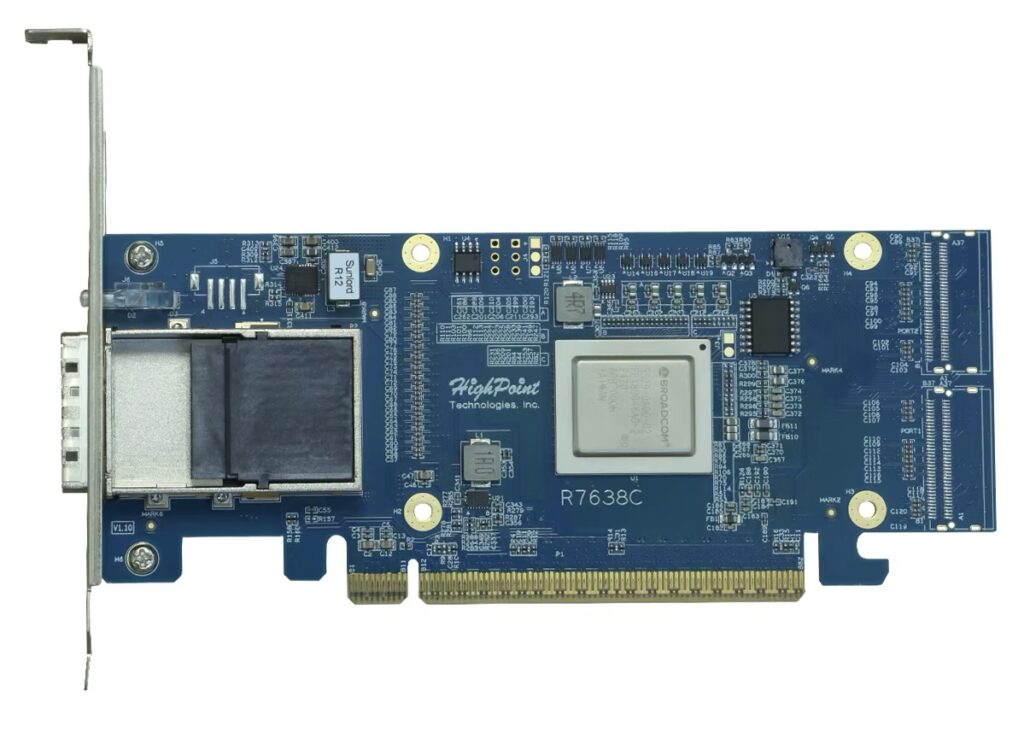
At its core, the Rocket 7634D is built around a PCIe Gen5 switch that can expose a full x16 Gen5 link to external devices. That translates to up to 64GB per second of bidirectional bandwidth, which is exactly what you would expect from a direct internal slot. The idea is simple but ambitious. Plug this card into a server or workstation, connect it to a CopprLink compatible enclosure, and the external GPU or NVMe array should behave as if it were installed directly on the motherboard.
HighPoint is leaning heavily on compliance with the PCI SIG CopprLink specification. That matters because CopprLink is designed as an open standard for external PCIe connectivity, rather than a vendor specific workaround. In theory, this should mean better interoperability, predictable signal integrity at Gen5 speeds, and fewer unpleasant surprises when mixing hardware from different vendors. For enterprise buyers who plan hardware refresh cycles years in advance, that standards based approach is not a small detail.
The Rocket 7634D is positioned as a professional grade host interface card, not a consumer add in. It is meant to sit in industrial servers, workstations, and dense rackmount systems where internal expansion slots are already spoken for. By pushing GPUs, accelerators, or NVMe storage into external enclosures, organizations can scale compute or storage without ripping apart their existing infrastructure.
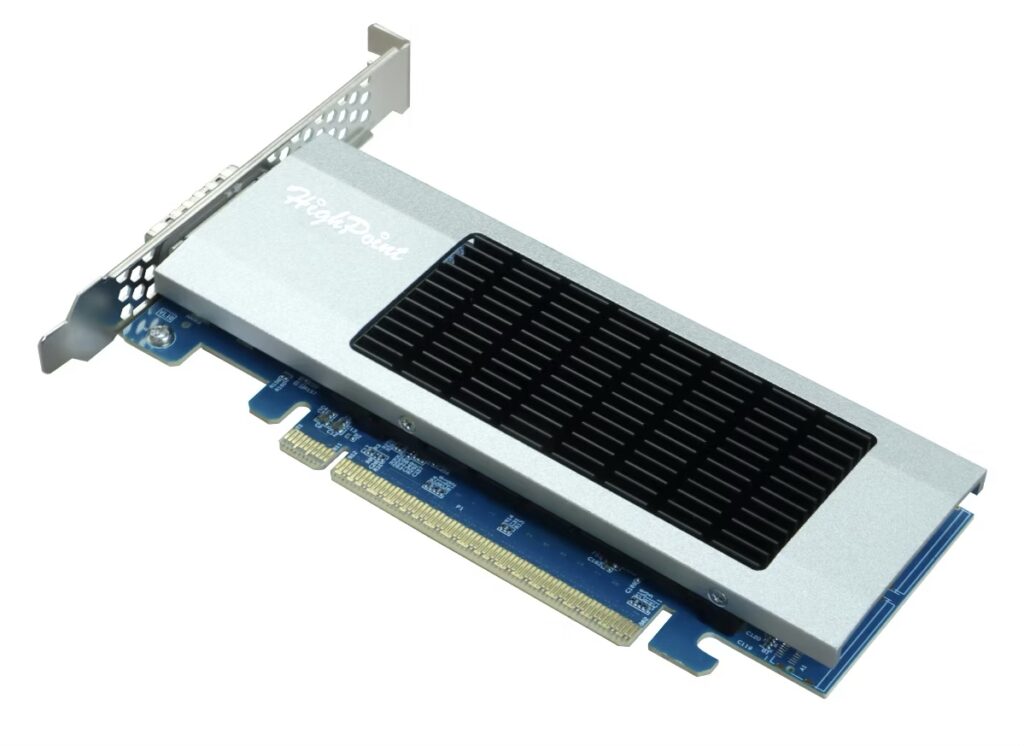
HighPoint highlights use cases like external GPU expansion for AI training and inference, as well as external NVMe JBOF systems for databases and analytics. In both cases, the pitch is the same. You get direct attached Gen5 performance, not a shared or bottlenecked approximation of it. If that holds up in real world deployments, it could be appealing for shops that need flexibility without sacrificing throughput.
Physically, the Rocket 7634D uses a low profile form factor, which makes sense given its target audience. Space constrained servers and high density racks rarely have room for full height cards, and this design choice suggests HighPoint is thinking about OEMs and system integrators, not just end users. The company also says firmware customization is supported, which hints at tailored deployments in embedded or specialized environments.
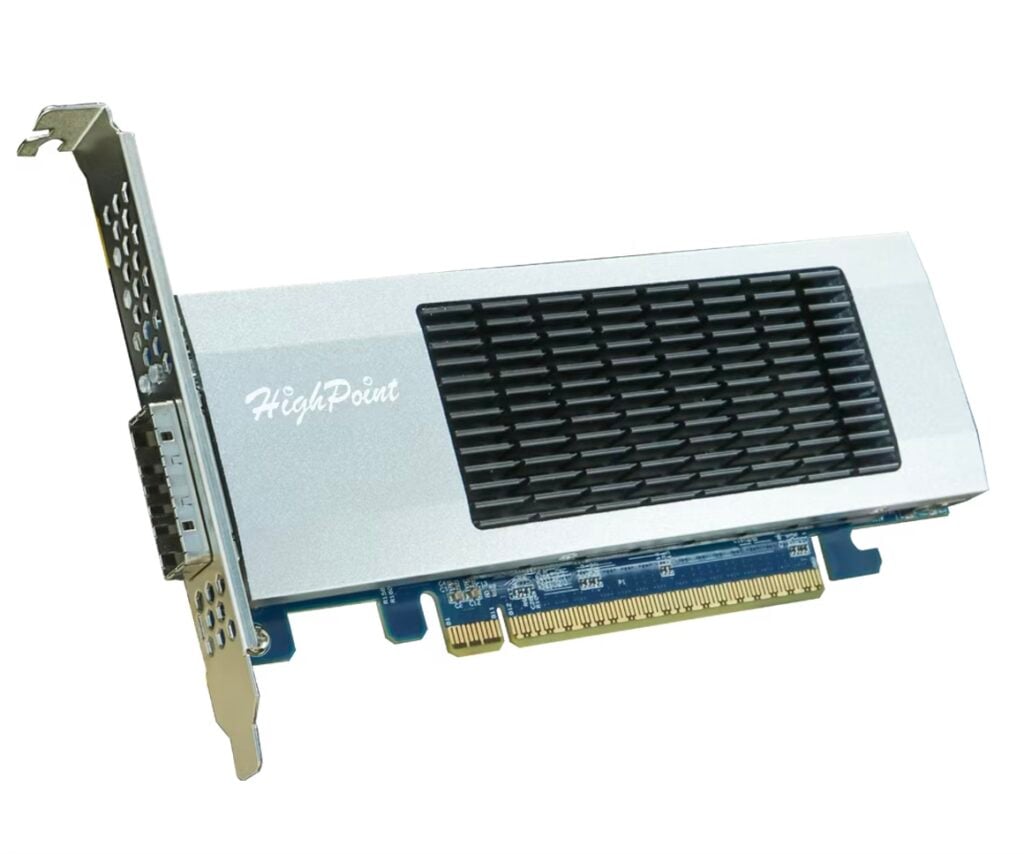
Management is handled through HighPoint’s MPT software, which provides real time visibility into link status and device health. For enterprise and industrial environments, that kind of always on monitoring is table stakes. External PCIe fabrics add complexity, and administrators will want to know immediately if a link drops or performance degrades.
Of course, there is some healthy skepticism to apply here. External Gen5 connectivity at full x16 bandwidth is ambitious, and it will depend heavily on cable quality, enclosure design, and overall system validation. Standards compliance helps, but real world results will matter more than spec sheets. Still, the Rocket 7634D appears to be aiming squarely at a problem many high end users already have.
The Rocket 7634D is available now from the company directly for $999. For organizations already investing heavily in GPUs, accelerators, or large NVMe arrays, that price may be reasonable if it truly delivers native PCIe Gen5 performance outside the chassis.
Support independent tech journalism
NERDS.xyz is independently owned and operated. If you enjoy my coverage of Linux, AI, hardware, cybersecurity, and tech culture, consider supporting the site on Ko-fi.
Support NERDS.xyz