
The AI industry keeps talking about autonomous “agents” as the next phase of artificial intelligence, but there is a growing problem lurking beneath the hype… cost. You see, as enterprises experiment with AI agents that constantly reason, analyze, and automate tasks, token usage can spiral quickly. For many businesses, cloud-only AI strategies are starting to look financially painful, especially when sensitive company data is involved.
That backdrop helps explain why Dell Technologies is making such a big push into local AI infrastructure. At Dell Technologies World, the company unveiled Dell Deskside Agentic AI as part of its expanding AI Factory with NVIDIA initiative. The idea is simple enough: give organizations the ability to run AI agents locally on powerful Dell hardware rather than constantly sending workloads to remote cloud APIs.
At the same time, OpenAI announced a new partnership with Dell aimed at bringing Codex into hybrid and on premises enterprise environments. The collaboration ties directly into Dell’s broader “AI closer to the data” strategy.
Codex has apparently become one of OpenAI’s fastest-growing enterprise products, with the company claiming more than 4 million developers now use it every week. While many folks still think of Codex primarily as a coding assistant, OpenAI says businesses are increasingly using AI agents for much broader tasks, including report preparation, product feedback analysis, lead qualification, workflow coordination, and internal knowledge retrieval.
The challenge, of course, is that enterprises typically do not want all of that sensitive data floating endlessly through third-party cloud systems. That is where Dell enters the picture.
Under the partnership, Codex will integrate with Dell AI Data Platform infrastructure so organizations can connect AI agents directly to internal repositories, business systems, documentation, operational data, and software projects already living on premises. OpenAI and Dell are also exploring how Codex, ChatGPT Enterprise, and API-based AI tools can interface with Dell AI Factory infrastructure for testing, deployment, orchestration, and large-scale enterprise AI workloads.
For Linux and infrastructure nerds, the more interesting aspect may actually be the local deployment angle rather than the AI buzzwords themselves. Dell says NVIDIA OpenShell support now stretches across its AI Factory ecosystem, from deskside workstations to PowerEdge XE servers running Canonical Ubuntu and Red Hat AI platforms.
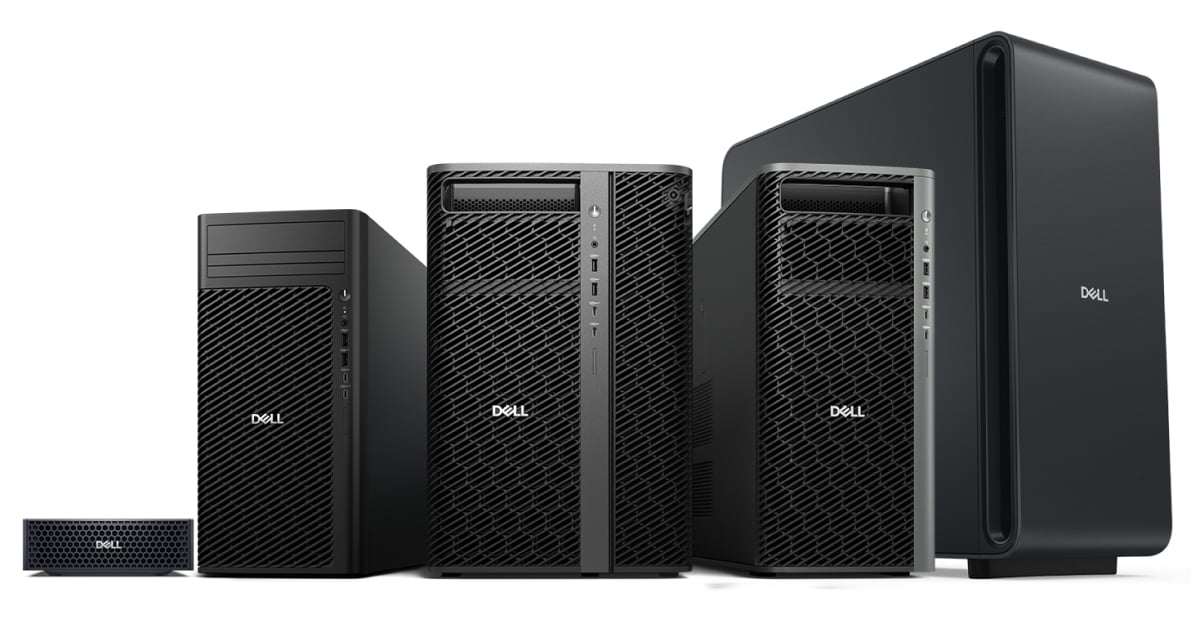
Dell is also introducing several workstation configurations aimed at agentic AI workloads of different sizes. The compact Dell Pro Max with GB10 targets smaller deployments, while larger Dell Pro Precision 9 towers can scale up with as many as five NVIDIA RTX PRO Blackwell GPUs. At the high end sits the Dell Pro Max with GB300 for extremely large AI models approaching frontier-scale workloads.
Dell claims businesses could potentially cut AI spending by up to 87 percent over two years versus relying entirely on cloud APIs. Whether those savings materialize will obviously depend on workload size, electricity costs, hardware refresh cycles, staffing, and how aggressively organizations actually deploy AI agents.
There is still a lingering question surrounding all of this agentic AI enthusiasm, however. Many enterprises are barely comfortable with generative AI chatbots today, let alone handing important operational workflows over to autonomous multi-step AI systems. The tech industry is clearly betting heavily that AI agents become commonplace, but it remains to be seen how quickly companies will move from experimentation to genuine large-scale deployment.
Still, Dell’s approach probably feels more grounded than some of the “AI everything” messaging elsewhere in the market. Instead of pretending the cloud solves every problem, Dell is leaning into a reality many enterprises already understand: keeping workloads local can sometimes be cheaper, safer, and easier to govern.
Support independent tech journalism
NERDS.xyz is independently owned and operated. If you enjoy my coverage of Linux, AI, hardware, cybersecurity, and tech culture, consider supporting the site on Ko-fi.
Support NERDS.xyz