
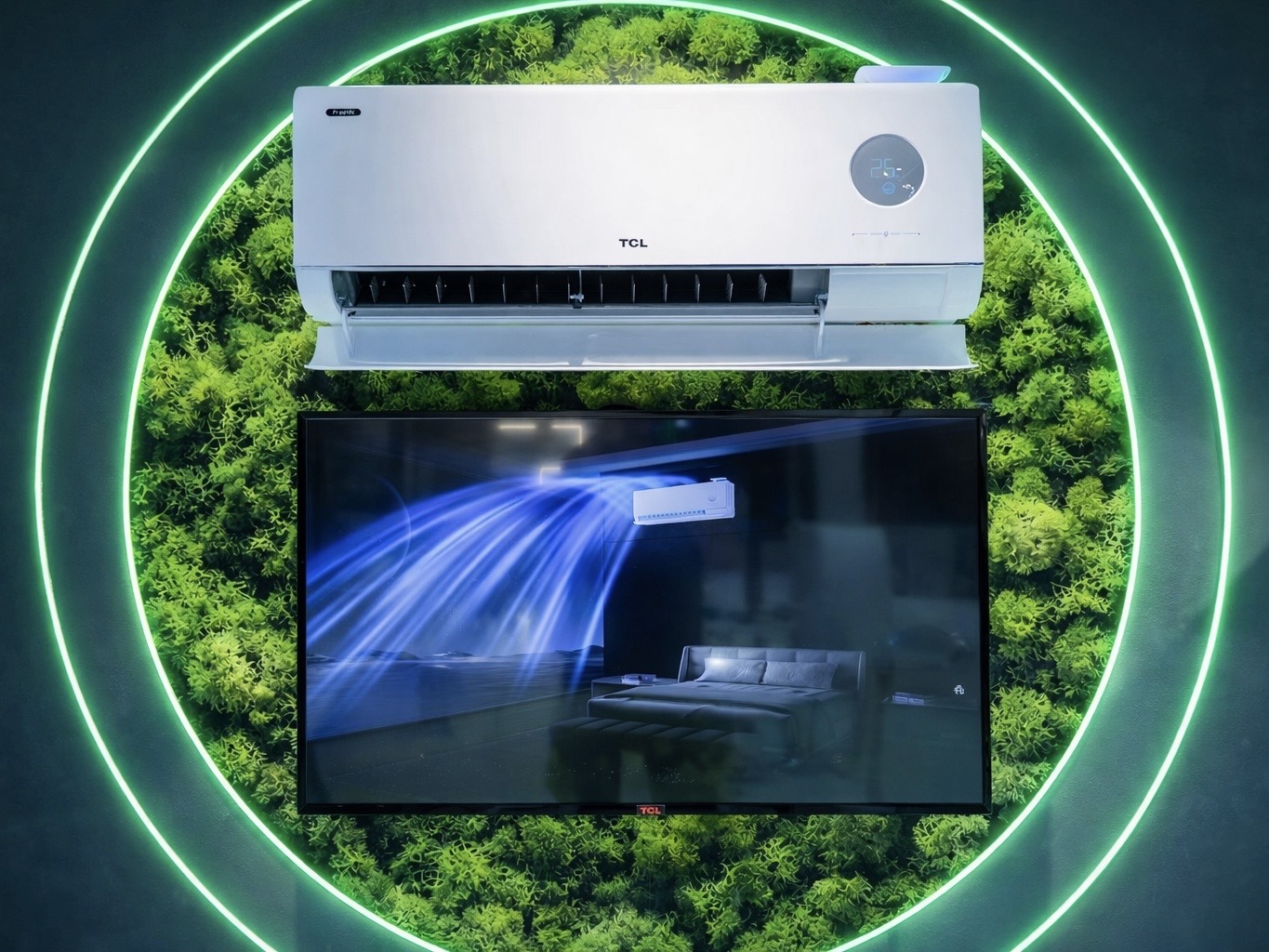
I’ll be honest, when I hear “AI-powered air conditioner,” I don’t exactly get excited. Cooling a room isn’t some big mystery. It’s been handled just fine for years. Yet here comes TCL at MCE 2026 leaning hard into AI like it’s the missing piece of home comfort.
To be fair, the products themselves sound pretty solid. TCL is showing off models like FreshIN 3.0, VoxIN, SaveIN, and BreezeIN. The pitch is cleaner air, better efficiency, and smarter control. That’s all good stuff. But if you strip away the AI branding, a lot of this feels like the natural evolution of air conditioners rather than anything new.
Take FreshIN 3.0. It has multi-layer filtration, real-time air quality monitoring, and can run as quietly as 16 dB. That matters. Quiet operation and cleaner air are things people actually notice. TCL also claims up to 37 percent additional energy savings with its T-AI system. Maybe that’s true, but it sounds a lot like refined automation and better sensors more than anything resembling intelligence.
VoxIN leans into voice control, including offline support. That part is actually interesting. Being able to talk to your AC without relying on the cloud is practical, faster, and avoids some privacy concerns. But calling that AI still feels like a stretch. It’s good design, not magic.
TCL also highlights extreme cold performance, saying these units can heat in temperatures as low as negative 40 degrees Celsius. That’s impressive engineering. But again, that has nothing to do with AI. Same goes for airflow tuning and quiet operation. Those are the improvements that actually make a difference.
On the commercial side, TCL is showing its Free-Match system, where one outdoor unit can connect to multiple indoor units. That’s useful for offices, retail spaces, and hotels that need flexible climate control. There’s also support for building management systems and longer duct runs, which is what decision makers actually care about.
The company keeps framing everything around AI Health, AI Voice Control, and AI Energy-Saving. Translate that into plain English and you get better air filtration, voice commands, and improved efficiency. All worthwhile features. Just not something that needed an AI label slapped on top.
None of this is to say the products are bad. They actually sound quite good. Quiet, efficient, and flexible systems are exactly what people want. But calling all of this “AI-powered” feels like marketing getting a little carried away.
At some point, an air conditioner can just be a really good air conditioner. It doesn’t need to pretend to be smart to do its job well.
Support independent tech journalism
NERDS.xyz is independently owned and operated. If you enjoy my coverage of Linux, AI, hardware, cybersecurity, and tech culture, consider supporting the site on Ko-fi.
Support NERDS.xyz