
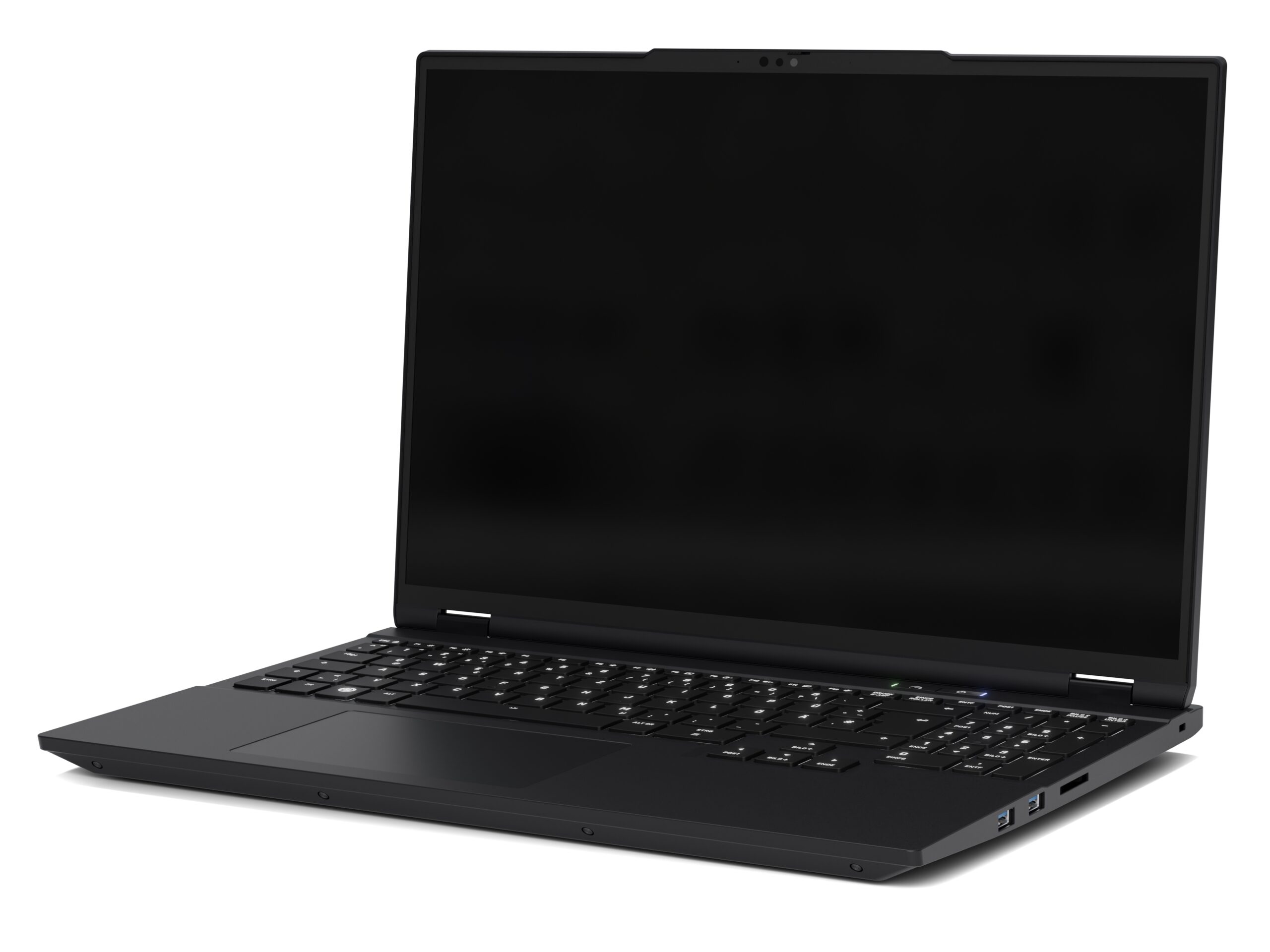
If you have been waiting for a thin and light Linux laptop that does not ask you to choose between your workload and your gaming habit, TUXEDO Computers has something worth getting excited about. The company today announced the InfinityBook Max 16 in its AMD configuration, pairing up to a Ryzen AI 9 HX 370 and NVIDIA GeForce RTX 5070 inside a full-metal chassis that weighs just over 4.4 lbs (2 kg). It ships with Linux right out of the box.
That last part matters, folks. This is not a Windows machine with a “works on Linux” disclaimer buried somewhere on a support page. TUXEDO builds these laptops specifically for Linux users, pre-installs drivers, ships its own in-house developed apps for hardware control, and backs it all with Linux-trained customer support. You can get it with TUXEDO OS or Ubuntu 24.04, both with optional full disk encryption, and yes, Windows 11 is also available if you need it. But let’s be honest: if you are buying a TUXEDO, you know what you are here for.
The InfinityBook Max 16 is built around AMD’s Ryzen AI 300 series processors, a family designed to balance strong performance with low power draw. The entry point is the Ryzen AI 7 350, an 8-core chip that handles up to 16 threads at anywhere between 10 and 90 watts. That is more than enough muscle for everyday tasks and then some. Step up to the Ryzen AI 9 365 and you get 10 cores with roughly 15 percent better multi-core throughput at the same power envelope. The top-shelf Ryzen AI 9 HX 370 adds two more cores and another 15 percent gain over that.
The “AI” in the name is not just marketing dressing. Each chip carries AMD’s dedicated neural processing unit for running AI workloads locally, including image generation, text generation, AI assistant features, and similar tasks, without phoning home to a cloud server. The AI 7 350 handles up to 66 trillion operations per second, the AI 9 365 pushes 73 TOPS, and the HX 370 tops out at 80 TOPS. For Linux users who care about privacy, keeping that compute on-device is a genuine advantage.
On the graphics side, buyers can choose between the NVIDIA GeForce RTX 5060 or the RTX 5070, which TUXEDO says delivers roughly 15 percent more performance than the 5060. Both cards land in mid-range territory and offer approximately three to four times the graphics horsepower of the CPU-integrated Radeon 890M. That puts serious creative and gaming workloads within reach. The Total Graphics Power can be adjusted within NVIDIA’s official range using the TUXEDO Control Center: 45 to 115 watts for the RTX 5060 and 50 to 115 watts for the RTX 5070, letting you dial in performance against fan noise according to your situation.
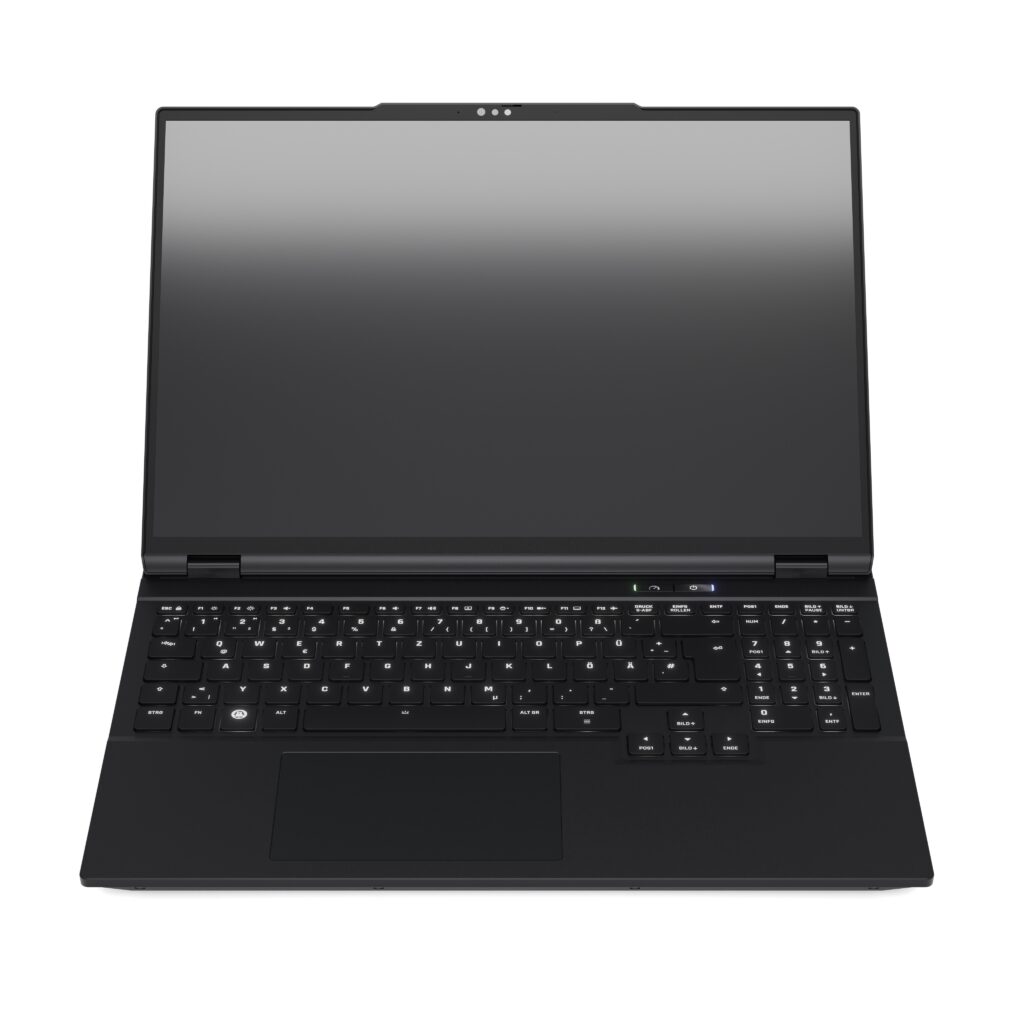
The display is a 16-inch, 16:10 panel covering 100 percent of the DCI-P3 color gamut, which is about 25 percent wider than sRGB. At 500 nits of brightness and a 300 Hz refresh rate, it is equally suited for color-accurate design work and high-frame-rate gaming. The display lid tilts a full 180 degrees, handy for laptop stands and conference room setups alike, and a physical privacy shutter covers the 1080p webcam when you would rather not worry about it.
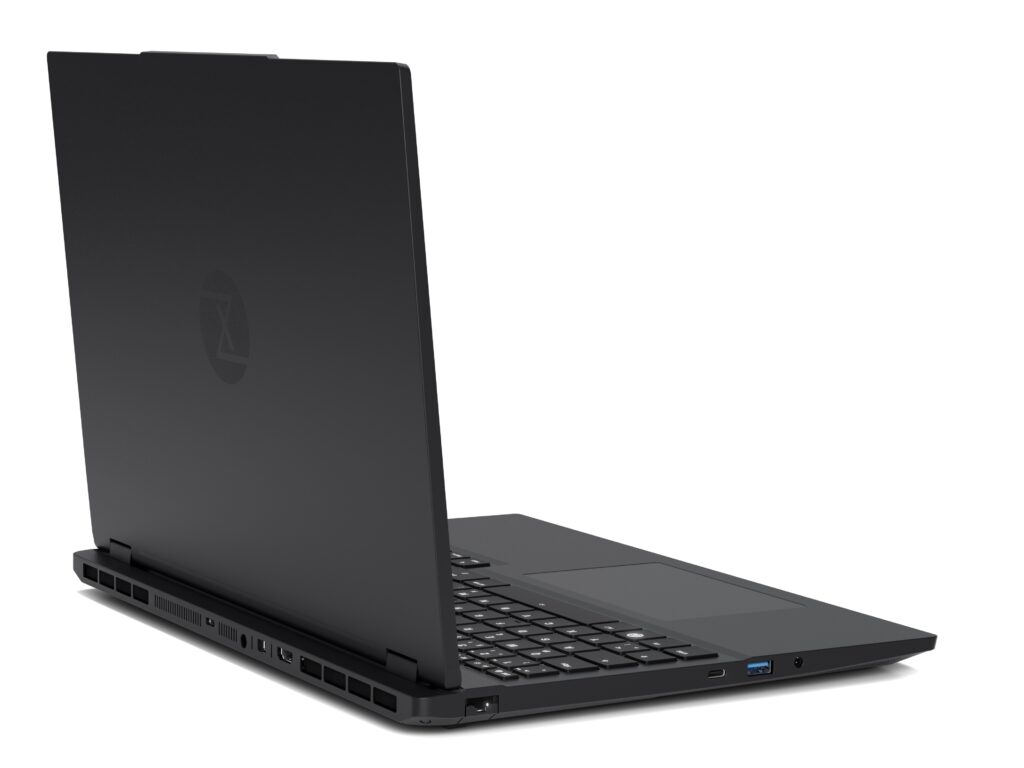
The chassis is all aluminum and houses a 99 Wh battery, the largest capacity you can put in a commercial laptop without running into airline restrictions. TUXEDO rates it for up to 7 hours of Wi-Fi video streaming. Charging is handled over USB-C at up to 140 watts, and a compact 240 W GaN power supply is included for when you need to uncork full performance.
Speaking of connectivity, the InfinityBook Max 16 covers the bases well. You get USB4, two USB-C ports (both supporting Power Delivery at 140 W), three USB-A ports, Mini DisplayPort, and HDMI 2.1, meaning you can drive up to four external monitors simultaneously. Monitor and power ports are positioned at the rear of the machine for cleaner cable management, which is a thoughtful touch. Internally, two slots accept up to 128 GB of DDR5-5600 RAM, and storage scales up to 8TB across one PCIe 5.0 and one PCIe 4.0 slot, both user-accessible and upgradeable.
Cooling is handled by an 8 mm low-profile system, one millimeter thicker than the InfinityBook Pro 15’s cooler, capable of dissipating up to 160 combined watts from the CPU and GPU at full fan speed. TUXEDO offers a useful size comparison: a 1-euro cent coin measures 16 mm in diameter, double the thickness of this cooler. If acoustics are your priority, the company points to its Stellaris 16, which uses 12 mm cooling and runs notably quieter at comparable performance levels.
The keyboard features a color-adjustable backlight, offset full-size arrow keys for easier navigation, and a full number pad. Small details, sure, but they add up when you are spending long hours at the machine.
Pre-orders are open now, with shipping expected to begin at the end of March. The base configuration includes a 100 percent DCI-P3 display, Ryzen AI 7 350, GeForce RTX 5060, 16 GB DDR5-5600 RAM (two 8 GB sticks), a 1TB Western Digital SSD, and TUXEDO OS pre-installed, starting at 1,470 EUR, excluding VAT and import duties.
Support independent tech journalism
NERDS.xyz is independently owned and operated. If you enjoy my coverage of Linux, AI, hardware, cybersecurity, and tech culture, consider supporting the site on Ko-fi.
Support NERDS.xyz
Nice to know that Tuxedo is still going strong!