
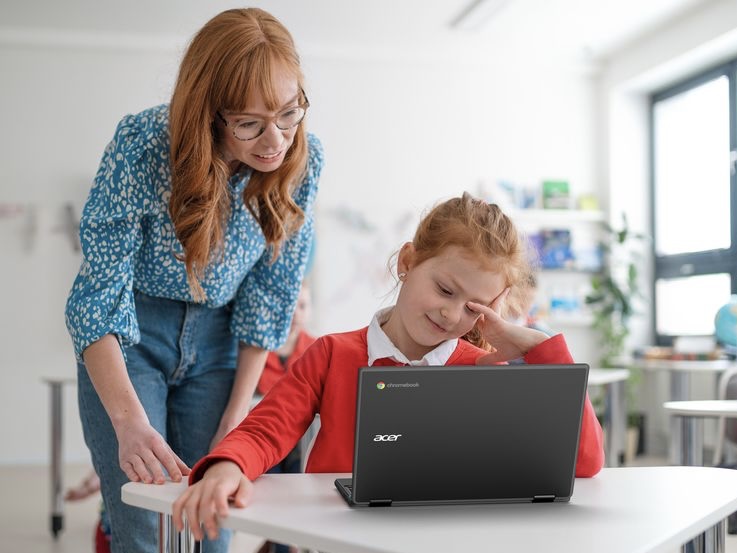
Acer is leaning hard into education again, and this time it is doing it with Arm power. The company just introduced two new student-focused Chromebooks, the Acer Chromebook 311 and Acer Chromebook Spin 311, both built around the MediaTek Kompanio 540 processor. These are the first Acer education Chromebooks to use this chip.
At a glance, these machines look like a continuation of Acer’s long-running school strategy, but there are some meaningful upgrades here. The Kompanio 540 is designed for efficiency first, and Acer is pairing it with fanless designs that promise up to 15 hours of battery life. That matters in schools where devices are shared, carts are common, and chargers seem to disappear constantly. A Chromebook that can survive a full day and then some is still a big deal in education, even in 2026.
The Acer Chromebook 311 sticks with a traditional clamshell design. It is compact, light, and clearly meant for younger students who just need something simple that works. The Spin 311 adds a 360-degree hinge, letting it flip into tablet mode for reading, drawing, or taking notes. That convertible design is still popular in classrooms where teachers want flexibility without managing multiple device types.
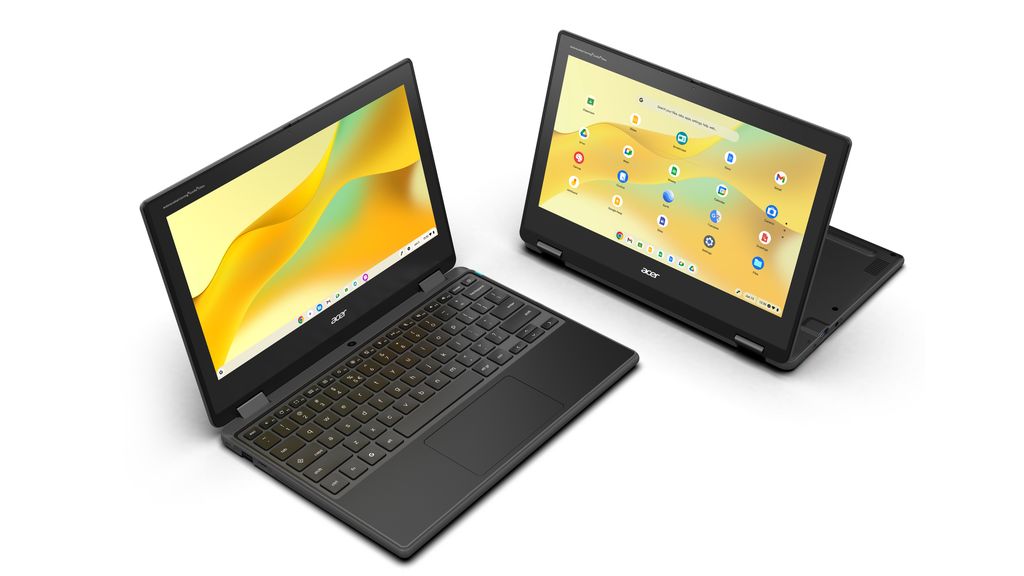
Both models use an 11.6-inch HD IPS display, which is fine for schoolwork, even if it is not going to impress anyone used to higher resolution panels. The Spin model can be configured with Gorilla Glass and antimicrobial coating, which is the kind of practical feature that makes sense when a device passes through dozens of hands every day. Acer is also offering low blue light display options, which schools increasingly ask for, even if the real-world benefits are still debated.
Inside, the Kompanio 540 uses a mix of Cortex-A78 and Cortex-A55 cores, paired with Arm Mali G57 graphics. Acer says this setup is enough for everyday school tasks, STEM apps, and even things like Minecraft Education Edition. That is probably true, though no one is pretending these are performance monsters. They are built for consistency and battery life, not raw speed, and that is the right tradeoff for classrooms.
Connectivity is another area where Acer clearly wanted to future-proof things. Both Chromebooks can be configured with Wi-Fi 7, which is still rare in schools but will matter over the lifespan of these devices. Bluetooth 5.3 support is also included, which helps with newer accessories and headsets that schools are slowly rolling out.
Durability is where these Chromebooks really show their purpose. Acer built them to meet MIL-STD 810H standards, and the designs include reinforced corners, shock-absorbing bumpers, and internal structures meant to survive drops from desk height. The keyboards are spill-resistant and include a drainage system that can handle a full cup of water, which feels less like a feature and more like a necessity in elementary schools.
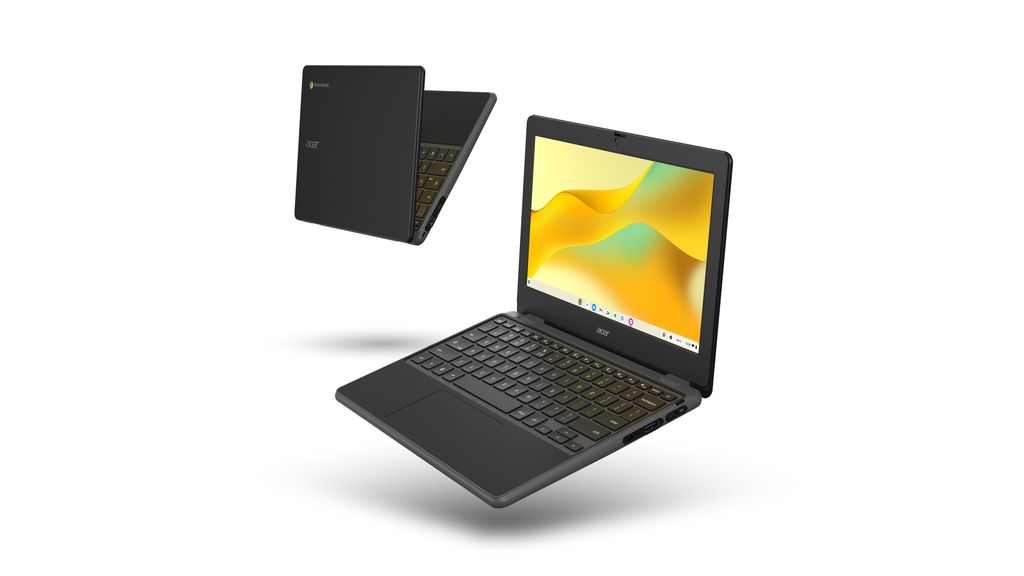
Acer also put thought into repairability, something IT departments care deeply about. The keyboards can be replaced by removing just two screws, and the USB-C ports are modular, making fixes cheaper and faster. That directly lowers long-term costs, which is often more important to districts than the upfront price.
Sustainability is part of the story too. Acer is using post-consumer recycled plastics, reduced packaging, and energy-efficient components. The Chromebooks are EPEAT registered and certified for Energy Star and TCO compliance, which helps schools meet procurement requirements without extra paperwork.
On the software side, these Chromebooks are available with Chrome Education Upgrade, which enables zero-touch enrollment and centralized management. For IT teams managing thousands of devices, that kind of automation is what makes Chromebooks appealing in the first place. Students log in, and everything just works, which is exactly what schools want.
Pricing and availability put these squarely in the mainstream education market. The Acer Chromebook 311 is expected to start at $499.99 in North America when it arrives in March 2026. The Spin 311 will start higher at $579.99, reflecting its convertible design and touch features.
Look, these are not flashy Chromebooks, and quite frankly, that is the point. Acer is focusing on reliability, battery life, and manageability, not gimmicks. For schools that need devices to last years instead of semesters, the Chromebook 311 and Spin 311 look like safe, practical bets.
Support independent tech journalism
NERDS.xyz is independently owned and operated. If you enjoy my coverage of Linux, AI, hardware, cybersecurity, and tech culture, consider supporting the site on Ko-fi.
Support NERDS.xyz