Artificial intelligence is making life increasingly difficult for cybersecurity professionals. Hackers can use AI to discover and exploit vulnerabilities faster than organizations can patch their systems. Cisco and OpenAI think Linux can help turn the tables on attackers, however, with a new open source project called Shirudo.
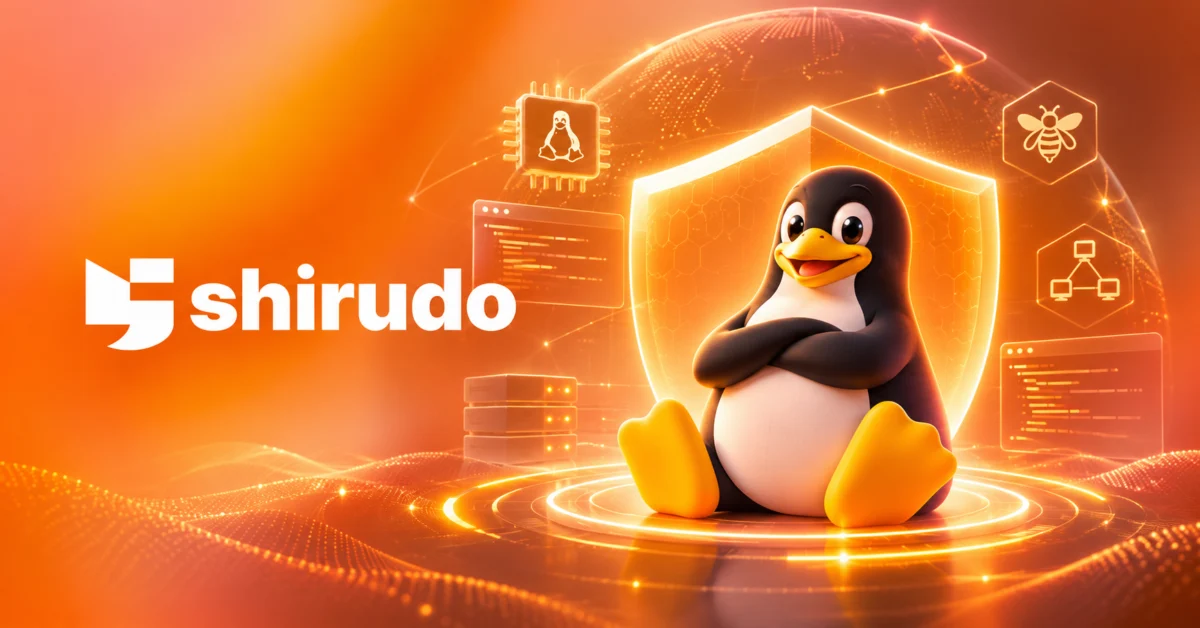
Announced today, Shirudo takes its name from the Japanese word for shield. The project is designed to protect running Linux systems against vulnerabilities before permanent security patches can be deployed, potentially buying administrators valuable time without forcing them to reboot servers or interrupt critical services.
Anyone who has managed production infrastructure knows that installing a security update is not always as simple as clicking a button. Patches must be tested for compatibility, maintenance windows need to be scheduled, and unexpected downtime can cost businesses a lot of money. Unfortunately, hackers are not particularly interested in accommodating anyone’s maintenance schedule.
Shirudo leverages eBPF, a technology that allows specialized programs to execute within the Linux kernel without modifying its source code. AI agents can use this capability to investigate vulnerabilities, develop temporary protections known as shields, and test whether those protections stop malicious activity without interfering with legitimate workloads.
In a controlled experiment detailed by OpenAI, the companies used Codex to generate a shield against the Java4Shell vulnerability. The protection was attached to a running Elasticsearch process, where it successfully rejected malicious input without requiring the service to restart. Cisco also reports successful testing against a recent PHP vulnerability.
What makes Shirudo particularly interesting is that administrators are not expected to simply trust whatever code an AI model spits out. Operators retain control over deployment, and protections can be evaluated before enforcement. Shields are cryptographically signed, while the Linux kernel’s eBPF verifier checks programs against established safety requirements.
Shirudo also incorporates Trusted Platform Module (TPM) technology to provide hardware-backed evidence of which protections have been installed or removed. This could help organizations independently verify the security posture of their infrastructure rather than relying exclusively on what a potentially compromised machine reports.
Of course, there is something a little unsettling about fighting AI-powered hackers with AI-generated security code. Artificial intelligence can make mistakes, and a poorly designed protection could conceivably interrupt the very services it is supposed to safeguard. Passing the kernel’s safety checks does not necessarily mean a shield will behave correctly under every production workload.
That is why the open source aspect of Shirudo is so important. Rather than asking customers to put their blind faith in a proprietary security product, Cisco and OpenAI are inviting developers and researchers to inspect the code, identify shortcomings, and contribute improvements. The project uses the BSD 2-Clause license, with its BPF programs available under both BSD and GPL licensing terms.
The longer-term ambitions go well beyond temporarily mitigating vulnerabilities. Cisco and OpenAI envision infrastructure that can adapt to emerging threats, automatically maintain application permissions, contain compromised systems, and help restore services to a verified, trustworthy state. Achieving all of that in complex enterprise environments will undoubtedly be easier said than done.
For now, Shirudo should not be viewed as an excuse to stop installing security updates. Temporary protections are just that. The real value lies in narrowing the dangerous window between the discovery of a vulnerability and the deployment of a permanent fix.
Developers and Linux enthusiasts interested in experimenting with Shirudo can find the source code on GitHub. Cisco and OpenAI are also encouraging contributions that test protections against different kernel builds and identify instances where shields interfere with legitimate activity.
Ultimately, it is encouraging to see two technology giants investing in an open source approach to cybersecurity with Linux at its foundation. While much of the conversation surrounding AI and security has understandably focused on the damage these models could inflict, Shirudo offers a glimpse of how the same technology might be used to protect us.
Hackers are increasingly operating at machine speed. It is about time defenders had the opportunity to do the same.
Support independent tech journalism
NERDS.xyz is independently owned and operated. If you enjoy my coverage of Linux, AI, hardware, cybersecurity, and tech culture, consider supporting the site on Ko-fi.
Support NERDS.xyz