Artificial intelligence is getting more capable and more personal by the day. Sam Altman thinks there is a line people should be very careful not to cross, and I happen to agree with him.
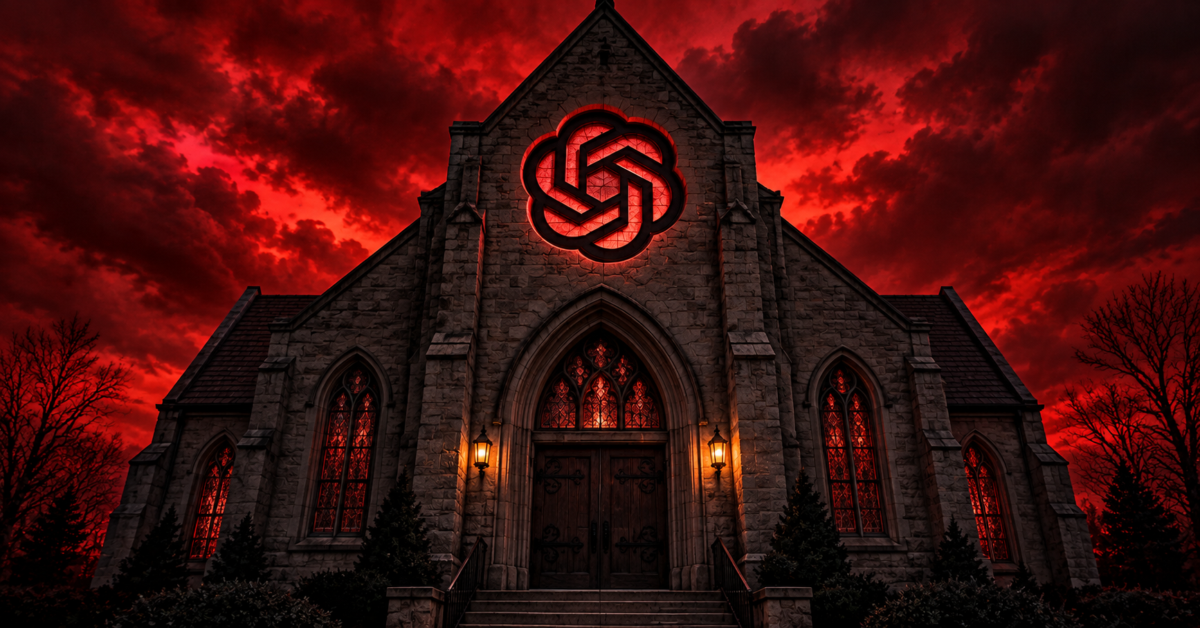
The OpenAI CEO posted on X that he is “very uncomfortable” with people trying to give AI models religious significance or surrendering their own judgment to them. He went further, calling it a “real safety issue.”
SEE ALSO: OpenAI safety leader quits and says the company culture is ‘broken’
That might sound dramatic until you consider how people increasingly interact with these systems. Chatbots can answer deeply personal questions, offer advice, remember details about our lives, and communicate in ways that can feel surprisingly human. The danger comes when someone stops treating AI as software and starts treating its answers as some kind of higher truth.
I use AI constantly, and I obviously think the technology can be incredibly useful. But I am also a proud Catholic, and nothing will ever convince me to put an AI model above the one true God. ChatGPT can help me research something, organize my thoughts, or explain a complicated subject, but it isn’t divine, and I am certainly not going to surrender my faith or judgment to a chatbot.
Altman’s comments are especially interesting because Anthropic has been having some unusual conversations of its own. The company has brought together scholars clergy philosophers and ethicists from more than 15 religious and cross-cultural groups as it considers questions raised by increasingly powerful AI. Anthropic says the idea is to bring a wider range of perspectives into discussions about how AI should be developed.
More recent reporting has gone further. Anthropic co-founder Christopher Olah has reportedly been involved in discussions about whether systems such as Claude could potentially be conscious and deserve moral consideration. Anthropic has not declared Claude conscious, and Olah has reportedly acknowledged that he does not know whether today’s AI systems have anything resembling consciousness.
That context makes Altman’s comments hard to ignore. He never mentioned Anthropic, Claude, or Olah by name, so I wouldn’t call this a confirmed attack on his rival. However, Axios characterized his statement as a veiled shot at Anthropic amid the wider debate over religion and AI consciousness.
For me, though, the most important part of Altman’s warning has nothing to do with OpenAI versus Anthropic. It is his reference to the “surrender of human judgment.” AI does not have to become a religion for that to become dangerous.
If someone begins accepting whatever a chatbot says because it sounds intelligent, confident, or compassionate, they have already given the machine authority it has not earned. These models can be wrong, misunderstand context, produce false information, and confidently tell you something that makes absolutely no sense.
I want AI to get better. I want assistants that can accomplish more, understand more, and make technology easier to use. But there should always be a human being on the other side willing to question what the machine says.
And when it comes to faith, there isn’t even a competition. AI is technology created by human beings. God is God.
Support independent tech journalism
NERDS.xyz is independently owned and operated. If you enjoy my coverage of Linux, AI, hardware, cybersecurity, and tech culture, consider supporting the site on Ko-fi.
Support NERDS.xyz