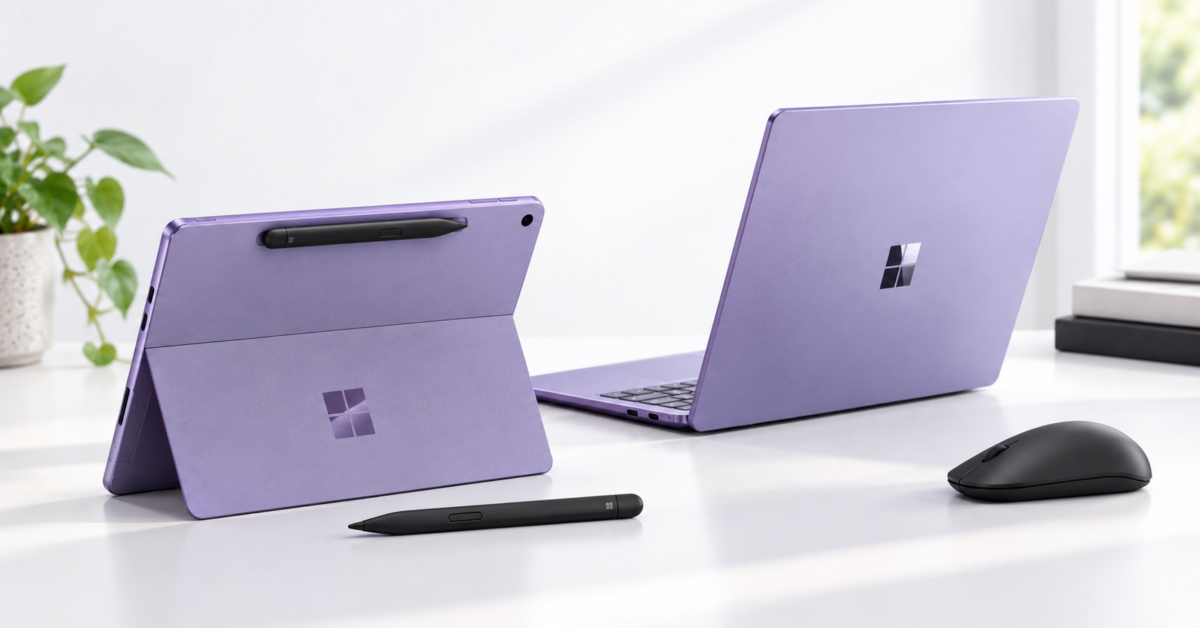
Microsoft is giving two of its smallest Windows PCs a substantial performance upgrade. The company has unveiled new versions of the Surface Pro 12-inch and Surface Laptop 13-inch, and both are moving to Qualcomm’s Snapdragon X2 Plus processor.
On paper, the improvements are pretty impressive. Microsoft says the new machines deliver up to 17 percent faster performance in Office productivity workloads, up to 18 percent better battery efficiency, more than 60 percent faster graphics, and up to 95 percent faster local AI inference on the NPU compared with the previous Snapdragon X Plus models.
Those numbers come from Microsoft’s own testing, so independent benchmarks will ultimately tell us more. Still, a graphics improvement of more than 60 percent is difficult to ignore, particularly in small fanless computers where performance and heat have traditionally required some compromises. Microsoft says it worked with Qualcomm during silicon development to tune Snapdragon X2 for thin and light PCs.
The Surface Pro 12-inch remains a thin, fanless Windows tablet that can become a laptop when paired with its optional keyboard. Beyond Snapdragon X2 Plus, Microsoft has increased display brightness by 25 percent to 500 nits and says the new model gets an additional hour of active web browsing. There is also a new black color option.
Microsoft is adding a software feature called Ink Canvas as well. The pen-focused experience lets users sketch, annotate, generate images, and summarize text while giving Copilot handwritten and visual context. Ink Canvas comes preinstalled on the new Surface Pro and will become available for other supported Windows and Surface devices on October 13. Some of its AI functionality requires an eligible Microsoft 365 subscription and is subject to usage limits.
The Surface Laptop 13-inch gets the same Snapdragon X2 Plus treatment while retaining its compact aluminum design, backlit keyboard, precision touchpad, and 3:2 touchscreen. Its display also gets the 25 percent brightness increase to 500 nits, while Microsoft claims up to 22.5 hours of battery life for local video playback. As always, actual battery life will depend heavily on what you are doing with the machine.
Personally, I love where ARM-based Windows PCs are nowadays. The early Windows on ARM experience could be frustrating, particularly when software compatibility entered the equation, but modern Snapdragon Windows machines are a very different story. They run great, battery life can be excellent, and the old assumption that buying an ARM PC means accepting a compromised Windows experience feels increasingly outdated.
Frankly, I think it is time for the PC world to start moving on from x86. Intel and AMD are not going anywhere overnight, nor should they, but ARM has demonstrated that Windows PCs do not need to remain permanently tied to the architecture that has dominated the platform for decades. Snapdragon X2 machines like these new Surface models make that transition increasingly easy to imagine.
There is also something appealing about Microsoft putting this much performance into its smaller machines. Bigger laptops have plenty of room for cooling and large batteries, but a thin 12-inch tablet and compact 13-inch notebook benefit considerably from a processor architecture focused on efficiency.
Pricing, however, keeps these firmly in premium territory. The Surface Pro 12-inch starts at $1,149.99, while the Surface Laptop 13-inch starts at $1,199. Both go on sale October 13 in select markets. The Surface Pro keyboard and Slim Pen are sold separately.
Microsoft also announced a new $79.99 Surface Mouse with haptic feedback, Bluetooth 6.0, and a customizable action button. Business customers get the same October 13 availability, while the Surface Pro 12-inch will additionally offer an optional 5G configuration.
The new Surface machines are not radical redesigns, and that is probably fine. Microsoft is taking two already portable computers and giving them substantially more graphics and AI performance without abandoning their fanless designs. If Snapdragon X2 Plus delivers anything close to Microsoft’s claims in real-world testing, these could be another compelling argument that the future of Windows does not have to be x86.
Support independent tech journalism
NERDS.xyz is independently owned and operated. If you enjoy my coverage of Linux, AI, hardware, cybersecurity, and tech culture, consider supporting the site on Ko-fi.
Support NERDS.xyz