Google says it is preparing for the next chapter of its artificial intelligence momentum, but the changes announced by CEO Sundar Pichai look far bigger than a routine reorganization.
Demis Hassabis is giving up day-to-day control of Google DeepMind. Koray Kavukcuoglu is taking over its operational leadership. At the same time, longtime Google engineers Jeff Dean and Sanjay Ghemawat are leaving to start an independent company.
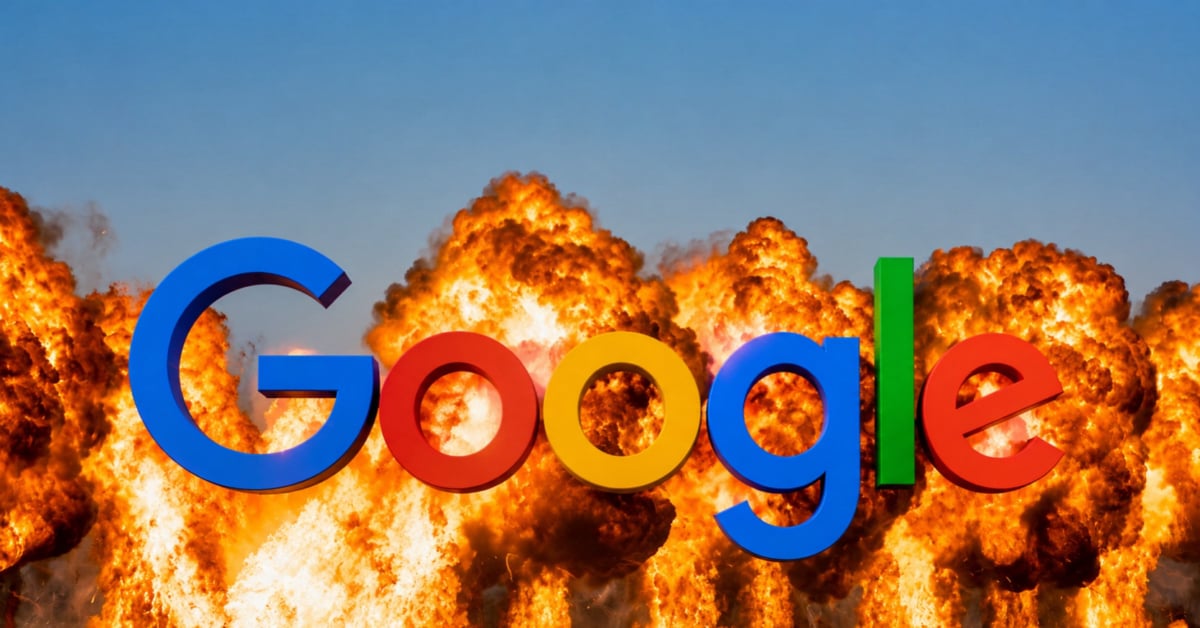
Any one of those developments would be notable. Announcing all three together amounts to a leadership bomb inside the organization responsible for much of Google’s AI future.
Hassabis will become Chair of Google DeepMind and Chief Scientist of Alphabet. He will continue advising the company on models and research, work with Pichai on artificial general intelligence strategy, and remain involved with Isomorphic Labs, Alphabet’s AI drug discovery business.
The new title carries weight, but Hassabis will no longer run Google DeepMind’s daily operations. That responsibility will fall to Kavukcuoglu, Google DeepMind’s current chief technology officer and Google’s Chief AI Architect.
As senior vice president of Google DeepMind, Kavukcuoglu will oversee Gemini model development, frontier AI research, the Gemini app, and developer teams.
He is not an outsider being brought in to fix a broken division. Kavukcuoglu has spent 13 years at DeepMind and worked on projects including WaveNet and DQN. Hassabis also says Gemini development has already been in his hands for some time.
Even so, replacing the operational leader of one of the world’s most important AI laboratories is not a minor adjustment. Hassabis has been closely tied to DeepMind since he co-founded it, and his move creates a clearer divide between Google’s long-term AGI ambitions and the teams responsible for shipping products.
The language surrounding the transition is unusually dramatic. Hassabis says AGI is “close at hand” and describes the current moment as pivotal for humanity. He argues that leaving operational management will give him more time to influence what comes next.
That could be a sensible division of labor. Running Google DeepMind while also dealing with scientific, political, and societal questions around AGI may simply have become too much for one person.
Google is also fighting on several fronts at once. It must improve Gemini, compete with OpenAI and Anthropic, expand AI services through Google Cloud, push AI deeper into Search, win over developers, and continue funding research that may not produce immediate revenue.
Splitting those responsibilities could help Google move faster. It could also create competing priorities and more distance between research, product development, and corporate strategy.
The departures of Dean and Ghemawat add another layer of uncertainty.
Dean has spent 27 years at Google and played a central role in its transition from traditional computing infrastructure to machine learning. Ghemawat worked alongside him on foundational systems including MapReduce, Bigtable, and the Google File System.
The pair will launch an independent public benefit corporation focused on machine learning, science, and engineering. Google will remain involved as a founding investor and Google Cloud partner.
That keeps the relationship alive, but Dean and Ghemawat will no longer be Google employees. Their attention will now belong to a separate organization with its own priorities.
Google is presenting the move as an extension of its research ecosystem rather than a loss. Employees, investors, and competitors may not see it that way.
The company still has plenty working in its favor. Google says the Gemini app has more than 950 million monthly users, while Gemma models have passed 900 million downloads. Gemini is also spreading through Search, Workspace, Android, Cloud, and other products.
Google is not acting from a position of desperation. It has enormous distribution, deep technical talent, its own computing infrastructure, and access to billions of users.
Still, successful companies can mishandle leadership transitions. Google now has to prove Hassabis can guide its long-term AGI strategy without becoming disconnected from the teams doing the work. Kavukcuoglu must also keep Gemini moving while competitors continue releasing new models and tools.
Calling this the next chapter of Google’s AI momentum makes the announcement sound orderly. In reality, the company has dropped a leadership bomb on the organization most responsible for its future.
The changes may produce a cleaner structure. They could also bring divided priorities, lost institutional knowledge, and confusion at the top. Google now has to prove this was a carefully planned transition rather than the start of an expensive leadership problem.
Support independent tech journalism
NERDS.xyz is independently owned and operated. If you enjoy my coverage of Linux, AI, hardware, cybersecurity, and tech culture, consider supporting the site on Ko-fi.
Support NERDS.xyz