Linux users have been waiting for the mythical Year of Linux on the Desktop for what feels like forever. David Heinemeier Hansson, better known as DHH, now thinks he can actually make it happen, and some of the biggest names in technology are putting millions of dollars behind the effort.
DHH has announced the Omacom Foundation, a new nonprofit organization created to support Omarchy, his increasingly ambitious Linux operating system. The foundation is starting with $8 million from eight founding patrons, with each contributing $1 million.
The list is difficult to ignore. Shopify CEO Tobi Lütke, Stripe CEO Patrick Collison, Dell Technologies chairman and CEO Michael Dell, Block chairman Jack Dorsey, Cloudflare CEO Matthew Prince, Oculus cofounder Brendan Iribe, 37signals CEO Jason Fried, and DHH himself are each contributing $1 million. For a desktop Linux project, that is a lot of money and an unusually influential collection of supporters.
According to DHH, the Omacom Foundation will hold the project’s trademarks, pay for infrastructure, promote its work, and support the open-source projects and developers that Omarchy depends on.
“We’re going to make the prophecy of The Year of Linux on the Desktop come true,” DHH said. “All the pieces are now in place. Time to go all in!”
Jack Dorsey’s involvement appears to be about more than simply writing a check. The Twitter cofounder responded to DHH’s announcement on X by explaining just how influential DHH’s work has been on his own companies.
“twitter and square were built upon David’s work, tools, and principles. he’s a force for good,” Dorsey wrote.
That is quite an endorsement from someone who helped build two major technology companies. It also suggests that at least some of Omarchy’s wealthy backers aren’t merely making a financial bet on another Linux distribution. They have longstanding respect for DHH’s ideas about software and computing.
What is Omarchy
If you have never heard of Omarchy, calling it simply another Linux distribution doesn’t really explain what DHH is trying to build.
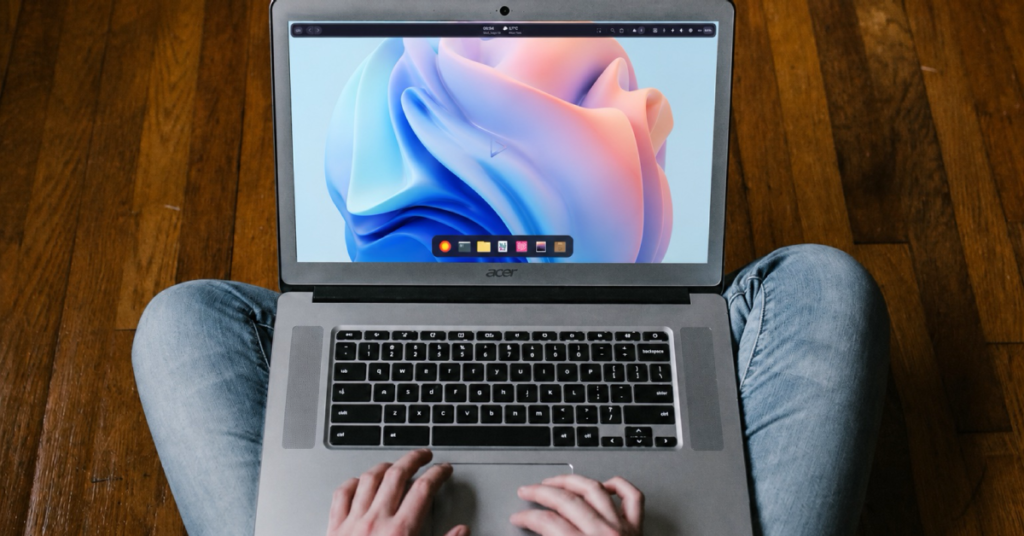
Omarchy is an Arch Linux-based operating system centered around Hyprland, a Wayland compositor and tiling window manager, and Quickshell, which is used to construct much of the desktop interface. DHH describes the combination of Arch Linux, Hyprland, and Quickshell as the three core technologies behind Omarchy.
Unlike Linux distributions designed to make Windows or macOS users feel immediately at home, Omarchy is intentionally opinionated.
The desktop relies heavily on keyboard shortcuts and automatically tiled windows. In fact, Omarchy’s own documentation says that when the system first starts, there isn’t much you can accomplish using the mouse alone. Users are instead encouraged to learn keyboard commands for launching applications, moving windows, switching layouts, and navigating the operating system.
That will undoubtedly make Omarchy intimidating for some newcomers, but that is also part of its identity. DHH isn’t trying to recreate Windows 11 with a Linux kernel underneath it.
Omarchy comes configured with software including Chromium, Neovim, Obsidian, LibreOffice, Kdenlive, and OBS Studio. It also embraces terminal applications and gives users extensive control over themes, configuration files, keyboard behavior, and the overall desktop experience.
The operating system can be installed from an ISO, either taking over an entire drive or alongside another operating system using available disk space. Full-disk encryption is enabled by default.
There is an interesting AI angle too. Omarchy treats command-line AI coding tools as first-class applications, with launchers available for services including Claude Code, OpenAI Codex, Gemini CLI, GitHub Copilot CLI, and others. Users can also install tools for running local AI models.
In other words, Omarchy isn’t really aiming to be Linux for everyone. At least not yet. It is closer to DHH’s vision of what a modern computer should be for developers and technically inclined users who are willing to learn a different way of working.
Omacom is already spending money on Hyprland
Perhaps the most encouraging part of the Omacom Foundation announcement is that DHH already has plans for some of the money.
The foundation will become the exclusive sponsor of Hyprland creator Vaxry under a three-year agreement, with an option to continue for another two years.
The sponsorship is designed to allow Vaxry to concentrate on Hyprland development without having to worry about commercial development or fundraising. Since Hyprland sits at the center of the Omarchy desktop experience, financially supporting its creator also directly benefits DHH’s operating system.
The deal will also change Hyprperks, Hyprland’s existing paid membership program. Paid subscriptions will end, and the associated benefits will become available for free. Users will still be able to make personal donations to support Hyprland development. The Omacom Foundation is expected to take over the sponsorship beginning October 10.
Look, folks, plenty of organizations announce millions in funding and attach vague promises about supporting open source. Here, we already have a specific example of money being directed toward a developer maintaining technology Omarchy depends on. That doesn’t guarantee success, of course.
Microsoft and Apple operate on financial scales that make $8 million look like pocket change. Windows also ships on an enormous number of new PCs, while macOS comes attached to Apple’s tightly controlled hardware ecosystem. Omarchy has neither advantage.
Its keyboard-heavy, tiling-window approach isn’t likely to convince the average person buying a laptop at Best Buy to abandon Windows tomorrow either. Still, mainstream doesn’t necessarily have to mean replacing Windows.
If Omarchy can attract developers, Linux enthusiasts, creators, and people increasingly frustrated with the direction of Windows and macOS, it could build a meaningful desktop audience. Funding the open-source components underneath it may also benefit people who never install Omarchy at all.
And then there is Michael Dell. Seeing the founder and CEO of one of the world’s largest PC companies put $1 million behind a project openly talking about taking Linux desktop computing further is notable on its own.
Linux has experienced countless attempts to break through on the desktop, and most have failed to seriously threaten Windows or macOS. Omarchy could ultimately become another entry on that very long list.
But DHH now has $8 million, several extremely wealthy technology executives behind him, and a foundation already preparing to fund one of the developers responsible for a core part of the operating system.
The Year of Linux on the Desktop still isn’t here. DHH apparently intends to spend some serious money trying to hopefully change that.
Support independent tech journalism
NERDS.xyz is independently owned and operated. If you enjoy my coverage of Linux, AI, hardware, cybersecurity, and tech culture, consider supporting the site on Ko-fi.
Support NERDS.xyz