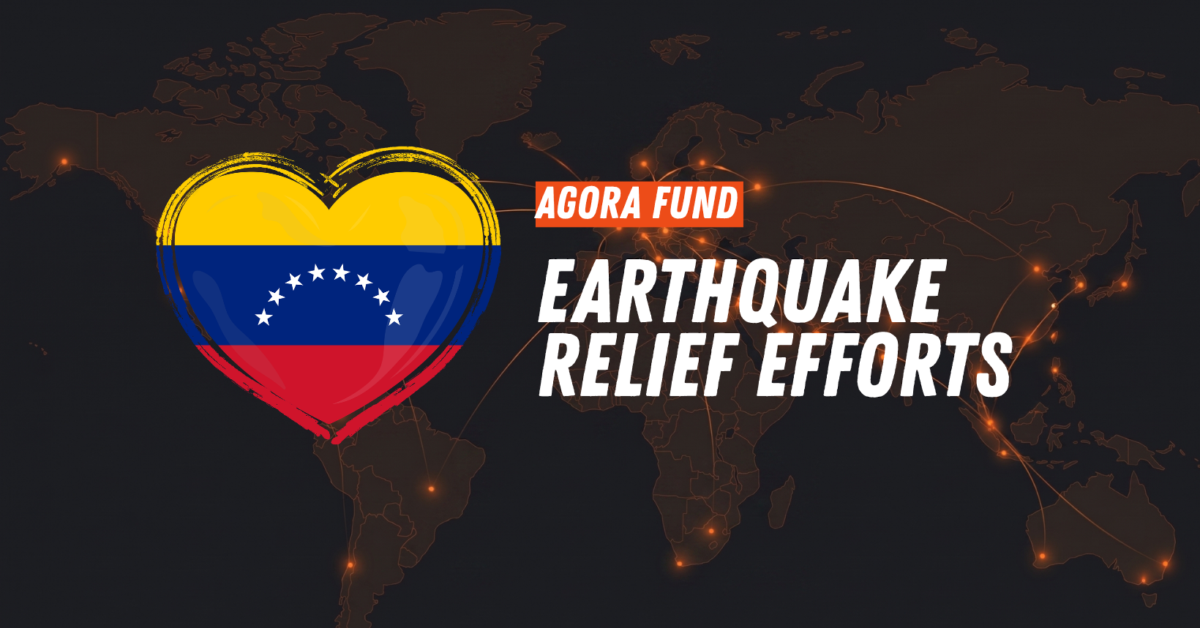
Bitcoin is often discussed as an investment, and yeah, it totally can be. But let’s not forget that it is also money that can be quickly transferred to those in need. An earthquake relief effort in Venezuela is putting it to work as exactly that.
You see, grassroots organizers are using Agora, a Bitcoin-based crowdfunding platform, to raise funds for medical care, displaced children, emergency communications, and other recovery efforts.
The campaigns allow donors around the world to send Bitcoin directly to local groups without relying on a bank, international payment processor, or large foreign organization to manage the money.
ALSO READ: Before buying Bitcoin many people now ask AI instead of Google
For volunteers working inside shelters and damaged communities, that direct access can make an enormous difference.
“I need to set up a crowdfunder, but going through relatives abroad means high fees and delays at every step,” one Venezuelan organizer said. “Sometimes the money takes weeks to actually reach us.”
Traditional international aid remains important, but much of it moves through large NGOs and established organizations. Smaller groups, including volunteer doctors, students, neighborhood organizers, and local support networks, can struggle to raise money on their own.
Agora is designed to give those groups another option. The platform allows organizers to launch fundraisers and receive donations in satoshis, the smallest unit of Bitcoin. Transactions are settled peer to peer, meaning the money can move directly from donors to recipients without passing through the usual layers of financial intermediaries.
Agora uses a decentralized verification system built around local trust networks. Campaigns are reviewed through relationships among activists, volunteers, and civil society organizations already working in the affected areas.
“Foreign aid and big NGOs matter, but they were never going to reach everyone,” a Venezuelan organizer involved with the relief effort said. “Agora exists for the people the traditional system leaves behind.”
Three individual relief campaigns are currently seeking support, along with a combined fund for donors who want to contribute to the broader effort.
The Medical Brigades Fund supports volunteer doctors and nurses from Universidad de Carabobo who are traveling to areas where public health infrastructure has been damaged or overwhelmed.
The teams are providing consultations, first aid, emergency triage, and access to an on-site pharmacy. Donations are being used for fuel, medical supplies, transportation, and other costs required to keep the clinics operating.
Proyecto Sonrisa is focused on children who lost family members, homes, or a sense of stability following the earthquake.
Volunteers are visiting shelters with toys, art activities, group programs, and continuing companionship. The goal is to give displaced children moments of comfort and normality during an extremely difficult time.
A third campaign, Connecting Hope, is working to restore communications in La Guaira.
More than 100 shelters are operating in the region, and many reportedly remain without electricity or reliable mobile service. A student-led team is installing Starlink antennas so doctors, rescuers, volunteers, and displaced families can communicate.
Reliable internet access can help relief workers coordinate medical care, locate supplies, share information, and connect people with relatives.
Donors who do not want to select a single campaign can contribute to the Agora Venezuela Earthquake Relief Fund. Bitcoin sent to the collective fund will be distributed across the active relief campaigns.
“This is a chance for the world to see Bitcoin as borderless money,” Agora’s development team said. “If we want Bitcoin to be taken seriously as a currency, not just as speculation, it’s time to put our sats to work.”
That message gets to the heart of the initiative.
Bitcoin is frequently judged by its price, but its ability to move money across borders may be even more important. It gives people a way to send financial help directly, even when conventional systems are slow, expensive, unavailable, or inaccessible.
For the organizers working inside Venezuela, Bitcoin is not an abstract technology or a speculative asset. It is a way to buy medical supplies, fuel vehicles, connect shelters, and help children dealing with trauma.
People who want to support the relief effort can donate to one of the individual campaigns or contribute to the combined Agora fund.
This is Bitcoin being used as money when speed, access, and independence matter most.
Support independent tech journalism
NERDS.xyz is independently owned and operated. If you enjoy my coverage of Linux, AI, hardware, cybersecurity, and tech culture, consider supporting the site on Ko-fi.
Support NERDS.xyz