
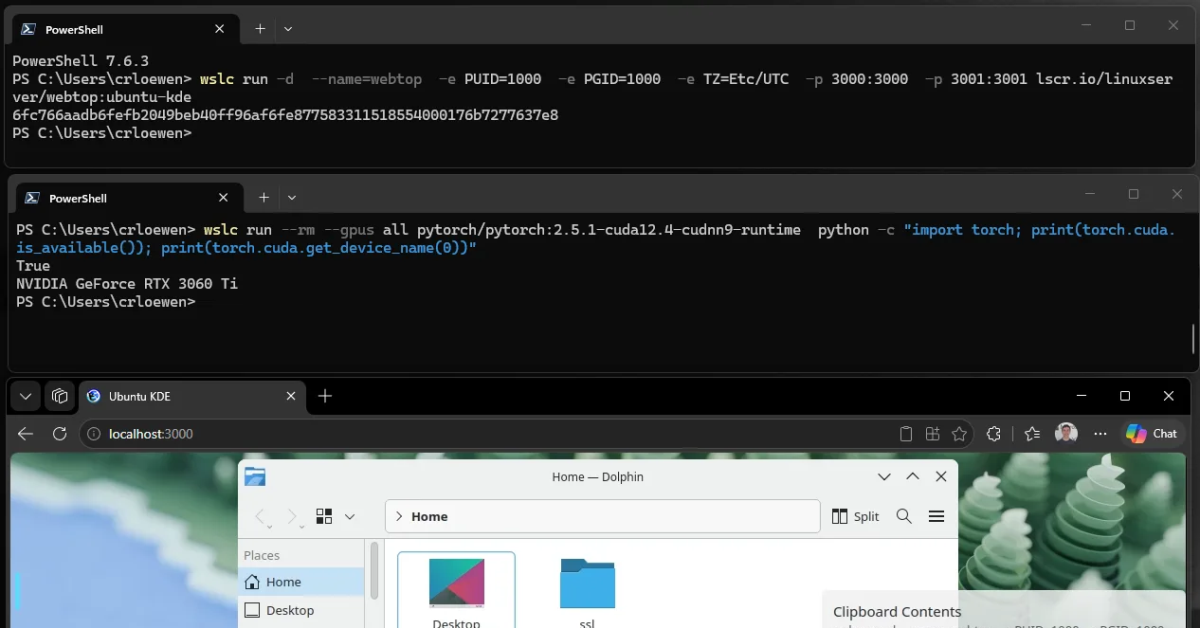
Microsoft just made one of its boldest Linux moves yet, and Docker Desktop should probably be paying attention.
The company has opened the public preview of WSL containers, a new feature that allows developers to create and run Linux containers directly through the Windows Subsystem for Linux. The goal is obvious enough: make Windows the place where developers do Linux work instead of simply being the operating system that launches third-party tools.
The centerpiece of the effort is a new command called wslc.exe. Microsoft says it can handle the entire Linux container workflow, including building, testing, debugging, and running applications locally.
Sound familiar?
That is because Microsoft clearly wants developers to feel right at home. The syntax and behavior are intentionally designed to resemble the container tools many developers already use every day.
Officially, Microsoft says existing options such as Docker Desktop, Podman Desktop, and Rancher Desktop remain important parts of the ecosystem.
Unofficially, this feels an awful lot like Microsoft is laying the groundwork to make at least some of those tools optional.
After all, if Windows ships with a capable Linux container platform built directly into WSL, why would a developer install additional software unless they absolutely needed features that Microsoft’s implementation lacks?
That question becomes even harder to ignore when you look at Microsoft’s longer-term strategy.
The company is not merely adding a command-line utility. It is also introducing APIs that allow native Windows applications to launch and manage Linux containers directly. Developers working with C, C++, and C# can pull Linux workloads into their Windows applications without relying on separate infrastructure.
Microsoft is effectively trying to make Linux another Windows subsystem rather than a competing platform.
Whether longtime Linux users will appreciate that framing is another question entirely.
Enterprise customers appear to be a major focus as well. Administrators will be able to decide which container registries employees can access, enforce policies through Group Policy and eventually Intune, and monitor activity through Microsoft Defender for Endpoint.
That combination of control, security, and centralized management checks a lot of boxes for corporate IT departments.
There are technical improvements arriving alongside WSL containers too. Microsoft says its new virtiofs file system can double file access performance in some situations, while a new networking mode called consomme aims to improve compatibility with VPN clients, proxies, and enterprise networking environments.
Memory handling is also getting smarter, with WSL returning unused memory back to Windows more consistently instead of holding onto resources longer than necessary.
Perhaps the most interesting part of this story is how far WSL has come.
When Microsoft first introduced the technology, many Linux enthusiasts viewed it with suspicion. Some dismissed it as an attempt to keep developers tied to Windows rather than encouraging them to move to Linux desktops.
Nearly a decade later, that criticism feels less far-fetched than it once did.
WSL has evolved from a compatibility feature into a platform that increasingly replaces reasons developers once had for leaving Windows altogether.
Whether that is a win for developers, a win for Microsoft, or both probably depends on who you ask.
WSL containers remain a preview feature for now and require the pre-release version of WSL to install. Microsoft expects the feature to reach general availability this fall.
If adoption takes off, the biggest threat to Docker Desktop on Windows may not come from another container company at all. It may come from Microsoft itself.
Support independent tech journalism
NERDS.xyz is independently owned and operated. If you enjoy my coverage of Linux, AI, hardware, cybersecurity, and tech culture, consider supporting the site on Ko-fi.
Support NERDS.xyz