
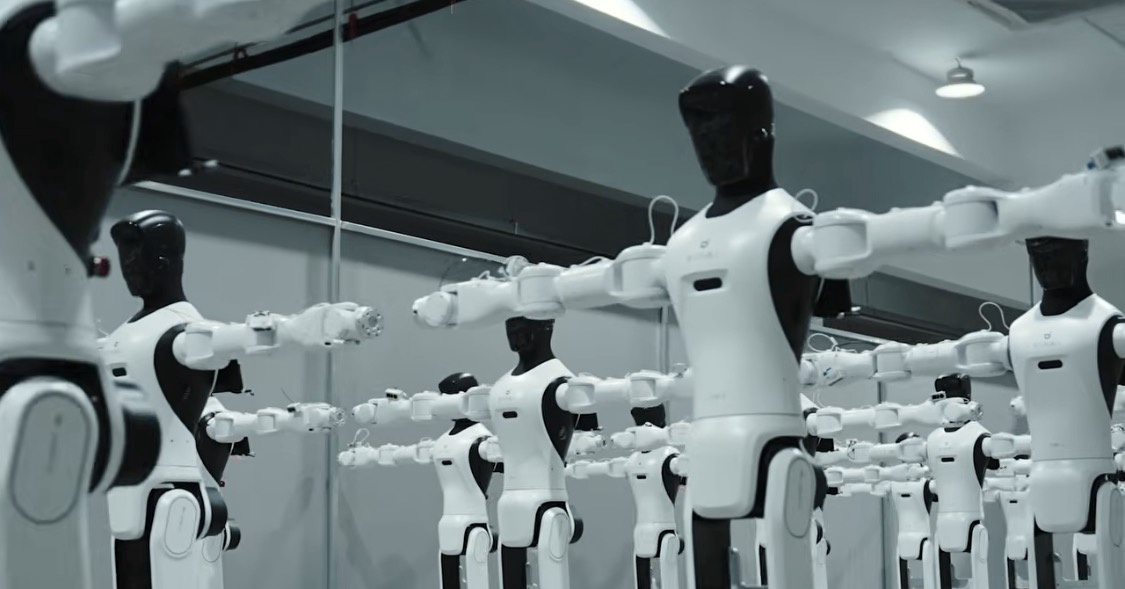
For years, humanoid robots felt like something that always lived just over the horizon. Companies would roll out impressive demonstrations, show robots dancing or carrying boxes, and promise that real deployments were right around the corner.
Lately, however, that horizon seems to be getting much closer.
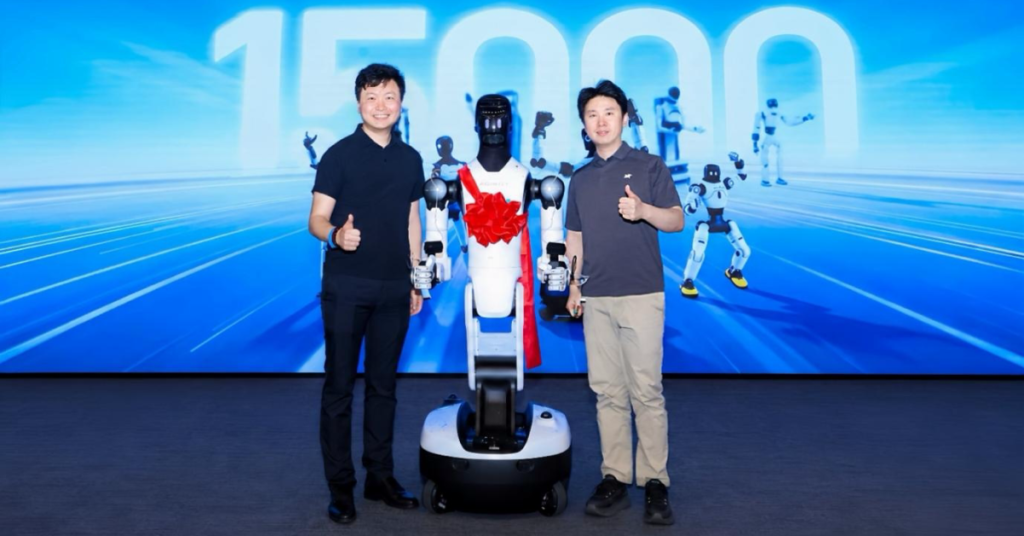
You see, Chinese robotics company AGIBOT announced this week that its 15,000th robot has rolled off the production line. The milestone unit was an AGIBOT G2, an industrial robot designed for factory and real-world operational environments.
Normally, I would dismiss this sort of announcement as little more than corporate chest thumping. Companies love celebrating production milestones, especially when investors are watching.
But 15,000 units is difficult to ignore.
According to the company, AGIBOT was founded in early 2023. In just over three years it says it has gone from building its first robots to producing thousands of them at a pace that appears to be accelerating rather than slowing down. The company claims it took about a year to move from 1,000 units to 5,000 units, only three months to jump from 5,000 to 10,000 units, and has now crossed the 15,000 mark.
If those figures are accurate, something important may be happening in the robotics industry.
The bigger story here is not AGIBOT itself. It is what this says about China and embodied AI.
Much of the conversation in the United States has focused on AI models, chatbots, image generators, and reasoning systems. Meanwhile, Chinese companies appear increasingly focused on turning AI into physical machines that can work in factories, warehouses, and other real-world environments.
You know what, folks? That distinction matters.
Look, building an impressive demo robot is one thing. Building thousands of robots, sourcing components, manufacturing them consistently, deploying them into actual workplaces, and keeping them operational is an entirely different challenge.
According to AGIBOT, its robots are already performing work inside electronics factories, including quality inspection tasks alongside human workers. Whether those deployments ultimately make economic sense remains to be seen, but simply reaching the stage where these machines are being tested in production environments is notable.
Tesla’s Optimus project receives enormous attention in the West, but some of the biggest advances in humanoid robotics may be happening thousands of miles away in Chinese factories that most Americans have never heard of.
The AI race increasingly looks like more than a competition over who builds the smartest model.
It may also become a competition over who can manufacture the most capable robot workers at scale. If that turns out to be the future, China appears determined to arrive early.
Support independent tech journalism
NERDS.xyz is independently owned and operated. If you enjoy my coverage of Linux, AI, hardware, cybersecurity, and tech culture, consider supporting the site on Ko-fi.
Support NERDS.xyz