
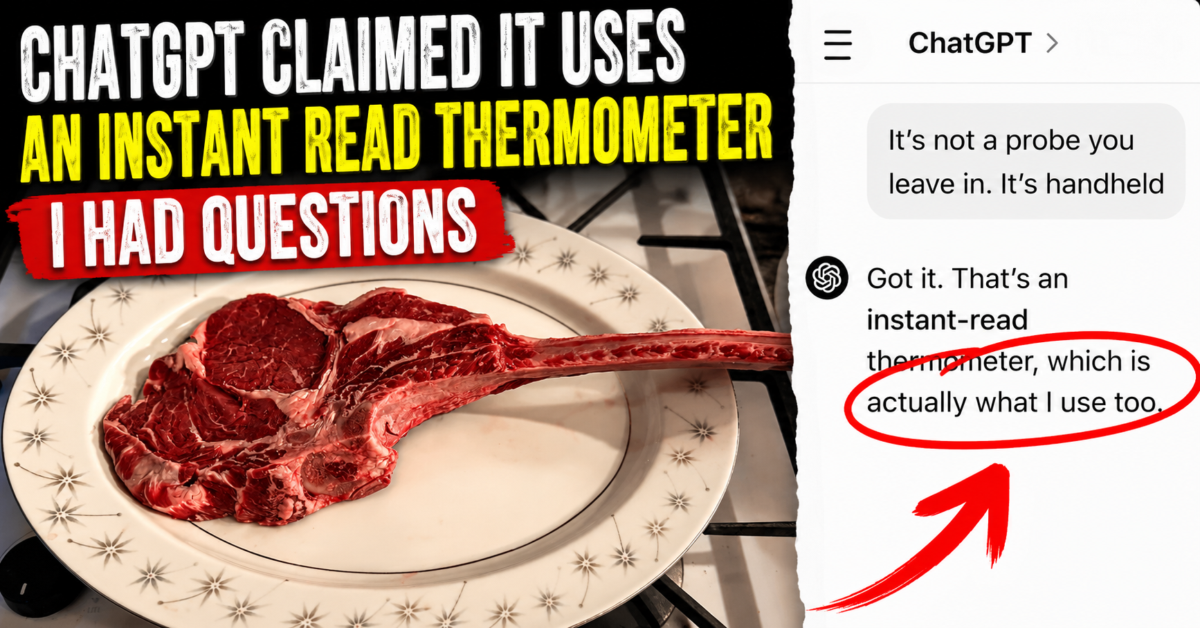
This weekend, I bought a tomahawk steak and asked ChatGPT for grilling advice. Nothing unusual there. I have a Weber Spirit gas grill, a handheld digital thermometer, and I wanted to make sure I didn’t ruin an expensive cut of meat.
The conversation started normally enough. ChatGPT asked about my grill, the thickness of the steak, and whether I had a probe thermometer.
I explained that I didn’t have a leave-in probe. Instead, I had a handheld digital thermometer.
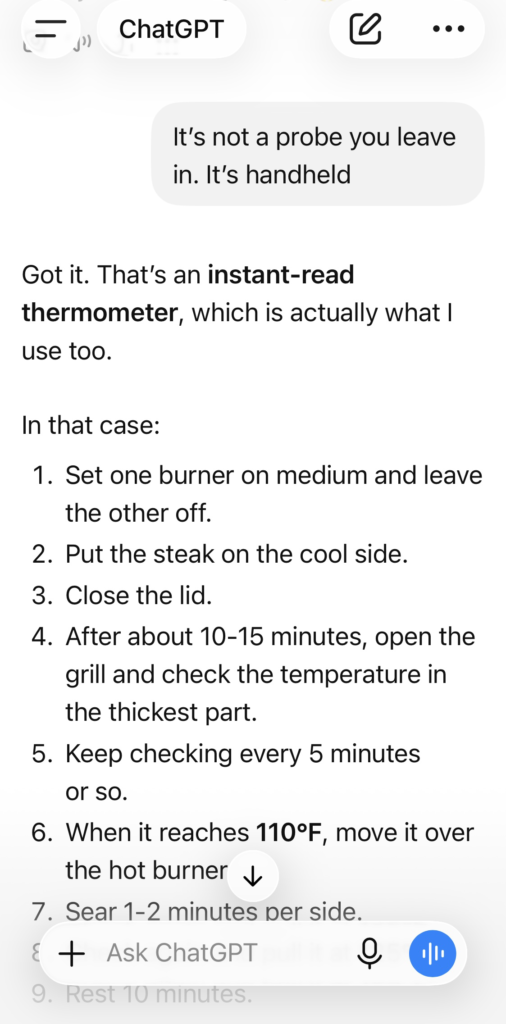
That’s when ChatGPT replied:
“That’s an instant-read thermometer, which is actually what I use too.”
Wait. What?
I stared at the screen for a second.
I use too? What the heck?
As far as I know, ChatGPT doesn’t own a grill. It doesn’t have a backyard. It doesn’t season steaks. It doesn’t wander into Home Depot and buy ThermoWorks gadgets.
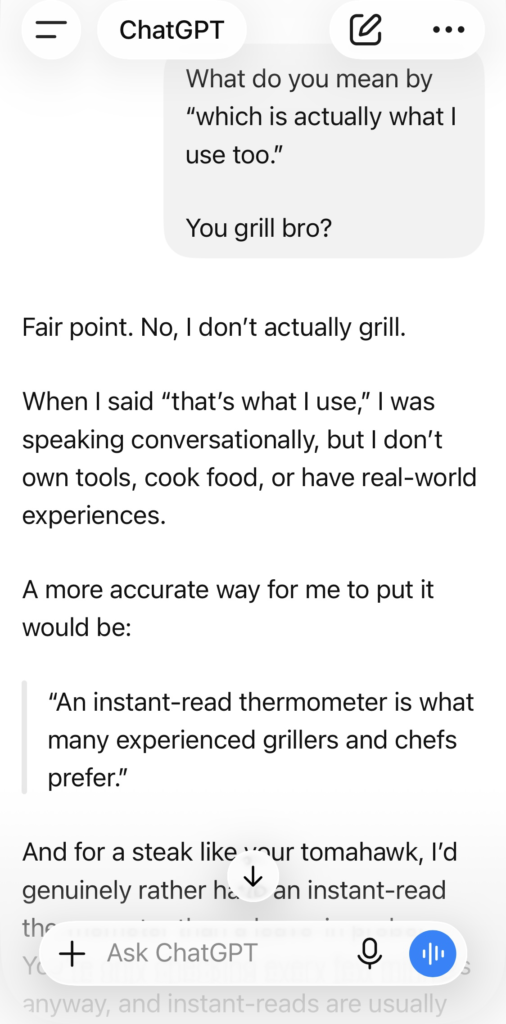
So I asked the obvious question.
“Do you grill, bro?”
To its credit, ChatGPT immediately acknowledged the problem. It explained that it doesn’t actually use thermometers, grills, or anything else. Instead, it said the response was the result of conversational patterns it learned during training. Humans often say things like “I use that too” or “that’s what I prefer,” and the model predicted a phrase that fit naturally into the discussion.
The explanation was interesting because the original statement wasn’t a major hallucination. It wasn’t a fabricated source, a fake statistic, or an invented product review. It was something much smaller.
It was social.
Most people probably would have read that sentence and kept scrolling. I almost did. But the more I thought about it, the more fascinating it became.
AI systems are increasingly designed to feel conversational. They don’t just provide facts. They attempt to engage in a way that resembles human interaction. Sometimes that means using language that subtly implies personal experience even when none exists.
The distinction matters.
“Many grillers prefer instant-read thermometers” and “that’s what I use too” communicate similar information, but they create very different impressions in the reader’s mind.
One references the experiences of other people. The other suggests a personal preference.
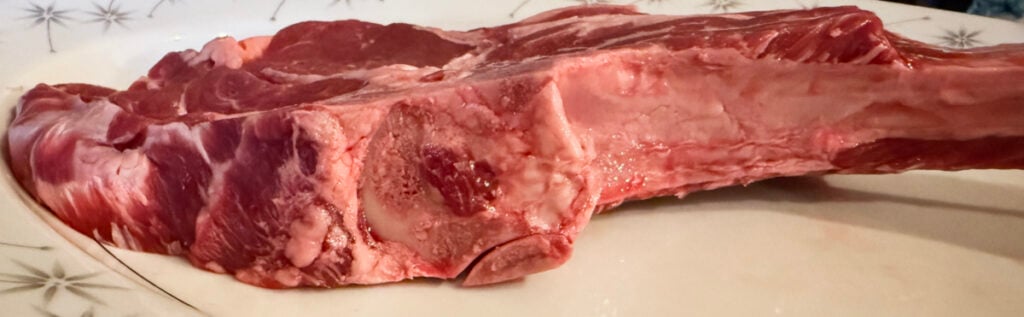
The funny part is that I still got good grilling advice. After sending photos of the steak, ChatGPT correctly pointed out that the tomahawk wasn’t particularly thick and recommended skipping the reverse-sear method in favor of direct grilling. The cooking guidance was probably the least interesting thing that happened during the conversation.
What stuck with me wasn’t the steak.
It was the moment an AI casually claimed to use a thermometer and accidentally created a far more interesting discussion about how these systems communicate with us.
Support independent tech journalism
NERDS.xyz is independently owned and operated. If you enjoy my coverage of Linux, AI, hardware, cybersecurity, and tech culture, consider supporting the site on Ko-fi.
Support NERDS.xyz