
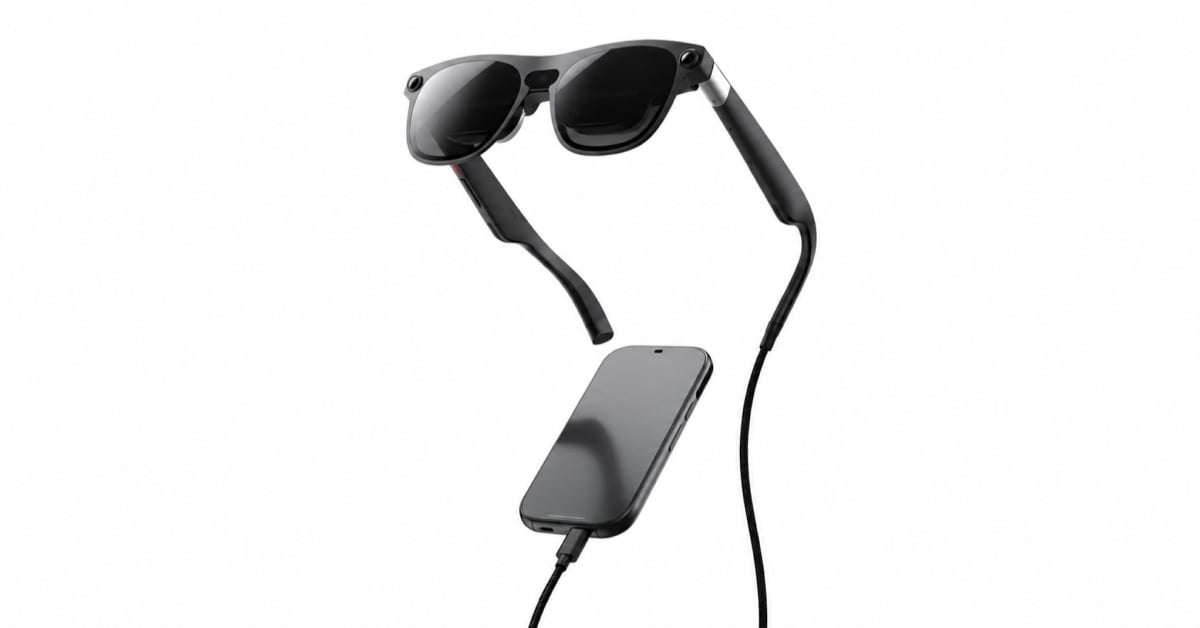
After months of teasing Project Aura, XREAL and Google finally gave folks attending Google I/O 2026 a real look at the upcoming Android XR glasses. And unlike some of the weird, bulky headsets that have dominated the XR conversation lately, Aura actually looks like something a normal person might consider wearing.
The companies showed off a series of live demos running on the glasses, including immersive Google Maps navigation, floating multitasking video windows, WebXR painting experiences powered by Gemini, and YouTube VR content in both 2D and 3D. XREAL says Project Aura features a 70-degree field of view with OLED displays, which should make media and spatial apps feel a lot less cramped than earlier smart glasses attempts.
One of the more interesting demos involved plugging the glasses into a laptop over DisplayPort. That setup extended Gemini and Android XR features into a three-dimensional workspace floating around the user. If that sounds a little sci-fi, well, it kind of is. But this is also where XR starts becoming more compelling. Using wearable displays for productivity and AI assistance makes a lot more sense than pretending everybody wants to live inside a giant virtual reality helmet all day.
Qualcomm is involved too, with Snapdragon hardware powering the experience. That is not surprising at this point since Qualcomm has its fingerprints all over the XR industry. What matters more is whether Google can finally turn XR into something regular folks care about instead of another expensive tech demo destined for YouTube reaction videos.
To help developers get started, XREAL and Google also announced the Android XR Developer Catalyst Program. Select developers will receive Project Aura development kits along with software tools and Android XR resources ahead of launch. The companies say applications are now open.
Google clearly does not want to let Apple and Meta dominate the future of spatial computing without a fight. The difference here is that Project Aura appears focused on lightweight hardware and AI integration rather than trying to replace your entire reality with a ski goggle computer strapped to your face.
Of course, the XR industry has promised “the future” more times than folks can count. Smart glasses, mixed reality, metaverse worlds – we have heard it all before. But tying Gemini AI into a lighter wearable form factor may finally give people a reason to care beyond pure novelty.
Project Aura is expected to launch globally in 2026. Pricing has not yet been announced.
Support independent tech journalism
NERDS.xyz is independently owned and operated. If you enjoy my coverage of Linux, AI, hardware, cybersecurity, and tech culture, consider supporting the site on Ko-fi.
Support NERDS.xyz