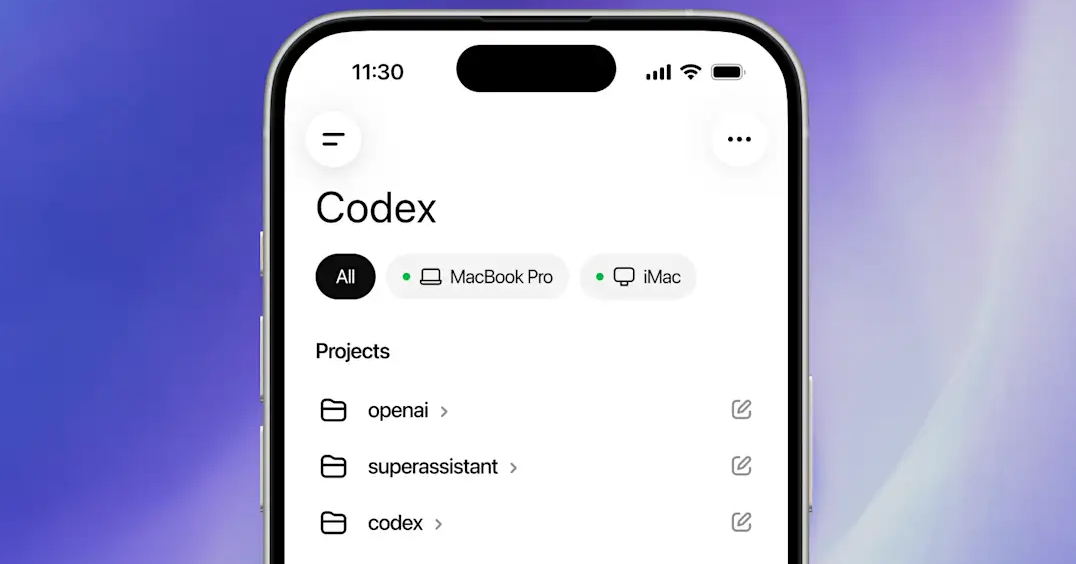
OpenAI is putting Codex on mobile devices, which means developers can now keep tabs on AI powered coding tasks from pretty much anywhere. The feature is arriving in preview through the ChatGPT mobile app on both iPhone and Android, and it feels like another sign that AI coding agents are starting to behave less like chatbots and more like background coworkers that never really stop working.
The company says more than 4 million people are already using Codex every week. With the new mobile support, users can check in on tasks running on laptops, remote Linux systems, Mac minis, devboxes, or enterprise environments without needing to stay planted in front of a desk all day.
What makes this interesting is that OpenAI is not pitching it as a glorified remote desktop app. Instead, the phone acts more like a live control panel for whatever machine Codex is actively using. Developers can review terminal output, approve commands, inspect screenshots, read test results, switch models, and redirect work while the actual computing stays on the connected machine.
For Linux folks especially, this setup will probably sound pretty natural. A lot of development already happens through SSH sessions, remote servers, containers, and cloud infrastructure anyway. In that sense, OpenAI is leaning into workflows developers already use instead of pretending phones should suddenly become full blown coding workstations.
OpenAI says the system works through a secure relay layer that keeps machines reachable without directly exposing them to the public internet. Files, credentials, permissions, and local configurations remain on the connected computer while updates stream back to the mobile app in real time.
The company also announced that Remote SSH support is now generally available. Codex can connect directly to managed environments using existing SSH configurations, which should make life easier for teams already working inside enterprise infrastructure or remote Linux environments.
That detail matters because despite all the AI hype, modern software development still revolves heavily around terminals, remote systems, and Linux based infrastructure. AI might be changing how code gets written, but it has not replaced the underlying environments developers rely on every day.
OpenAI also rolled out a handful of enterprise focused additions alongside the mobile launch. These include programmatic access tokens for automation workflows, generally available Hooks support, and HIPAA compliant Codex usage for eligible ChatGPT Enterprise customers running local environments.
Hooks sound particularly aimed at organizations that want tighter oversight. OpenAI says they can scan prompts for secrets, run validators, customize repository behavior, create memories, and log conversations. Some companies will love that level of control. Other developers may see it as yet another layer of monitoring wrapped around AI tooling.
One thing notably missing for now is full Windows connectivity support from the phone experience. OpenAI says that is still coming soon. That timing stands out given the company recently talked about how Linux already offered many of the sandboxing and isolation features Codex needed, while Windows required extra engineering work and custom security layers to achieve similar behavior.
Codex mobile support is rolling out now through the ChatGPT app on iOS and Android across Free, Go, and paid plans in supported regions.
Support independent tech journalism
NERDS.xyz is independently owned and operated. If you enjoy my coverage of Linux, AI, hardware, cybersecurity, and tech culture, consider supporting the site on Ko-fi.
Support NERDS.xyz