
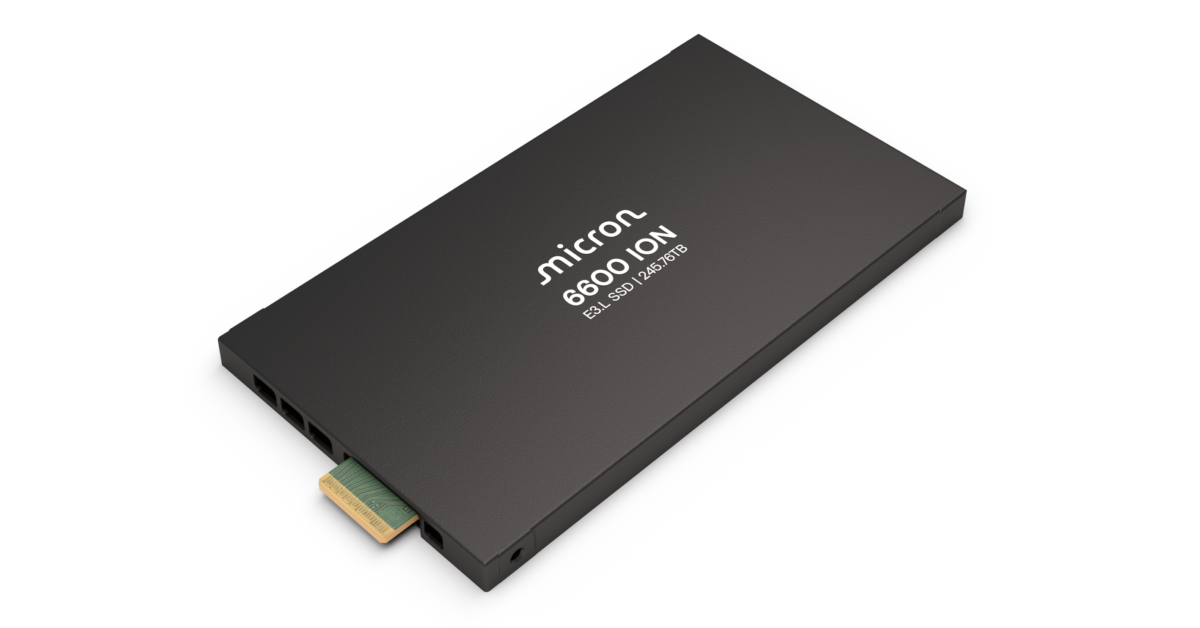
Hard drives have managed to stick around in data centers because of one simple thing: massive storage capacity at relatively low cost. But Micron just dropped a new SSD that feels like another warning shot aimed directly at spinning disks.
The company says its new Micron 6600 ION SSD is now shipping with an absurd 245TB capacity. Yeah, you read that right. A single SSD with nearly a quarter petabyte of storage.
SEE ALSO: Satechi DotDisk brings 80Gbps Thunderbolt 5 SSD speed to your pocket
Micron is targeting AI workloads, hyperscalers, cloud providers, and enterprise customers that are drowning in data. And with AI infrastructure growing at a ridiculous pace, companies are starting to care less about tradition and more about efficiency, density, power usage, and speed.
That is where Micron thinks this drive changes the conversation.
According to the company, the 245TB SSD can reduce rack counts by 82 percent compared to equivalent HDD deployments. In giant data centers where floor space, cooling, and power availability are becoming serious problems, that is a pretty aggressive claim.
The drive uses Micron’s G9 QLC NAND, which the company says is ahead of competing QLC NAND used in current enterprise SSDs. It will be offered in both U.2 and E3.L form factors, so it should fit into a wide variety of modern server platforms.
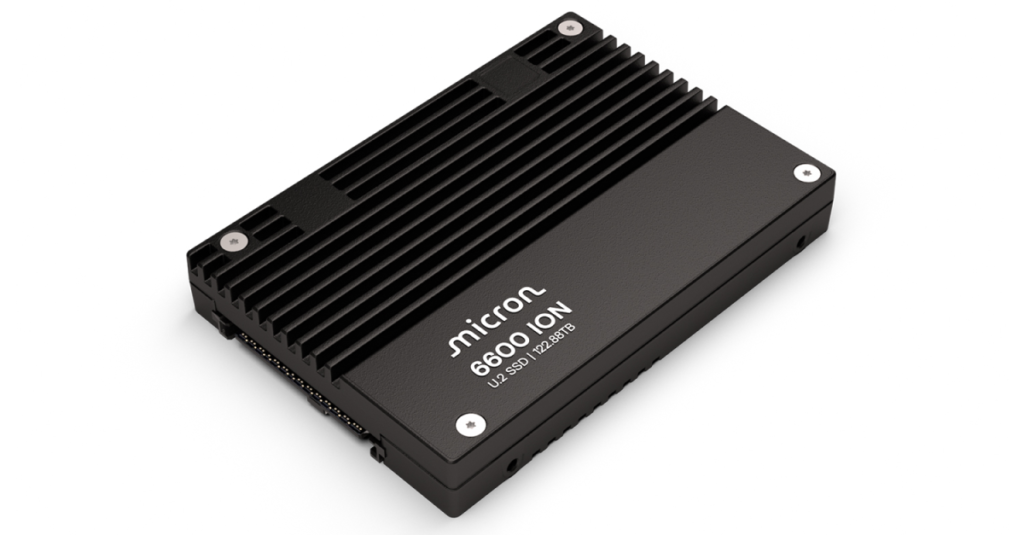
What caught my attention most, however, was the power story. Micron says the drive tops out at around 30W, which is supposedly about half the power draw of comparable hard drive setups delivering similar capacity. Less power means less heat, and less heat means less cooling overhead. At AI scale, those numbers start adding up very quickly.
Micron is also flexing performance numbers pretty hard here. The company claims the 245TB SSD delivered up to 84 times better energy efficiency for AI workloads versus HDD systems. It also says the drive achieved much faster preprocessing speeds, better ingest throughput, and dramatically lower latency.
Now look, hard drives are not disappearing overnight. They are still cheaper for certain workloads, especially cold storage and archival scenarios where raw capacity matters more than speed. But every year the gap gets smaller, and SSD capacities keep climbing into territory that used to belong exclusively to HDDs.
Seeing a 245TB SSD feels a bit surreal. Not that long ago, consumers were excited about 256GB SATA drives. Now we are talking about SSDs large enough to store enormous AI datasets on a single device.
No pricing has been announced, but let’s just say this is probably not headed into your Linux desktop anytime soon unless your basement doubles as a hyperscale cloud provider.
Support independent tech journalism
NERDS.xyz is independently owned and operated. If you enjoy my coverage of Linux, AI, hardware, cybersecurity, and tech culture, consider supporting the site on Ko-fi.
Support NERDS.xyz