
There was a time when email marketing platforms were mostly just glorified newsletter tools. You’d upload a mailing list, design an email, hit send, and hope for the best. Those days may be fading fast.
Intuit says its latest AI upgrades for Mailchimp are designed to do far more than help write subject lines or generate filler copy. The company is now pushing toward a future where AI can analyze campaign performance, identify trends, build audience segments, and eventually create and execute marketing campaigns with minimal human involvement.
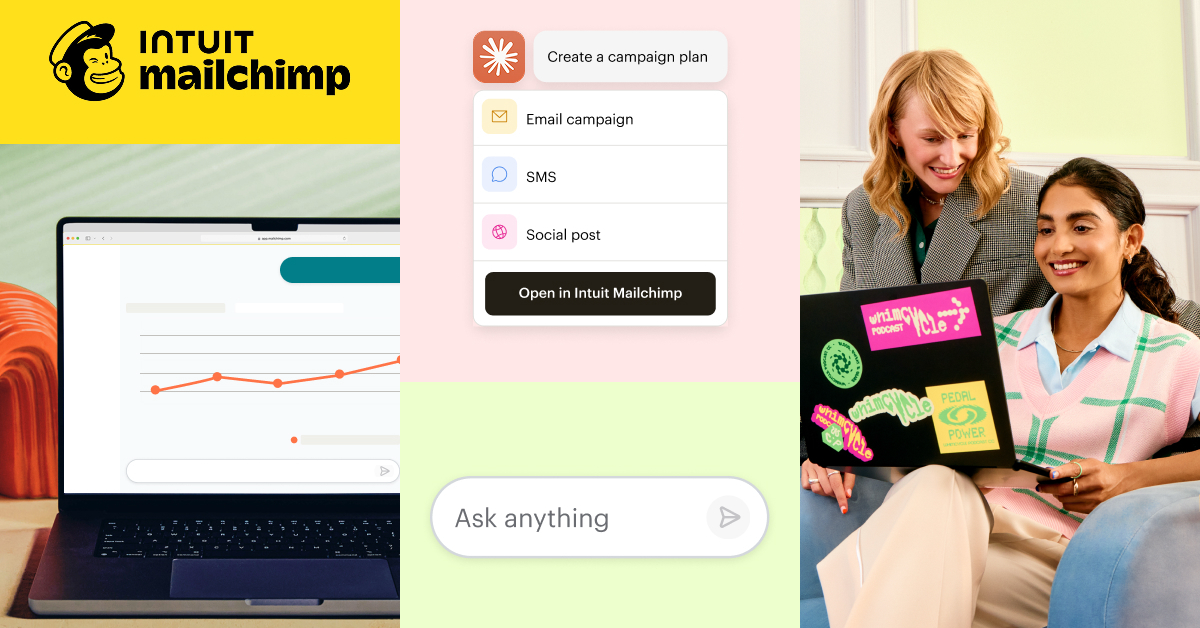
That’s the big takeaway from the launch of Analytics AI, a conversational analytics tool built directly into Mailchimp. Instead of digging through dashboards and reports manually, users can supposedly ask plain language questions and receive strategic recommendations instantly. Think less spreadsheets and charts, and more chatting with an AI assistant about why sales dropped or why a campaign suddenly performed well.
At least in theory.
The idea itself actually makes sense. Plenty of small businesses are drowning in data but have no clue what to do with it. Most folks are not marketing analysts. They own restaurants, online shops, galleries, repair businesses, or small ecommerce brands. They don’t have time to stare at graphs all day trying to decode open rates and conversion funnels.
If AI can truly bridge that gap, there is real value there.
Still, I remain a bit skeptical whenever companies start talking about “agentic” AI systems that will eventually handle everything automatically. Mailchimp says Analytics AI is laying the groundwork for a future where AI plans strategy, builds audiences, drafts campaigns, and learns from results over time. That sounds convenient, but it also sounds like marketers slowly handing decision-making over to algorithms.
And let’s be real here. AI tools are not magical. They can hallucinate, misinterpret trends, and confidently recommend bad ideas. Marketing already has enough buzzwords and fake gurus floating around. Adding AI-generated strategy into the mix could either simplify things or create an entirely new layer of nonsense.
One of the more interesting parts of this announcement is that Mailchimp is integrating directly with both Claude and ChatGPT. That says a lot about where software is heading right now. Companies increasingly seem to believe users would rather talk to software conversationally instead of clicking through traditional interfaces and menus.
That may actually be true.
We’re rapidly moving toward a world where dashboards are replaced with prompts, chat windows, and AI agents. Instead of building reports manually, users may simply ask software questions like “Why are sales down this week?” or “Create a campaign targeting customers who abandoned carts last month.”
Whether that future turns out to be useful or annoying remains to be seen.
Mailchimp also announced expanded integrations with Wix, WooCommerce, and Canva, alongside AI-powered audience segmentation and improved ecommerce tracking. The company says these integrations are meant to unify customer data and reduce the friction involved in launching campaigns.
For now, the bigger story may not be email marketing at all. It may be the slow death of traditional SaaS interfaces. Companies increasingly seem convinced that the future of software is conversational AI layered on top of everything else.
Folks may soon spend less time clicking buttons and more time talking to machines.
Support independent tech journalism
NERDS.xyz is independently owned and operated. If you enjoy my coverage of Linux, AI, hardware, cybersecurity, and tech culture, consider supporting the site on Ko-fi.
Support NERDS.xyz