
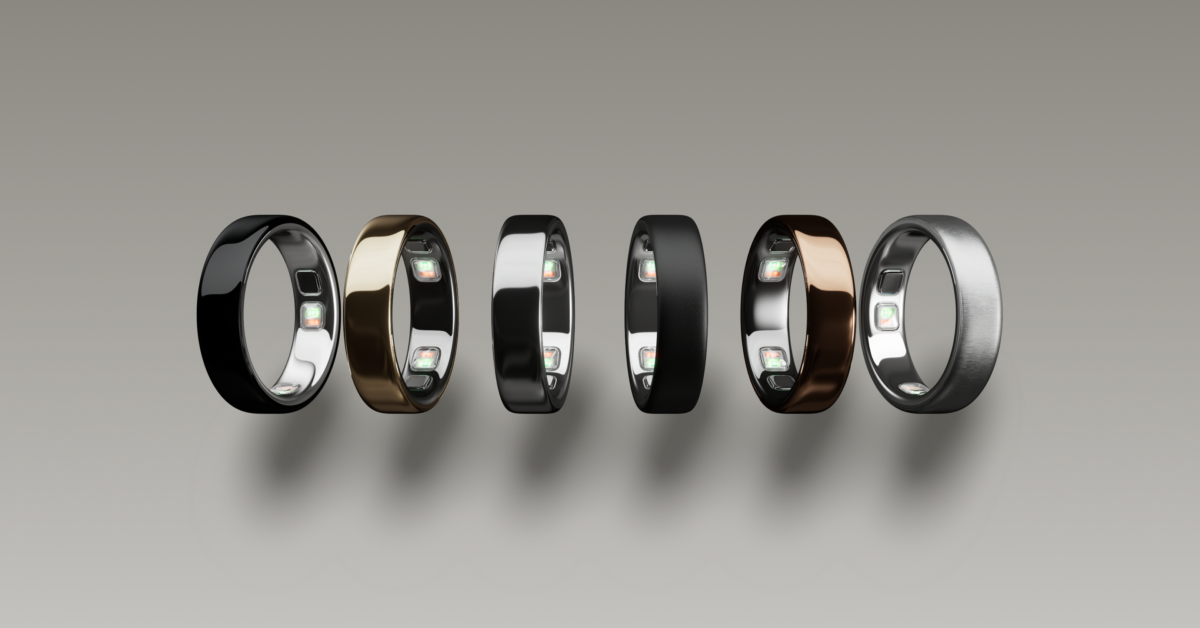
I’ve always found smart rings interesting, but I also never fully understood why some folks were willing to spend hundreds of dollars on one instead of simply buying a smartwatch. That may start changing with Oura Ring 5, because this thing is far more ambitious than just tracking sleep and steps.
ŌURA says the new Oura Ring 5 is 40 percent smaller than the previous generation, making it the world’s smallest smart ring. Shrinking a wearable that much without ruining battery life or sensor accuracy is genuinely impressive, especially considering all the new features packed inside.
The company says it redesigned basically everything, including the sensors, optics, battery system, and internal architecture. The result is a ring that is thinner, lighter, and supposedly more comfortable to wear around the clock. That matters because smart rings only work if people actually keep them on.
The bigger story here, however, is not really the smaller size. It is the growing focus on AI-powered health monitoring and preventative care. Oura clearly wants its ring to become something much more important than a fitness gadget.
One of the most notable additions is something called Health Radar. Instead of simply showing raw data, the system continuously watches for biometric patterns that could suggest health issues before users even notice symptoms themselves. That includes blood pressure monitoring during sleep, which Oura says can reveal cardiovascular warning signs that daytime readings sometimes miss.
There is also a new Nighttime Breathing feature that tracks longer-term breathing disturbances while sleeping. Combined with Oura’s partnership with Resmed, the company is moving deeper into sleep health and wellness guidance.
To be clear, Oura Ring is still not a medical device, but the line separating wellness gadgets from healthcare tools keeps getting blurrier every year.
The AI push is impossible to ignore too. Oura Advisor now connects biometric tracking, health records, and personalized recommendations into one experience. The company is even partnering with Counsel Health to offer AI-assisted medical guidance and connections to licensed healthcare providers directly inside the app.
That concept will probably make some people uncomfortable, and I understand why. We are entering an era where folks may start asking AI about their health before speaking to an actual doctor. Whether that ends up being helpful or dangerous likely depends on how responsibly these tools are developed.
Oura is also embracing the explosion of GLP-1 weight loss drugs. New GLP-1 Insights tools let users track doses, side effects, body changes, sleep, stress, and activity all in one place. Love that trend or hate it, these medications are becoming extremely common, and Oura clearly sees an opportunity there.
Workout tracking is improving too. Users can now start live workouts from the Oura app and track metrics like pace, distance, and heart rate in real time. That helps address one of the biggest weaknesses smart rings have traditionally had compared to smartwatches.
Battery life still sounds solid as well. Oura promises up to a week per charge, and there is now a separate portable charging case capable of storing up to a month of additional battery power.
The pricing, however, may scare off plenty of buyers. Oura Ring 5 starts at $399 for standard finishes and jumps to $499 for premium colors like Gold and Deep Rose. Then there is the ongoing membership fee of $5.99 per month or $69.99 annually. You can pre-order here now.
That subscription model continues to be a tough sell for some consumers, especially after already dropping several hundred dollars on the hardware itself.
Even so, Oura Ring 5 feels like an important release for the smart ring category. Smartwatches still offer more functionality overall, but rings have advantages too. They are smaller, less distracting, and much easier to forget you are even wearing.
If Oura can avoid drowning users in AI gimmicks and actually deliver meaningful health insights, Ring 5 could end up being one of the more interesting wearables released this year.
Support independent tech journalism
NERDS.xyz is independently owned and operated. If you enjoy my coverage of Linux, AI, hardware, cybersecurity, and tech culture, consider supporting the site on Ko-fi.
Support NERDS.xyz