
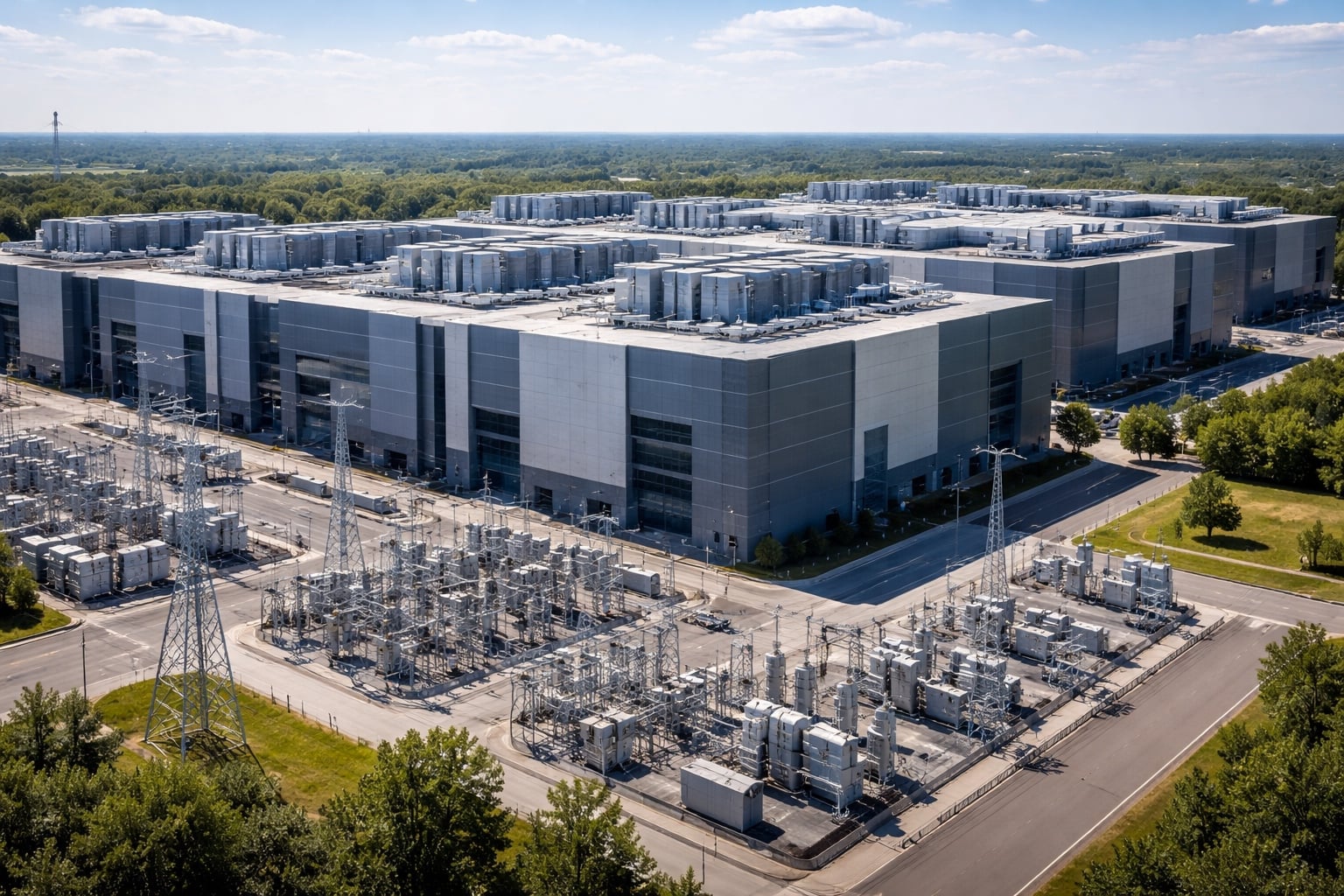
New York lawmakers are pushing a bill that would effectively put a long pause on new large data centers, and it is hard to see how this helps anyone who actually lives or works here. Senate Bill S9144 would block permits for new data centers for years while the state studies their environmental and utility impacts and figures out new rules. That may sound thoughtful on the surface, but in practice it sends a loud and clear message that New York is not open for business in one of the most important industries of the modern economy.
At the heart of the bill is a moratorium on data centers that use 20 megawatts of electricity or more. That is not some niche category. These are the facilities that power cloud-based services, enterprise software, streaming platforms, and increasingly, artificial intelligence. This is core infrastructure now, not a luxury. You cannot talk about economic growth, tech leadership, or even basic digital services without talking about data centers.
The proposed pause would last at least three years and ninety days. In tech terms, that is forever. While New York holds hearings, writes reports, opens comment periods, and debates regulations, companies will do what companies always do. They will build somewhere else. Once those investments go to Virginia, Texas, Ohio, or Arizona, they are not coming back.
Supporters of the bill frame it as a way to protect the environment and shield ratepayers from higher utility costs. Those concerns are real. Large-scale computing uses a lot of power and water, and no one wants residential customers quietly subsidizing massive industrial users. But this bill does not take a scalpel to the problem. It takes a sledgehammer.
Instead of setting firm standards and letting projects that meet them move forward, the state is choosing paralysis. Businesses can live with tough rules. They cannot live with uncertainty. A multi-year freeze followed by years of regulatory rewrites is uncertainty on steroids.
I consider myself an independent, but living on Long Island has a way of sharpening your views. Between property taxes that never seem to go down and a state government that too often treats business growth like a threat instead of an opportunity, I find myself increasingly out of step with Democratic leadership in Albany. This bill fits that pattern perfectly. It sounds good in a press release, but it ignores how decisions like this ripple out into jobs, tax bases, and long-term economic health.
There is also something deeply anti-progress baked into the approach. The world is moving fast toward cloud-based services and AI-driven tools. Freezing data center growth in New York does not slow that trend. It just ensures the innovation, infrastructure, and influence happen somewhere else. Other states are not waiting. They are actively courting these projects.
What makes it even more frustrating is that pushing data centers out of New York does not magically reduce emissions. If those facilities are built in states with dirtier grids or looser oversight, the global environmental outcome may actually be worse. If New York wants to lead, leadership means shaping the future responsibly, not exporting it.
The bill also paints data centers almost exclusively as villains. They are described as energy hogs, water guzzlers, land grabbers, and e-waste factories. Missing from that picture is the reality that data centers are now as essential as highways, ports, and power plants. You do not get a modern economy without them, and you do not pay for schools, services, or infrastructure without economic growth.
Yes, utilities matter. Yes, data centers should pay their fair share for grid upgrades and capacity. Those issues can be addressed directly through rate structures, infrastructure requirements, and targeted regulation. Creating a separate customer class or forcing large users to fund needed upgrades could have been debated on its own. Instead, everything is bundled into a broad freeze that treats investment itself as the problem.
New York could have taken a smarter path. It could have welcomed data centers with clear expectations. Use cleaner energy. Be transparent about water use. Fund the infrastructure you require. Build in appropriate locations. That would have been pro-business and forward-looking.
S9144 does the opposite. It tells the tech industry that New York is cautious to the point of self-sabotage. In a moment when digital infrastructure is reshaping the economy, that is not prudence. It is stagnation by choice.
If this bill becomes law, data centers will still get built. They just will not get built here.
Support independent tech journalism
NERDS.xyz is independently owned and operated. If you enjoy my coverage of Linux, AI, hardware, cybersecurity, and tech culture, consider supporting the site on Ko-fi.
Support NERDS.xyz