Social media increasingly feels optimized for algorithms instead of people. Profiles look the same, feeds feel sterile, and many users seem exhausted by engagement bait, outrage farming, and AI generated slop.
Ditto wants to push in the opposite direction.
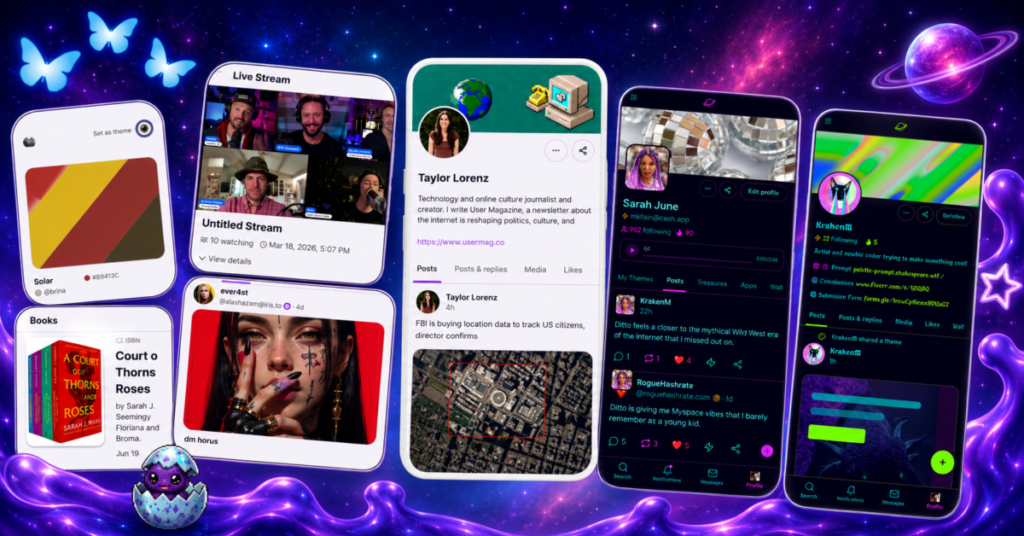
Built on the Nostr protocol and interoperable with Mastodon and Bluesky, the open source social platform heavily emphasizes customization, weirdness, creativity, and user ownership. The platform has drawn comparisons to older internet experiences like MySpace and GeoCities, where personal expression mattered more than clean corporate uniformity.
I recently covered Ditto’s launch on NERDS.xyz. Afterward, Soapbox sponsored a Q&A with Derek Ross (Developer Relations) about the project’s vision, decentralized social networking, moderation, internet nostalgia, and why the company believes people are ready for a more personal web again.
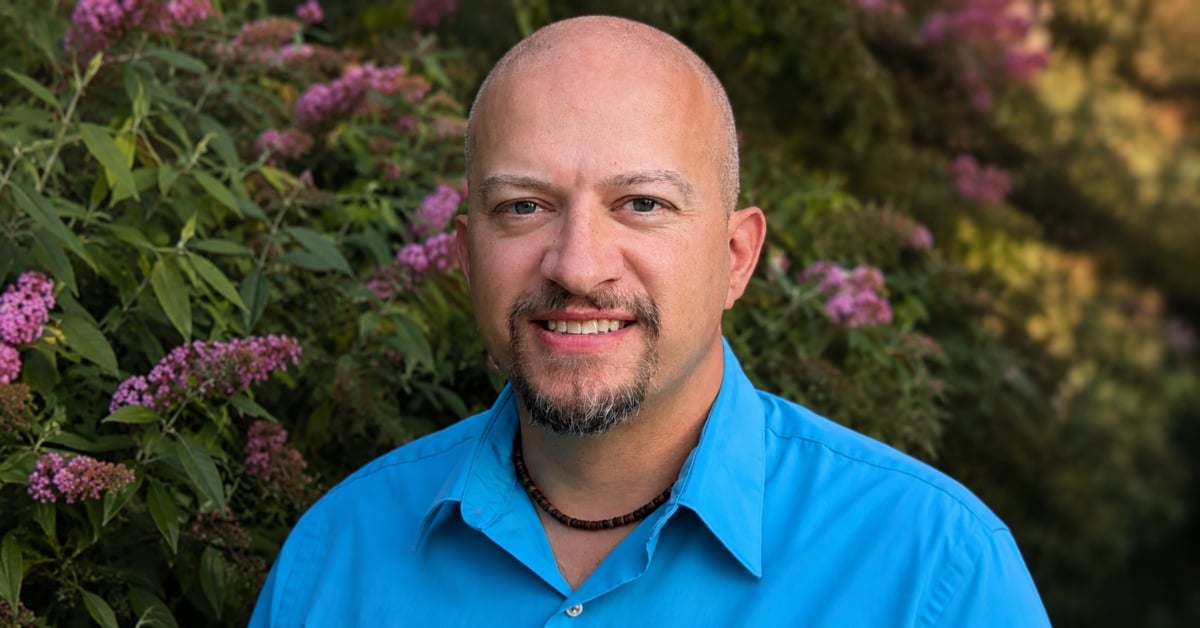
Brian Fagioli: For readers who may be hearing about Ditto for the first time, what exactly is it, and what problem are you trying to solve?
Derek Ross: “Ditto is a social platform built on Nostr: fully open source, fully customizable, and built for people who actually want to enjoy being online again. Your content, your vibe, your rules.
The problem we’re solving is simple: every social app today looks and feels the same. A black-and-white rectangle, an algorithm deciding what you see, and engagement metrics designed to keep you miserable. We don’t think social media has to be that way. The internet used to be a playground, your profile was a canvas, going online was an adventure, and you actually had fun. Ditto exists to bring that back, and to do it on a protocol where you own your identity, your content, and your followers. No email, no phone number, just humans being humans without software getting in the way.”
Brian Fagioli: A lot of social media today feels algorithmically optimized and strangely sterile. Do you think users are genuinely craving a return to a more customizable and personal internet experience?
Derek Ross: “Yes, and the receipts are everywhere. People decorate their Discord profiles. They post screenshots of their Spotify Wraps. They customize their car, their phone case, their gaming setup, their Steam profile. The instinct to express yourself online never went away, legacy social media platforms just took the tools away.
Modern social apps stripped customization out because it was bad for ad targeting and bad for ‘consistent UX.’ But it was also bad for users, who started feeling like they were just one more identical box in an endless scroll. People miss feeling like the space online is theirs. We hear it constantly: ‘this reminds me of MySpace and I mean that as a compliment.’ Yeah. That’s the point.”
Brian Fagioli: Many people are comparing Ditto to MySpace in terms of creativity and profile individuality. Was that older era of the web a direct inspiration for the platform?
Derek Ross: “Absolutely, and we wear that influence proudly. MySpace, GeoCities, AIM profiles, the early forums, that whole era of the web treated the user as a creator first and a consumer second. Your profile was a place you decorated and inhabited, not a template you filled in.
But we’re not trying to recreate MySpace. We’re trying to honor the spirit of it on modern infrastructure. So instead of HTML you have to learn, you get colors that generate an entire theme, custom fonts, custom backgrounds, and even custom avatar shapes. With shapes, you can pick any emoji and that’s the silhouette of your profile picture. Themes are Nostr events too, which means you can publish one and other users can apply it with a click. The personal web is back, just on better rails.”
Brian Fagioli: Ditto bridges Nostr, Mastodon, and Bluesky together. Why was interoperability so important to the project instead of focusing exclusively on one ecosystem?
Derek Ross: “Because tribalism is how you lose. Every closed platform plays the same game, wall off the users, hold the network hostage, and dare them to leave. The open web only works if we refuse to play that game with each other.
Soapbox has been building bridges since the Mostr Bridge launched back in 2023 connecting Nostr and the Fediverse. Today that bridge has over 56,000 users connected across networks. With Bluesky in the mix through Bridgy Fed, you can follow people no matter which open protocol they’re on. The goal isn’t ‘everybody come to Nostr.’ The goal is the open web wins, the corporate web loses, and you don’t lose your audience because you picked a different app. Ditto is your homebase for the indie web, not another silo.”
Brian Fagioli: Decentralized social platforms often struggle with onboarding and complexity. How are you trying to make Ditto approachable for everyday users who may not care about protocols or cryptographic keys?
Derek Ross: “By not making them care. That’s the whole strategy.
The old pitch for decentralized social was, ‘Let me explain relays, public keys, NIPs, key backups, and why this matters morally.’ Eyes glaze over. Nobody signs up.
Our approach with Ditto is the opposite. Sign up takes about 15 seconds, no email, no phone number, and we save your key for you in your iCloud Keychain or browser. Then we show you the fun stuff: themes, virtual pets, Letters with custom stationery, geocaches you can hunt in real life, playable games right in your feed. By the time anyone wonders what’s powering all this, they’re already hooked. Education comes after engagement, not before it.
We also lean hard into what we call conversion-through-experience. Instead of explaining decentralization to a friend, send them a link to a game of Quake III running in their browser through Ditto. They play, they visit your profile, pumpkins, serif fonts, wild colors, and they think, ‘wait, what IS this?’ That’s the conversion right there. They sign up because they want to be part of it, not because we told them they should care.”
Brian Fagioli: Some users hear “Nostr” and immediately think “Bitcoin only.” Do you think that perception has limited broader adoption of decentralized social platforms?
Derek Ross: “It has, and it’s a real challenge we’re actively pushing against. Nostr grew up in the Bitcoin community because the values aligned, open protocol, no gatekeeper, you own your keys. That’s not a bad heritage, and Bitcoin is freedom money the same way Nostr is freedom communication. They genuinely belong together and have a beautiful symbiotic relationship together.
But Nostr isn’t ‘the Bitcoin social network.’ It’s an open protocol for human communication, full stop. The content on it spans podcasts, books, photography, music, geocaching, gaming, art, journalism, everything humans actually do. With Ditto we’re intentionally leading with that breadth. Lead with the fun, lead with the creativity, lead with the social benefits, and let the financial freedom story come along naturally. If you want to zap a creator a few sats, great (and you should!) that’s there too. If you just want to share weird stuff with your friends and never touch Bitcoin, also great. Both users belong.”
Brian Fagioli: Customization is clearly a huge focus for Ditto. Why do you think modern social media platforms moved away from personal expression in favor of standardized layouts?
Derek Ross: “Two reasons, and neither of them benefit you. First, money. Standardized layouts make ad inventory predictable and easy to sell. Custom profiles are a nightmare for advertisers. Second, control. Identical-looking profiles make everyone interchangeable, which makes content easier to algorithmically rank, surface, and monetize. The platform decides what you see, not you.
Personal expression is bad for engagement metrics but great for actual humans. We’re a company funded by community and grants, not investors, so we have the freedom to optimize for the user experience instead of the ad experience. Customization isn’t a feature for us. It’s the thesis. It’s our entire being. User choice. Boxes are prisons. Your profile should be a planet you inhabit and control.”
Brian Fagioli: The internet today often feels dominated by engagement bait, algorithms, and AI generated content. Do you think users are becoming exhausted by that experience?
Derek Ross: “Yeah, and I think exhaustion is what’s going to drive the next great migration. People are tired. They open Twitter, they open Threads, they open TikTok, they open Instagram, different logos, same dopamine slot machine, same outrage cycle, same AI slop. You close the app feeling worse than you opened it.
The interesting thing is what people are doing in response. They’re going back to RSS readers. They’re joining smaller Discords. They’re starting newsletters. They’re posting in group chats instead of in public. The instinct is right, get out of the engagement casino, but the tools haven’t caught up. That’s the opening for something like Ditto. A place that doesn’t optimize for your time, doesn’t ship dark patterns, doesn’t try to make you angry, and just lets you have a weird, fun, personal corner of the internet again.”
Brian Fagioli: Ditto includes playful features like virtual pets, themes, and decorative messaging. Was it important for the platform to feel fun and weird instead of purely technical?
Derek Ross: “Critical. Our internal phrase is ‘Fun requires Freedom.’ That’s the whole philosophy.
We could have built another competent, minimalist, gray Nostr client. The world has plenty of those. Instead Ditto has Blobbi virtual pets, Tamagotchi-style creatures that live in your feed and have shops, daily missions, and evolutions. It has Letters, encrypted personal messages with stationery, stickers, and 3D envelopes. It has Color Moments where you express your mood as a color palette. It has Magic: The Gathering deck lists, geocaching, voice messages, in-feed games, custom emoji packs, and a world map.
This stuff sounds weird because it IS weird. And it’s weird on purpose. The big platforms will never build any of this because none of it optimizes for engagement metrics. But it does optimize for joy, which we think is a better metric. Carnival, not platform. Every feature is its own attraction. That’s what we’re going for here.”
Brian Fagioli: Soapbox says Ditto operates without ads, investors, or data sales. Is that model sustainable long term, and what challenges come with building a platform that way?
Derek Ross: “We think it is, and we’re proving it day by day. Soapbox is community-funded, not investor-funded, primarily through the And Other Stuff (AOS) collective, with long-term support from OpenSats (the Bitcoin nonprofit that backs Nostr development), and from the Human Rights Foundation for our activist work. We’re working toward 501(c)(3) status. All our code is open source under AGPL-3.0 on GitLab. No ads, no data sales, no VC, no shareholders. Nothing to extract from you.
The challenges are real. We can’t outspend Meta on marketing. We can’t promise a billion-dollar exit to attract certain kinds of talent. We have to be patient and we have to be efficient. But the upside is enormous: we build software that serves people, not shareholders, and we get to make decisions based on what’s right rather than what’s profitable. The 1990s nonprofit and open-source projects that shaped the modern internet, Wikipedia, Linux, the W3C, proved this model works at scale. We’re following that playbook in a new domain.”
Brian Fagioli: Moderation is one of the hardest problems in decentralized social networking. How does Ditto approach moderation while still respecting user freedom and platform openness?
Derek Ross: “Decentralized moderation is genuinely a different beast from centralized moderation, and pretending otherwise gets you in trouble. On Ditto, no single company controls who can speak, but that doesn’t mean anything goes on any given relay or instance.
The model is closer to email than to Twitter. Anybody can run a relay or run an instance of Ditto. Each operator sets their own moderation rules. Users get powerful client-side tools too: mute lists, block lists, content warnings, follow packs from trusted curators, and the ability to switch which relays they read from. You can opt into stricter or looser environments depending on what you actually want.
Ditto’s flagship relay has its own moderation, and we publish our policies transparently. But because the protocol is open and your identity is portable, no operator, including us, can deplatform you from Nostr itself. Your content and followers travel with you. That’s a fundamentally different trust model from anything Big Tech can offer, and we think it’s healthier in the long run.”
Brian Fagioli: Your founder Alex Gleason previously worked as Head of Engineering at Truth Social. Do you think people sometimes unfairly inject politics into technology discussions rather than evaluating products on their own merits?
Derek Ross: “Yes, and it cuts both directions, which is part of why it’s so corrosive.
Alex’s background includes building open-source social software for a long list of communities that didn’t have viable options under Big Tech, including Spinster.xyz, a feminist platform, Truth Social, an American conservative platform, and now Agora, which is helping Venezuelan dissidents organize against an authoritarian regime. The common thread isn’t politics, it’s the conviction that everyone deserves the tools to speak, organize, and build community online, regardless of what side of any debate they’re on. That’s what open source actually means.
If your test for whether a piece of software is good is, ‘do its users and operators share my political team,’ you’re going to end up with worse software and a smaller internet. Evaluate the code, the protocol, the values of the project, and the experience. Ditto is open source, AGPL-3.0, no ads, no data sales, no shareholders, no investors, runs on an open protocol nobody owns, and you control your own keys. That stands on its own merits regardless of who built it or what other projects they’ve worked on.”
Brian Fagioli: What has the early reaction to Ditto been like since launch? Have there been any surprises so far?
Derek Ross: “I’ll be honest, we’re not seeing massive mainstream adoption yet, and I don’t think we should pretend otherwise. But the users we do have absolutely love it, and the depth of that love is what’s surprising. We did a complete rewrite for Ditto 2.0 recently using our own Shakespeare AI builder and the mkstack framework, and the pace since then has been unreal. We have an Android app on Google Play and Zapstore and an iOS app on Apple’s App Store. The platform is there. now it’s about getting more people through the door.
What’s been incredible to watch is what the early community has gravitated to. Themes are the gateway drug. People show up, pick a preset, then start tweaking colors and fonts and backgrounds, and within a week they’ve published their own theme and shared it with someone else. It scratches an itch that modern social media abandoned years ago. Blobbi virtual pets are right there with themes, users name them, and post about them, building entire personalities around them. It feels like watching the early Tamagotchi craze all over again, except your pet is your social companion.
The other thing users keep telling us is that Ditto doesn’t feel like just a social app, it feels like an Other Stuff app. Everything weird and interoperable that the Nostr ecosystem has ever built is supported in one place.
So adoption is still early, and we know that. But the people who are here are the right people. They’re the artists, the tinkerers, the customizers, the folks who remember when the internet had personality. That’s exactly the audience we wanted to build for first. Mainstream growth comes next and when it does, it’s going to be because this community made the platform interesting enough to be worth showing up for.”
Brian Fagioli: Where do you ultimately see Ditto heading over the next few years? Is the goal to remain a niche enthusiast platform, or do you believe decentralized social can eventually go mainstream?
Derek Ross: “Mainstream, full stop. But ‘mainstream’ doesn’t have to mean ‘a billion daily active users in one app.’ The future we’re building toward is one where the open social web is just the social web, the same way email is just email. There’s no single dominant client and there doesn’t need to be. There’s a thriving ecosystem of apps that all talk to each other through open protocols, and Ditto is one of the most fun places to live inside that ecosystem.
Concretely, over the next couple of years: more bridges to more networks, more first-class support for the creative content types nobody else builds, a thriving value for value economy for direct creator support, more localization, more performance, and most importantly more ways for users to make their corner of the internet feel like theirs. The bet we’re making is that when you give people freedom, fun follows. And fun is what brings the mainstream over.”
Brian Fagioli: Finally, what would you say to readers who are curious about decentralized social networking but have never actually tried it before?
Derek Ross: “Just try it. Don’t read another article about Nostr. Don’t try to wrap your head around relays and keys and NIPs. None of that matters until you experience it.
Go to ditto.pub. Sign up, it takes 15 seconds. Pick a theme that looks like you. Adopt a Blobbi. Send your first post. Play a game running in someone’s feed and play it. Browse Treasures. Read a Letter someone wrote with custom stationery. Comment on a country. Then look at your profile and realize it’s a planet, not a page. That experience does more in five minutes than any explainer can do in five hours.
The internet used to be fun. We’re making it fun again. The door is open, and there’s no password. Go have fun!”
Whether Ditto becomes a breakout platform or remains a niche corner of the decentralized web, one thing is clear after speaking with Ross: Soapbox is betting that people are exhausted by algorithmic sameness and are ready for something more personal, expressive, and strange. You know what? I hope they are right.
Support independent tech journalism
NERDS.xyz is independently owned and operated. If you enjoy my coverage of Linux, AI, hardware, cybersecurity, and tech culture, consider supporting the site on Ko-fi.
Support NERDS.xyz
1 thought on “Q&A: Ditto says social media became sterile and the internet should be fun again”
Comments are closed.