
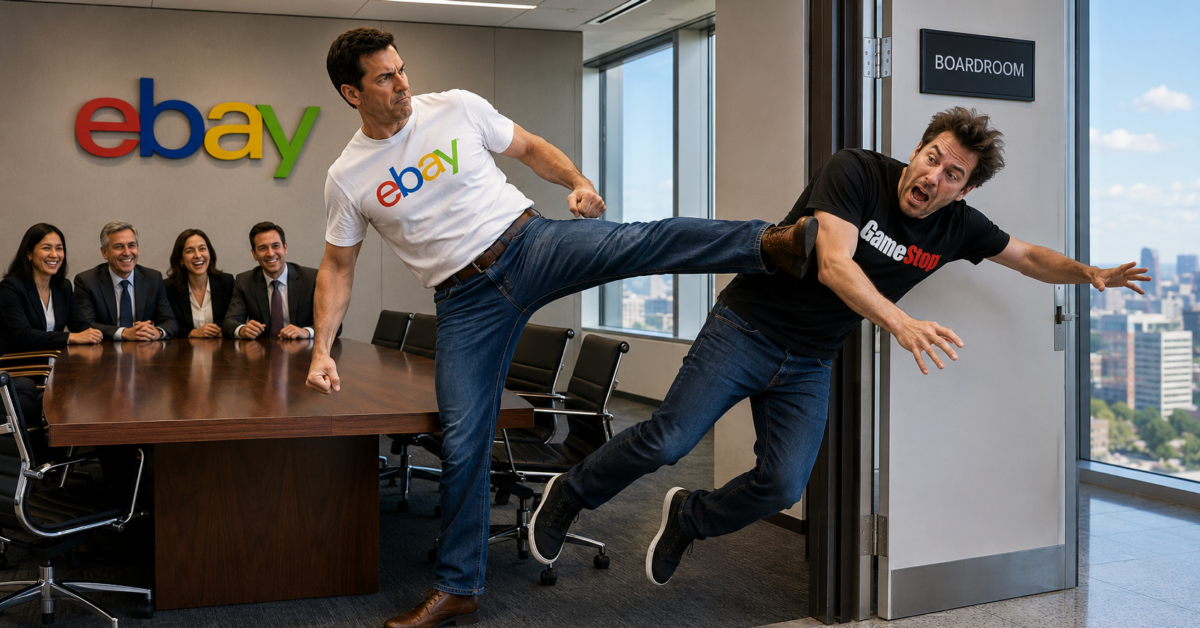
There are hostile takeovers, and then there’s whatever the heck just happened between eBay and GameStop. In a newly published response letter, eBay’s board flat-out rejected an unsolicited $56 billion acquisition proposal from GameStop CEO Ryan Cohen, calling the offer “neither credible nor attractive.” That’s corporate speak for “absolutely not.”
The letter (read in full here), signed by eBay Chairman Paul S. Pressler, didn’t exactly pull punches either. eBay said it considered concerns ranging from financing uncertainty and operational risks to GameStop’s governance structure and executive incentives. The company also made it clear it believes its current strategy is already working just fine without GameStop stepping in.
What makes this especially wild is how different the two companies are today. eBay remains one of the internet’s biggest online marketplaces, while GameStop has spent the past several years trying to reinvent itself after its meme stock era exploded into mainstream culture. Ryan Cohen has pushed GameStop into collectibles, trading cards, and e-commerce experiments, but buying eBay would have been a massive swing even by those standards.
Reading between the lines, eBay’s response almost feels personal. Public companies usually keep rejection letters polished and diplomatic, but this one carried a tone that sounded closer to “stay in your lane.” The mention of GameStop’s leadership structure and governance especially stands out because that’s the sort of criticism companies normally avoid spelling out so directly.
There’s also the reality that an eBay acquisition would likely have required a mountain of financing and regulatory scrutiny. Even if GameStop somehow pulled it off, investors probably would have spent years questioning how the businesses would fit together. Selling Funko Pops and retro games is one thing. Running a massive global marketplace with millions of sellers is another.
At this point, the proposal looks less like a realistic acquisition attempt and more like Ryan Cohen trying to position GameStop as a bigger player in digital commerce. Whether shareholders see that as visionary or reckless is another story entirely.
Support independent tech journalism
NERDS.xyz is independently owned and operated. If you enjoy my coverage of Linux, AI, hardware, cybersecurity, and tech culture, consider supporting the site on Ko-fi.
Support NERDS.xyz