

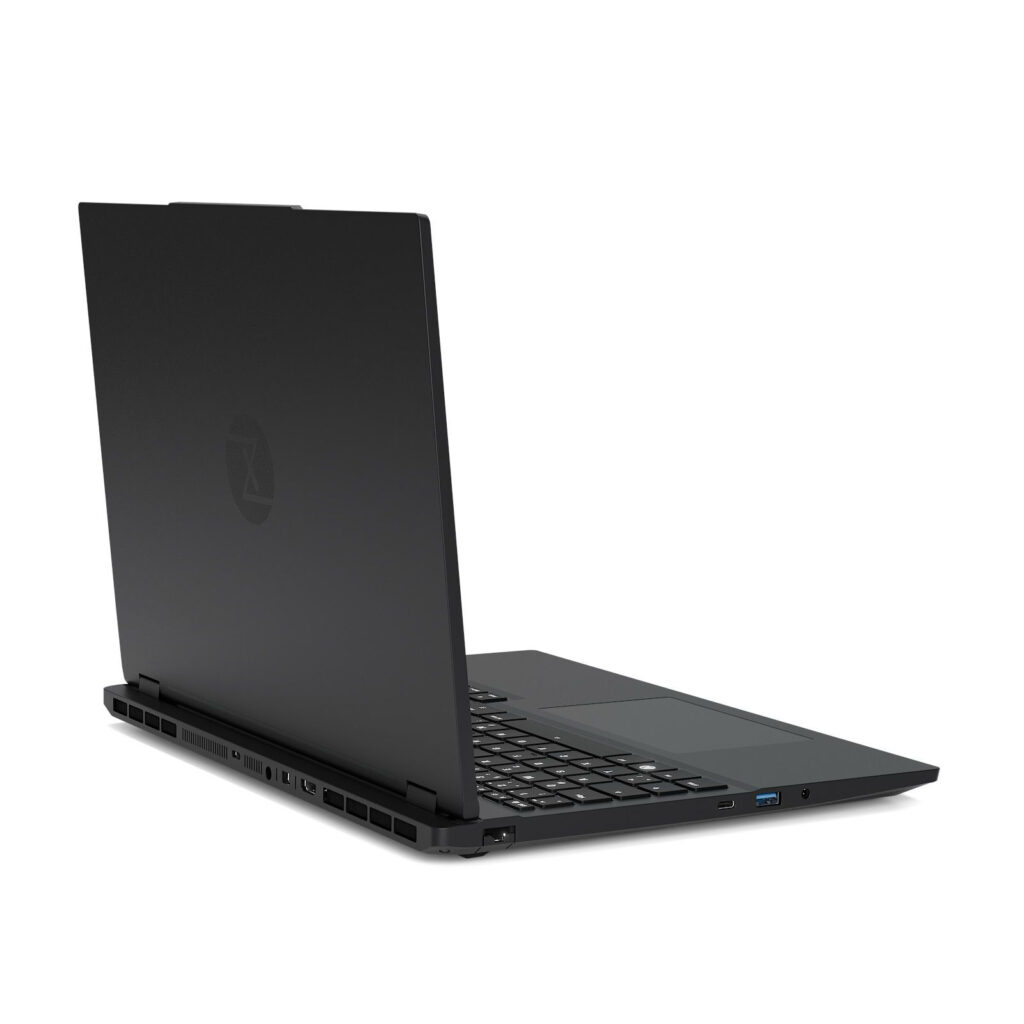
TUXEDO is kicking off the new year with a laptop that tries to live two lives at once. The new TUXEDO InfinityBook Max 16 is built to be a thin business machine that still has the muscle of a gaming notebook. It joins the smaller Max 15 from late last year, but this time Intel replaces Ryzen and brings the heat with the Core Ultra 9 275HX.
At just a shade over 2kg in a full aluminum body, TUXEDO wants buyers to see this machine as a daily carry that will not buckle when workloads spike. That Core Ultra 9 processor is basically desktop DNA fitted into a notebook shell. With 24 cores and the ability to hit 140 watts at full blast, it should chew through compiles, media workloads, and yes, plenty of Steam titles. The company also claims the CPU holds roughly ninety percent of its potential performance under 100 watts… which matters if you want to tame fan noise at a cafe or coworking space.
Graphics push this thing into new territory for TUXEDO’s business tuned machines. Buyers can choose between NVIDIA’s GeForce RTX 5060 or a slightly quicker RTX 5070. Both use TUXEDO Control Center for power tuning inside NVIDIA’s supported ranges, so you can favor calm fans or full frame rates depending on where you are working. Compared to the InfinityBook Pro 15 with Radeon 890M graphics, TUXEDO expects three to four times the performance. Anyone jumping from integrated graphics will feel that difference instantly.
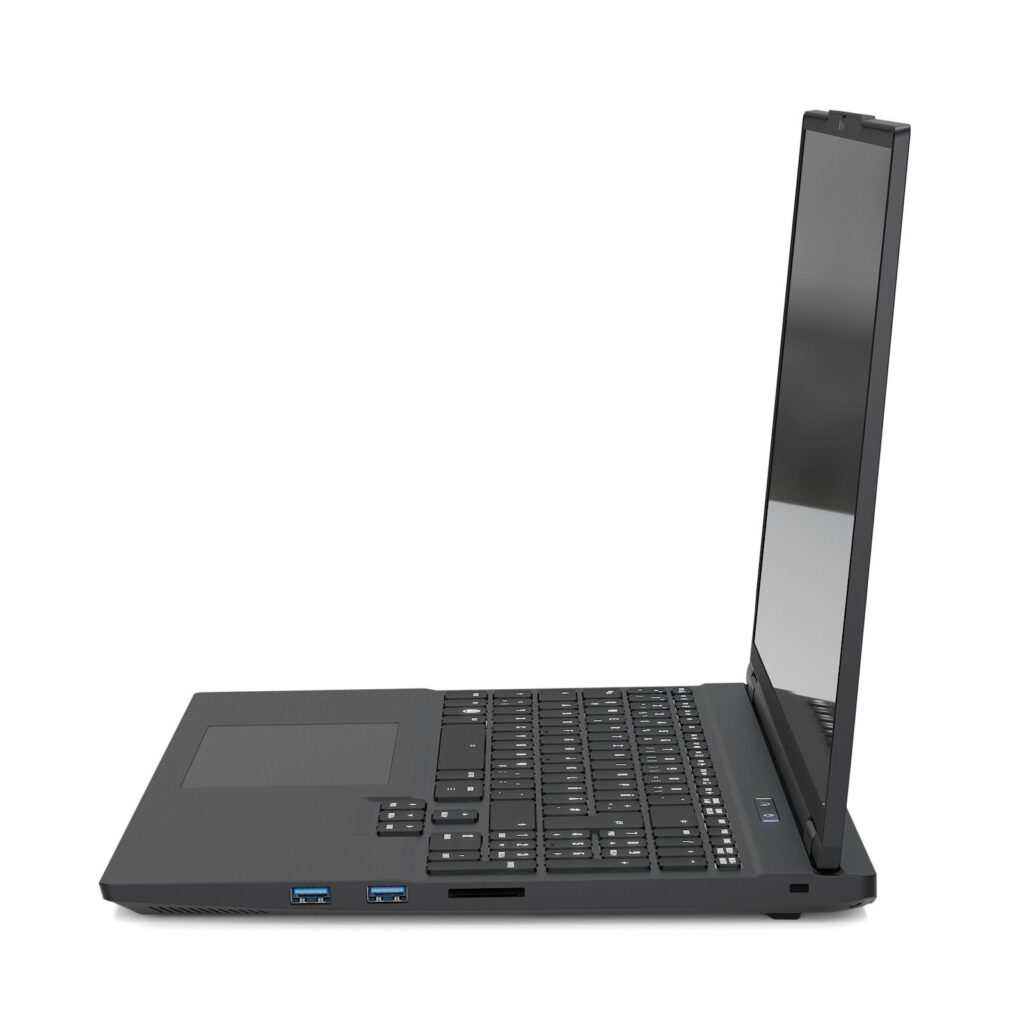
The screen selection is surprisingly thoughtful. The base panel is a 2560×1600 LED display rated for 500 nits with a fast 300Hz refresh rate and full DCI P3 coverage. That is a sweet spot for fast games and everyday work. Screen snobs can pick the 2880×1800 OLED option. These self lit pixels deliver the kind of deep blacks and vibrant colors that make everything look more alive, even if the shiny surface may mean reflections in bright offices.
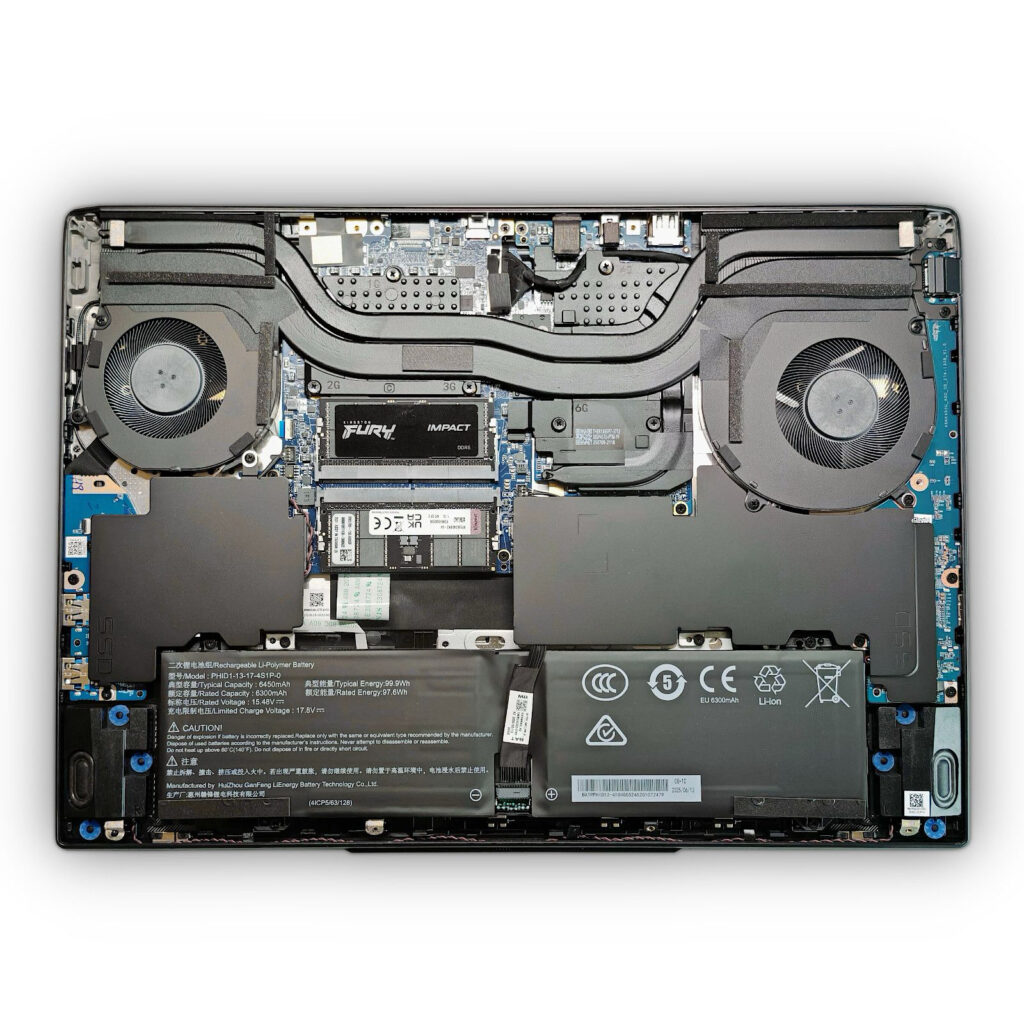
Battery life should be decent thanks to the full 99Wh capacity, which is the most you can legally fit into a plane friendly laptop. TUXEDO quotes up to eight hours, though real numbers will depend on how hard you push the GPU. Charging is flexible with up to 140 watt USB-C power delivery on either USB-C port, while a compact 240 watt GaN power brick is included for full performance.
Developers and power users will like the rest of the spec sheet. There is Thunderbolt 4 along with a second USB-C port, HDMI 2.1, Mini DisplayPort, and several USB-A ports. That mix supports up to four external displays, making this machine a real desktop replacement candidate. Storage and memory are also unusually roomy. Two RAM slots support up to 128GB of DDR5, while a PCIe 5.0 and a PCIe 4.0 SSD slot allow up to 8TB of total storage.
The cooling is a slim 8mm system designed to handle 170 watts when CPU and GPU are running together. That is wild for a machine this thin. The Stellaris 16 remains the better pick if you want maximum quiet and do not care about extra thickness, but the Max 16 keeps noise respectable with its power sliders dialed back.
Linux support is where TUXEDO still stands alone. Buyers get TUXEDO OS or Ubuntu 24.04 preinstalled with drivers, firmware tools, and a support team trained for Linux questions. Windows 11 is offered for those who need it, but the entire pitch is clearly built around open systems.
Pricing begins at 1,899 EUR for German customers with tax and about 1,596 EUR for shoppers outside Europe before tax. With an OLED panel and NVIDIA graphics in a slim metal shell, that number feels fair in today’s laptop market. You can order one here.
The TUXEDO InfinityBook Max 16 looks like a machine made for people who live in code editors and terminals all week but still want to unwind in Elden Ring or Baldur’s Gate 3 on Friday night. If you have been waiting for a thin Linux-first notebook that does not force a choice between portability and power, this might finally be it.
