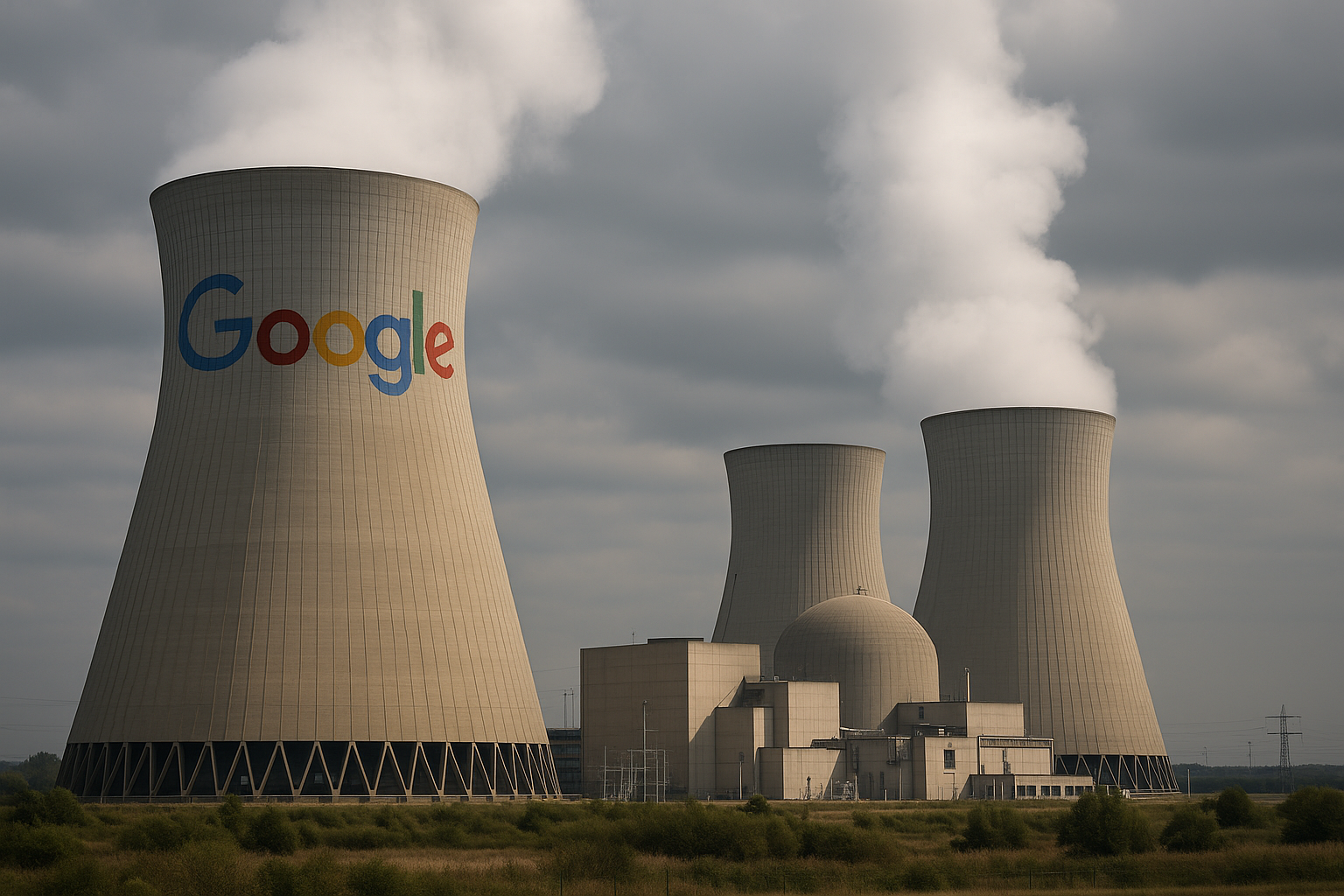

Westinghouse is diving headfirst into artificial intelligence. The company has announced a new collaboration with Google Cloud to bring powerful AI tools into nuclear construction and operations.
The goal is to streamline the process of building nuclear reactors and make plant operations more efficient. It’s a bold move, but it makes sense. Nuclear energy is back in focus as countries scramble to meet clean energy goals, and AI might be the missing piece to speed things up.
At the center of this effort are two Westinghouse-developed AI systems called HiVE and bertha. These tools are built on more than 75 years of Westinghouse’s proprietary nuclear data. Now, they’re being enhanced by Google Cloud technologies, including Gemini, Vertex AI, and BigQuery.
“As the only fully licensed, construction ready modular reactor available today, our AP1000 technology is the quickest way to add new sources of affordable and abundant nuclear energy to the U.S. grid,” said Dan Sumner, Interim CEO of Westinghouse Electric Company.
“By partnering with Google Cloud to enhance our HiVE and bertha technology, and backed by 75 years of our proprietary nuclear data, we can accelerate the deployment of new AP1000 units while implementing powerful AI technologies that will optimize the construction and operations of nuclear power plants,” Sumner added.
The AP1000 modular reactor is the centerpiece of this effort. It’s designed for faster, repeatable construction and Westinghouse believes that AI is the key to unlocking its full potential.
Google Cloud’s Kyle Jessen said the company is looking to demonstrate how AI can create real change.
“This partnership with Westinghouse combines Google Cloud’s AI technologies and expertise with Westinghouse’s century-long expertise in nuclear innovation to chart a new path towards a smarter and safer future,” said Jessen.
He continued, “Artificial intelligence is not merely a tool; it can give companies a critical competitive advantage. Westinghouse is demonstrating what’s possible.”
The two companies say they’ve already completed a proof of concept. By combining Westinghouse’s WNEXUS digital design platform with its HiVE AI and Google’s cloud tools, they claim to have autonomously generated and optimized construction work packages for AP1000 builds.
That may sound technical, but the idea is pretty straightforward. AI can automate complex tasks, reduce human error, and help standardize the building process. Nuclear plants are expensive and time-consuming. Mistakes are costly. This partnership could bring much-needed consistency to the industry.
HiVE and bertha were both introduced in September 2024. Westinghouse says they were built to optimize the deployment of its AP1000, AP300 small modular reactors, and eVinci microreactors. These AI systems are supported by real nuclear engineers, and are already being tested for real-world use.
Westinghouse is no stranger to innovation. The company built the first commercial pressurized water reactor in 1957. Its tech is used in nearly half of the world’s active nuclear plants. Now, with over 135 years in the energy business, it’s trying to bring nuclear into the AI age.
The idea isn’t to replace workers. It’s to assist them. AI could help generate more accurate plans, avoid delays, and even spot potential problems before they happen.
Westinghouse says its AI tools are already capable of supporting current nuclear operations. That includes optimizing how electricity is delivered to homes and businesses in a more cost-effective way.
No word yet on how much these new AI-enhanced tools will cost or what the price tag looks like for utilities that want in. But if this system can reduce construction times and improve reliability, the economics could make sense.
Whether or not the rest of the nuclear industry follows is another story. But if Westinghouse and Google Cloud can deliver on this vision, we may be witnessing the start of a very different future for clean energy.
Support independent tech journalism
NERDS.xyz is independently owned and operated. If you enjoy my coverage of Linux, AI, hardware, cybersecurity, and tech culture, consider supporting the site on Ko-fi.
Support NERDS.xyz