
IBM has switched on what it calls its most advanced quantum computer available, giving researchers another machine to test whether quantum computing can deliver on its promises. The IBM Quantum System Two is now operational at Hyde Park Labs in Chicago, where it is hosted by the University of Chicago.
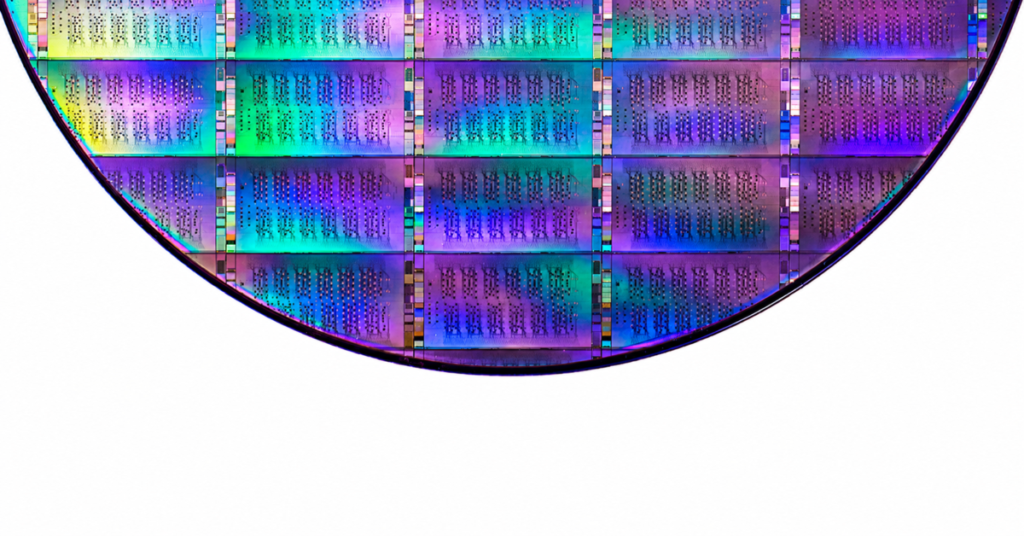
The system uses IBM’s Nighthawk processor, which the company describes as its most powerful quantum chip yet. IBM identifies the installed processor as Nighthawk r2, making this announcement about an actual deployment of its hardware rather than another machine penciled into a roadmap.
That is worth paying attention to, although “most advanced” needs some context. IBM is describing its own available systems, and the announcement does not establish that this machine is the world’s fastest computer or that it can outperform conventional computers at everything.
The more interesting question is what researchers will accomplish with it. IBM points to projects involving drug discovery, electricity grids, and high-energy physics, with universities and businesses working on algorithms intended to tackle difficult computational problems.
Through the National Quantum Algorithm Center, Deloitte and AbbVie are working with IBM and Northwestern University on quantum molecular simulation approaches for drug discovery research. The goal is to develop tools researchers could use to study molecular behavior, rather than announce a new medicine produced by a quantum computer.
Another project brings together IBM, EPRI, and the University of Illinois Urbana-Champaign to explore quantum optimization algorithms for more efficient power grids. Fermilab is also working with IBM on quantum approaches to high-energy physics research and technologies for distributed quantum computing.
These are specific research directions, which makes them more useful to readers than another vague promise to transform every industry. Still, exploring an application is different from demonstrating that it produces better results than existing methods at a practical cost.
“Today, it can deliver scientifically useful results to organizations across the state of Illinois and beyond,” said IBM Chairman and CEO Arvind Krishna. That is IBM’s assessment of the system, and the research emerging from it will be the more meaningful test.
IBM also points to an earlier quantum-advantage demonstration with the University of Chicago. In July, the university said the researchers had performed a computation beyond the reach of leading classical methods while providing confidence that the result was correct.
The scope of that claim matters. Success on a particular computational task does not establish that quantum computers are generally faster, nor does it prove that the drug discovery and power-grid projects described here have already achieved a practical advantage.
For now, the Chicago installation will support the National Quantum Algorithm Center, which was established in 2024. The machine is eventually expected to move to the Illinois Quantum and Microelectronics Park once that site is ready, becoming an anchor system for the center at its permanent location.
Its temporary home has an unusual feature for such specialized equipment. IBM says the computer sits at street level behind floor-to-ceiling windows, putting a real quantum system in view of people walking through the neighborhood.
There is a workforce pitch attached to the announcement, too. IBM previously announced plans for a FutureNow Chicago center with City Colleges of Chicago, promising 750 jobs across AI, cybersecurity, data science, quantum computing, and other technologies.
Those jobs belong to that broader initiative, so they should not be confused with positions created solely by installing this computer. The hardware deployment and the workforce program are related parts of IBM’s Illinois plans, but they are separate announcements.
Getting the machine operational gives researchers something concrete to work with. Now comes the harder part: showing which problems it can solve better, how reliably it can do so, and whether those results justify moving beyond experiments.
Support independent tech journalism
NERDS.xyz is independently owned and operated. If you enjoy my coverage of Linux, AI, hardware, cybersecurity, and tech culture, consider supporting the site on Ko-fi.
Support NERDS.xyz