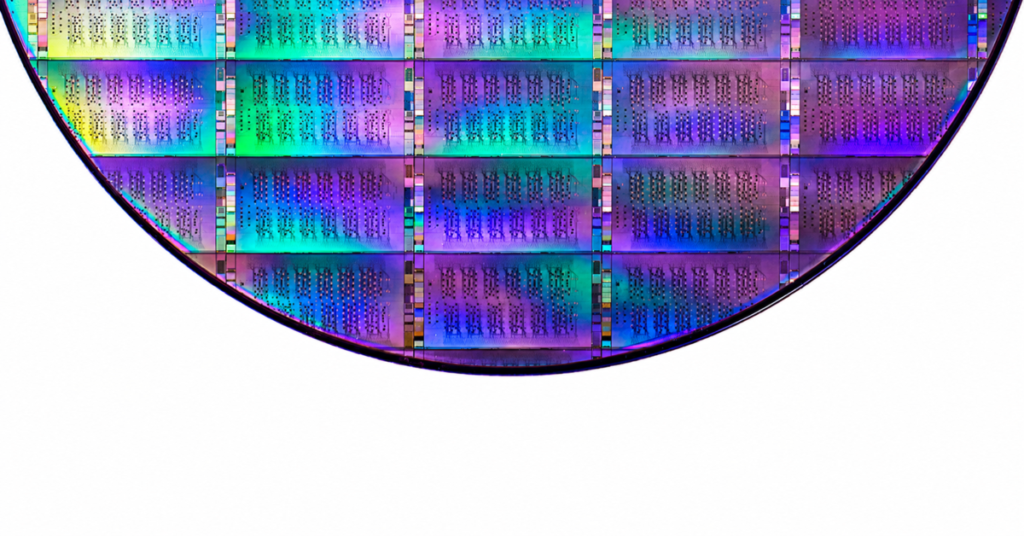

IBM plans to acquire HRL Laboratories, a research organization jointly owned by Boeing and General Motors. The transaction still requires regulatory approval, and IBM expects it to close by the end of September 2026.
Not surprisingly, IBM did not disclose the price of the deal, which remains subject to regulatory approval and other customary closing conditions, of course. IBM expects the acquisition to close by the end of September 2026.
Boeing and GM will no longer own HRL after the transaction closes, but both companies plan to continue working with IBM on quantum applications and other advanced technologies.
This is not a routine software acquisition. HRL specializes in physical and information sciences, with research covering quantum systems, advanced materials, sensors, electronics, communications, and manufacturing. Its work supports commercial businesses as well as aerospace, automotive, defense, and U.S. government projects.
The part that appears to interest IBM most is HRL’s experience with silicon-spin qubits. IBM currently builds its primary quantum systems around superconducting qubits. HRL has been exploring a different approach in which the spin of individual electrons in silicon can represent quantum information.
IBM believes the two technologies share enough of the same silicon fabrication foundation that HRL’s work could help it solve some of the difficult engineering problems involved in scaling quantum computers.
“The HRL team will help IBM push even farther forward toward the frontiers of quantum innovation,” said Jay Gambetta, IBM’s director of research and an IBM Fellow. “This talented group of researchers brings a broad portfolio of technologies that will strengthen IBM’s long-term plans to deliver useful quantum computing to the world, bringing together advances across quantum computing, quantum sensing, and quantum networking to enable the applications of the future.”
IBM is not saying that it plans to abandon superconducting qubits. Instead, the company appears to be buying access to another promising technology and the researchers who understand it.
That could prove to be quite valuable if the quantum computing industry eventually determines that no single type of qubit works best for every task. It could also give IBM options if silicon-spin technology becomes easier or cheaper to manufacture at scale.
HRL’s work extends beyond quantum processors. The laboratory develops quantum sensors capable of measuring extremely small physical changes. Potential applications include navigation, life sciences, defense systems, and scientific research.
IBM also expects to gain knowledge involving cryogenics, control electronics, chip packaging, qubit connections, high-power communications, and new quantum materials.
These areas may sound less exciting than the processors themselves, but they represent some of the biggest practical obstacles preventing quantum computers from becoming useful outside carefully controlled research environments.
“Joining IBM is the natural next chapter for what we have built at HRL, where our team has dedicated years to exploring paths to how future quantum computers could be built at scales that today seem impossible,” said HRL President and CEO Rob Vasquez.
“We now look forward to leveraging IBM’s industry leadership and working alongside their world-class talent on fundamental infrastructure to take this vision forward. Additionally, our cutting-edge physical and information science innovations will combine with their advanced research capabilities to deliver an unmatched suite of technology solutions for our commercial and government customers.”
The acquisition fits very cleanly into IBM’s aggressive quantum roadmap. IBM says it plans to deliver Quantum Starling in 2029. The company claims the fault-tolerant system will be 20,000 times more powerful than its current quantum computers and capable of running 100 million quantum operations.
IBM expects to follow Starling with Blue Jay in the mid-2030s. That system is projected to handle one billion quantum operations. Holy cow.
Those numbers sound impressive, yes, but they remain projections rather than capabilities available today. Quantum computing companies have repeatedly published ambitious roadmaps while the technology continues to face problems involving error correction, stability, cooling, manufacturing, and cost.
IBM also recently announced plans to establish Anderon, a standalone quantum wafer foundry supported by the U.S. Department of Commerce. The company says HRL could work closely with Anderon on manufacturing silicon-spin qubits and related components.
Buying HRL gives IBM considerably more than a new qubit design. It adds experienced researchers, specialized facilities, government relationships, and decades of work involving technologies that are difficult to reproduce quickly. It seems to be a smart buy.
The acquisition also fits IBM’s plan for the Anderon quantum chip foundry. The important test will be whether HRL’s research and fabrication expertise speeds work beyond IBM’s existing roadmap.
Support independent tech journalism
NERDS.xyz is independently owned and operated. If you enjoy my coverage of Linux, AI, hardware, cybersecurity, and tech culture, consider supporting the site on Ko-fi.
Support NERDS.xyz