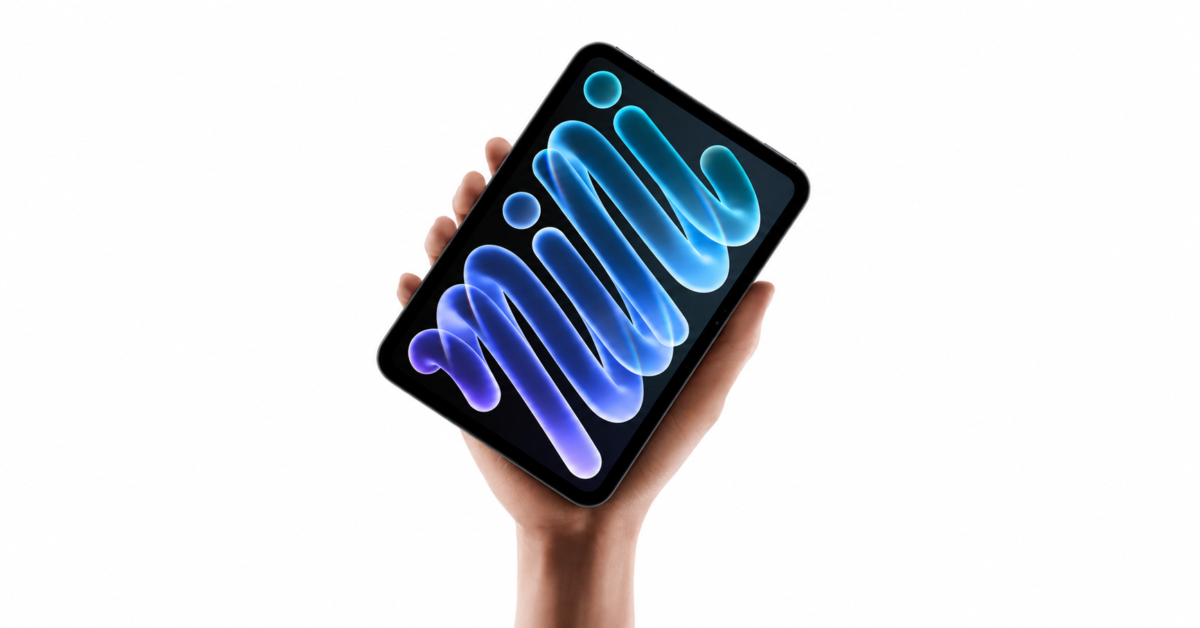
Apple’s new iPad mini brings an OLED display, A20 Pro chip, and water resistance to its smallest tablet. Those are welcome upgrades, but with a starting price of $699, buyers deserve a clear picture of what they are getting. Apple has left at least one basic display question unanswered, while its AI promises come with restrictions tucked into the footnotes.
The company announced the redesigned iPad mini today, with preorders opening October 28 and availability beginning November 6. It comes in midnight and starlight, with 128GB, 256GB, and 512GB storage options.
For me, the screen is the most interesting upgrade. Apple has fitted an 8.5-inch OLED panel into the same footprint as the previous mini by reducing the bezels by 24 percent. The tablet measures 5.4mm thick and weighs 255 grams for the Wi-Fi model or 263 grams with cellular connectivity.
The display supports P3 wide color and offers the deeper blacks associated with OLED. Apple lists full-screen brightness at 600 nits, with peak brightness reaching 1,200 nits for HDR content. It can also dim to just 1 nit, which could make reading in bed more comfortable.
However, Apple has failed to disclose the built-in display’s refresh rate in its published specifications. OLED does not automatically mean smoother scrolling, and the company does not mention ProMotion either. At $699, buyers deserve to know whether they are getting a 60Hz screen or something faster.
There is a nano-texture display option for reducing glare, although Apple limits it to the 256GB and 512GB configurations. Anyone interested in that finish will need to move beyond the entry-level model.
Water resistance is another practical addition. The IP67 rating covers controlled testing at a maximum depth of one meter for up to 30 minutes. Apple cautions that resistance can decline with normal wear, and its warranty does not cover liquid damage. Reading beside the pool sounds reasonable, but the rating should not encourage anyone to get careless.
Inside, the A20 Pro uses Apple’s 2-nanometer manufacturing process and includes a seven-core GPU. Apple claims up to 60 percent faster multithreaded CPU performance, up to 2.7 times faster graphics, and up to 4.5 times faster AI performance compared with the previous generation. These are Apple’s test results, and actual gains will depend on the application and workload.
Storage capacity also determines which version of the chip you get. The 128GB and 256GB models have a five-core CPU and 16-core Neural Engine. Moving to 512GB gets you a six-core CPU and Dual 16-core Neural Engine, giving that configuration 32 Neural Engine cores.
That makes the buying decision more complicated than choosing how much room you need for apps and photos. Anyone considering the mini for local AI workloads should pay attention to those hardware differences before ordering.
Apple has redesigned the audio system as well. Its Acoustic Display pairs woofers through the screen, with tweeters hidden between the glass and aluminum enclosure. The company promises stronger bass and more volume, although hands-on testing will need to establish how it actually sounds.
The 12MP Center Stage front camera now sits on the landscape edge, a sensible location for video calls with the tablet propped up horizontally. On the back, a 12MP camera supports 4K recording at up to 60 frames per second, while an Adaptive True Tone flash assists with photos and document scanning.
Wireless connectivity includes Wi-Fi 7, Bluetooth 6, and Thread through Apple’s N1 chip. Cellular models use the C2 modem, which Apple says can deliver data speeds up to 50 percent faster than the previous mini.
Fast charging can bring the battery to 50 percent in around 30 minutes with a power adapter rated for 35W or higher. Unfortunately, the included adapter is only 20W, so reaching that advertised charging speed requires a different charger.
Then there is Siri AI. Apple promotes an assistant that can draw on personal context, understand onscreen content, and answer questions across a broad range of topics. The footnotes, however, specify that Siri AI arrives in beta with iPadOS 27.2, with language and regional restrictions. It is unavailable to users under 13 and currently unavailable in iPadOS in the EU.
Certain cloud-based Apple Intelligence features also have daily usage limits. These include Siri AI, intelligent photo editing tools, and Image Playground. Limits can vary with request complexity, system demand, and other factors, and Apple says expanded access will cost money in the future. It has not provided pricing.
That does not mean every AI feature will require a subscription. It does mean the tablet’s purchase price should not be mistaken for unlimited access to everything Apple is promoting.
The Wi-Fi iPad mini starts at $699, while the cellular version starts at $849. Apple Pencil Pro and Apple Pencil USB-C remain optional purchases at $129 and $79, respectively. The new TechWoven Smart Folio costs another $79.
The OLED screen and water resistance give this mini a stronger hardware pitch, even for people with little interest in AI. Still, Apple should disclose the refresh rate and explain future AI pricing clearly. A smaller tablet does not justify leaving buyers with unanswered questions about a $699 purchase.
Support independent tech journalism
NERDS.xyz is independently owned and operated. If you enjoy my coverage of Linux, AI, hardware, cybersecurity, and tech culture, consider supporting the site on Ko-fi.
Support NERDS.xyz