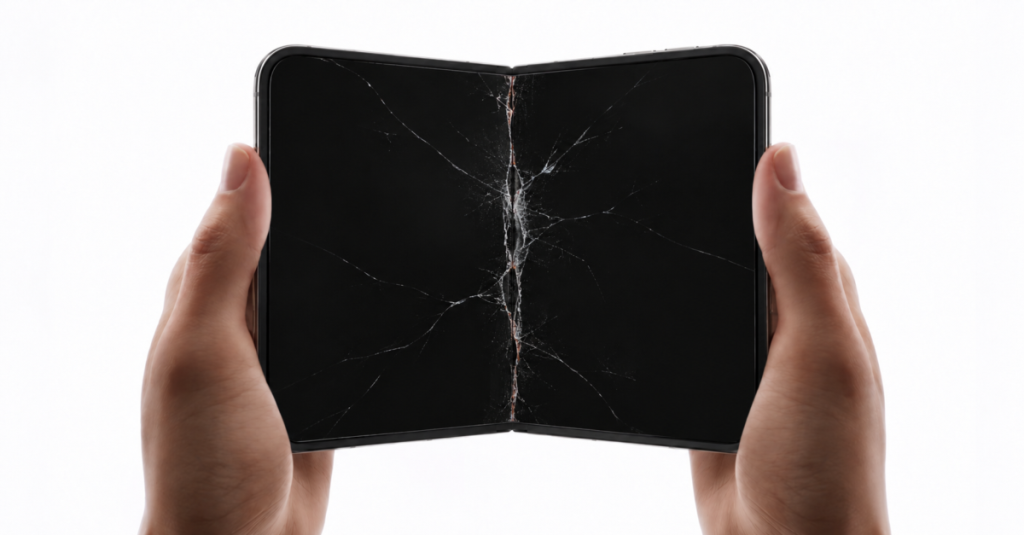
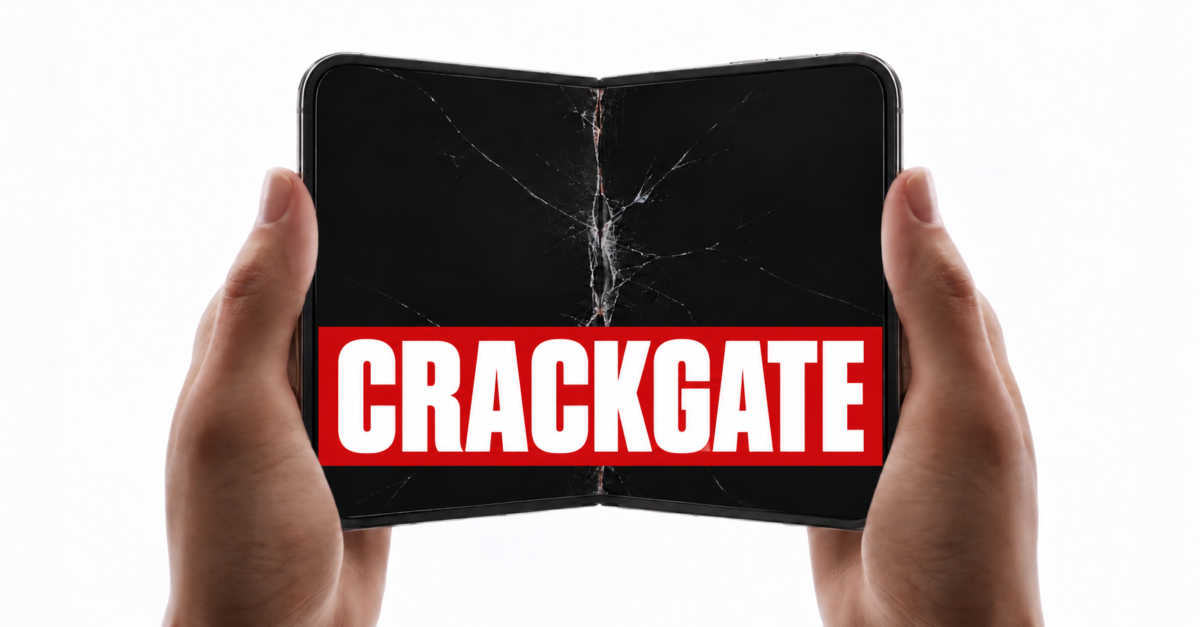
Apple’s iPhone Duo screen failures now have a possible mechanical explanation, and it involves a support beneath the folding display. A new iFixit teardown points to a spot where the hinge could put concentrated pressure on the screen, potentially helping explain why some owners report cracks and bright lines after barely using their phones.
We previously covered reports of iPhone Duo screens cracking, raising questions about a hinge that AI reportedly helped Apple develop. Now, iFixit’s detailed teardown adds physical evidence and a working theory to the discussion. It does not establish that AI caused the failures, but it gives Apple something much more specific to address than scattered complaints.
The repair specialists built a three-dimensional hinge model using teardown footage, patents, and CT scans. They then compared that model with photographs of damaged displays, finding that reported breaks clustered near a change in the structure supporting the screen.
That location sits near the transition between a gap for the cable connecting the phone’s halves and the central hinge support. Several edges meet there, changing how the thin display is supported while it bends.
In one simulation, iFixit showed what could happen if the center support bar failed to move down far enough during closing. The curved screen came into contact with the bar, producing a small area of concentrated stress near the reported damage location.
This remains a hypothesis. iFixit has not confirmed that the support bar caused the reported failures, and the teardown does not tell us what percentage of Duo phones might be affected. Still, it provides a plausible mechanism worth investigating, particularly given reports of a tightening hinge or a popping sound immediately before damage appeared.
The cable running through the hinge might seem like an obvious suspect, but iFixit says the symptoms point elsewhere. A tiny fault in the display’s electrical connections can disrupt an entire row or column of pixels, meaning a dramatic bright line does not necessarily indicate equally extensive physical damage.
For buyers, the financial concern is easier to understand. According to iFixit, inner-display damage costs $999 to repair without coverage. Apple is reportedly replacing affected units for now, so that price should not be confused with a bill every owner reporting an early failure will receive.
The teardown also challenges the idea that Apple has eliminated the crease. The Duo’s matte nano-textured cover scatters reflected light, helping conceal the fold underneath. When iFixit removed that layer, the crease became much easier to see, arguably more visible than the Galaxy Z Fold8’s in its comparison.
There is a practical benefit to that cover, though. Apple provides a procedure to replace it without replacing the OLED beneath it, with service priced at $49 without AppleCare or $19 with coverage. It requires specialized fixtures and careful alignment, so owners should not treat it like an ordinary peel-off screen protector.
Dust remains another weakness. After putting the Duo in fluorescent powder and working the hinge, iFixit heard crunching and later found particles in the moving mechanism. Less visible powder collected than in its previous Fold8 and Pixel 11 Pro Fold tests, but reaching the hinge to clean or replace parts still requires removing the flexible display and its supports.
That experiment was not an official IP certification test. It does, however, show that keeping particles away from sensitive electronics and keeping them out of a moving hinge are different engineering challenges.
Apple earned some credit elsewhere. Both batteries use electrically releasable adhesive, the outer display survived removal, and the inner-screen trim came off intact. Cameras and charging components are also relatively accessible, reducing the amount of disassembly some repairs require.
Those improvements helped the Duo earn a provisional repairability score of five out of ten, the highest iFixit has awarded a foldable smartphone. The score remains provisional while it waits for replacement parts.
The result is a phone with some thoughtful repair features and an expensive display problem that still needs answers. Easy battery removal is welcome, but owners reporting broken screens during setup have a more immediate concern. Apple needs to explain what is failing, which devices are affected, and how it will keep replacement phones from suffering the same fate.
Support independent tech journalism
NERDS.xyz is independently owned and operated. If you enjoy my coverage of Linux, AI, hardware, cybersecurity, and tech culture, consider supporting the site on Ko-fi.
Support NERDS.xyz