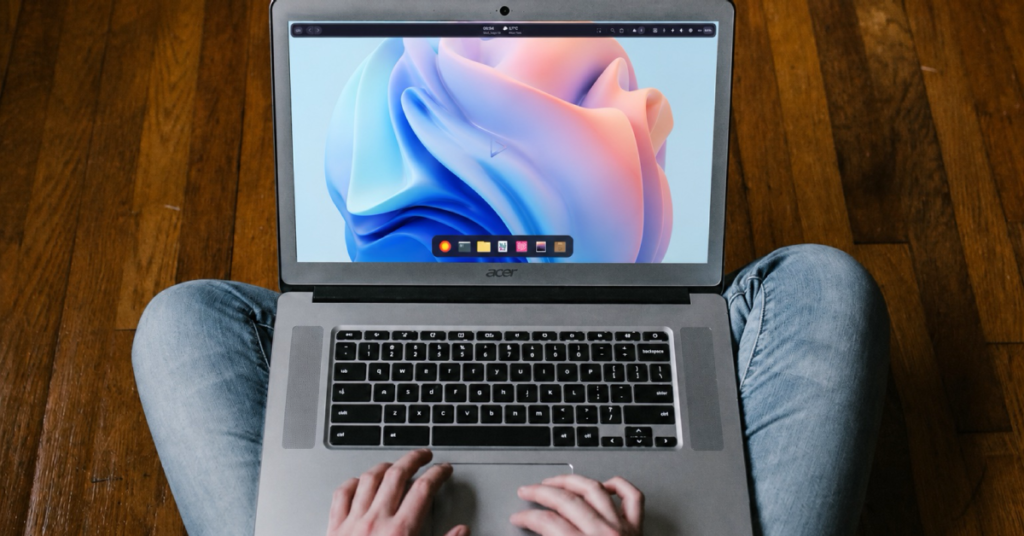
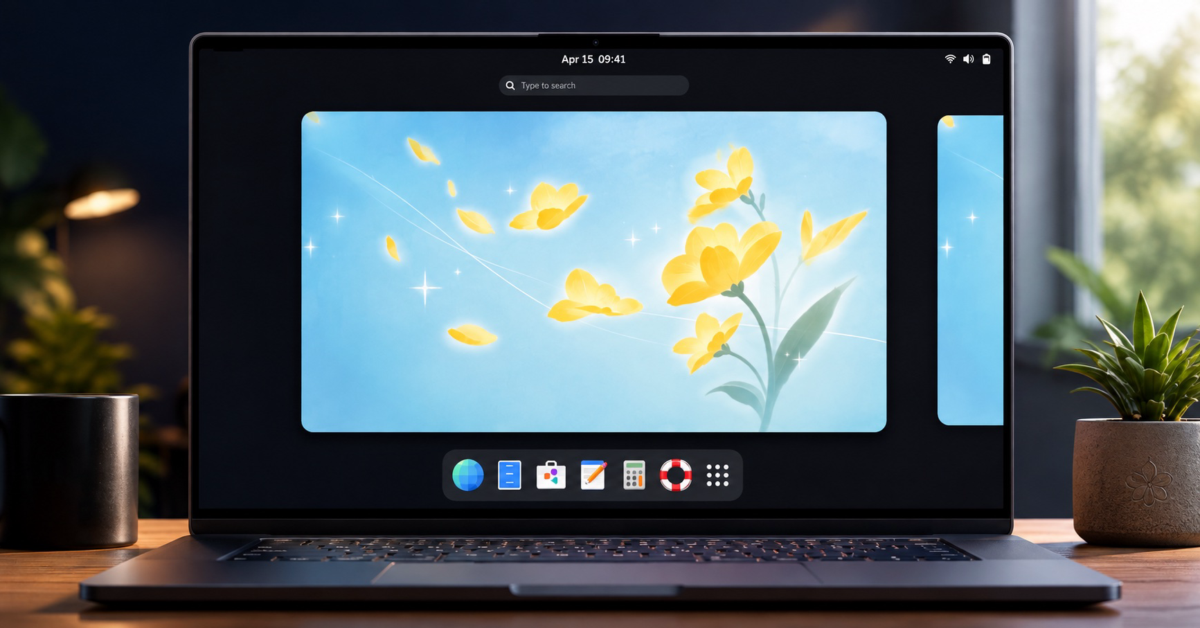
Vanilla OS 3 Reunion is officially available to download, arriving roughly two years after Vanilla OS 2 Orchid. This is a pretty substantial update for the immutable Linux distribution, with ARM64 support, GNOME 50, Linux kernel 7.1.3, reproducible builds, and a new backup and restore tool called Vanilla Continuity.
Existing Vanilla OS 2 Orchid users are not being left behind, either. If you are running version 1.4.0, Reunion can arrive as a normal system upgrade, although there are some requirements and breaking changes worth understanding before you make the jump.
Vanilla OS 3 finally supports ARM64
The biggest change may be official ARM64 support. Vanilla OS 3 can now run on ARM64 devices with UEFI firmware, opening the Linux distribution to compatible single-board computers, ARM laptops, and workstations.
Vanilla OS says all of its images are now multi-architecture, while every package includes an ARM64 build. The developers say the experience should be the same whether you are running ARM64 or AMD64, without functionality being stripped from the ARM version.
That matters because ARM Linux hardware continues to become more interesting. Vanilla OS was previously limited by its AMD64 focus, and Reunion removes that restriction.
Reproducible builds add another layer of trust
Vanilla OS 3 also introduces reproducible builds for most of its images. In other words, building an image from the same source should produce an identical result, bit for bit.
This allows people to independently verify that a Vanilla OS image has not been modified rather than simply trusting the image produced by the project’s GitHub Actions infrastructure. NVIDIA images are currently excluded because of their kernel modules.
For an operating system that emphasizes security and immutability, reproducible builds are a sensible addition.
GNOME 50 Tokyo takes over the desktop
Vanilla OS 3 Reunion ships with GNOME 50 Tokyo and moves to a Wayland-only GNOME session. Users also get GNOME 50 improvements such as better fractional scaling.
The default applications have changed considerably since Vanilla OS 2. Ptyxis replaces Black Box as the terminal, Papers replaces Evince as the document viewer, and Resources replaces GNOME System Monitor. File Roller and Photos are no longer installed by default.
Ptyxis should be especially useful on Vanilla OS because users regularly move between different environments. From the terminal, you can quickly access the host shell, VSO shell, or an Apx subsystem you created.
Because the default application lineup has changed, Vanilla OS has added an update mode to First Setup. After upgrading, it can install the new default applications and remove older ones after receiving approval from the user.
There is also a new wallpaper called Fairy Tale. Created by community member Enner Kou, it is available in both light and dark versions.
Apx and VSO have been rewritten
Some of the biggest Vanilla OS 3 changes are happening below GNOME. Apx and VSO, short for Vanilla System Operator, have been rewritten using the new Vanilla OS SDK.
The SDK provides shared tools and libraries for areas including logging, permissions, configuration, and system interaction. The goal is to make Vanilla OS’s various components behave more consistently.
There are breaking changes here, however. Apx configuration moves from apx.json to config.json, while a number of Apx and VSO commands have changed. Anyone with scripts or custom workflows built around the old commands should review them before upgrading.
Debian and openSUSE Leap are now included as default Apx stacks, while support for Ubuntu 26.04 subsystems has been added. The Apx graphical interface is now available from Flathub too, meaning Linux users outside Vanilla OS can install it. Vanilla OS 3 itself ships the GUI as a Flatpak.
VSO has switched its base from Debian sid to Debian testing. This should provide newer packages without living quite as close to the edge as sid. VSO v3 also adds init hooks that can automatically execute scripts when the subsystem starts.
Distrobox 2 is included
Vanilla OS 3 ships with Distrobox 2.0.0-rc.4, following Distrobox’s rewrite in Go. The Vanilla OS team says the release has been tested for compatibility with Apx v3.
The new VSO subsystem is called apx-vso-native. Anyone still using the older apx-vso-pico environment should pay attention before upgrading, as Vanilla OS recommends updating its packages first to avoid compatibility problems.
This is one of those areas where simply hitting the upgrade button without reading the documentation could cause headaches.
Vanilla Continuity backs up your data
Immutability can protect the operating system from unwanted changes, but it does not magically protect your personal files. Vanilla OS 3 addresses that problem with Vanilla Continuity, a new snapshot-based backup and restore tool that works alongside ABRoot.
Continuity can save home directories, the list of installed Flatpak applications, and ABRoot metadata. Backups can be stored in a directory on the computer, on an external drive protected with LUKS2 encryption, or remotely using SFTP, FTP, or NFS.
The downside is that Continuity 1.0 is currently command-line only. That is fine for experienced Linux users, but a graphical interface would make the feature much more approachable for the sort of mainstream desktop user Vanilla OS seems interested in attracting.
Custom Vanilla OS images are changing too
Vanilla Image Builder, or Vib, has been updated to version 1.1.0. It adds a cleanup property for removing unnecessary directories, mounts sources into containers instead of copying them during image creation, and introduces a new -o option for specifying the output Containerfile.
Developers maintaining custom Vanilla OS images should pay particular attention to Reunion’s breaking changes. Images are now multi-architecture, many packages have architecture suffixes, and several container image names and tags have changed.
ABRoot now symlinks /opt and /usr/local into /var, making those locations writable for users. FsGuard has also been removed to simplify the boot process.
Vanilla OS is encouraging more community variants through the new Vanilla-Flavors organization. The first is china-image, a community-maintained image with localized settings and mirror sources intended for users in mainland China. The project says other community images, including those using different desktop environments, are welcome.
How to get Vanilla OS 3 Reunion
Vanilla OS 3 Reunion is available to download now. Existing Vanilla OS 2 Orchid 1.4.0 users should receive Reunion through the normal system upgrade process, or they can manually start it with abroot upgrade.
There is an important requirement, though. You cannot directly upgrade to Vanilla OS 3 with an ABRoot version older than 2.4.0 because previous releases do not support the new multi-architecture images. Orchid users should make sure their current installation is completely updated before attempting the Reunion upgrade.
Vanilla OS has always taken a somewhat unusual approach to desktop Linux, combining an immutable base with containers and Flatpak applications. Reunion does not abandon that strategy. Instead, it expands it to ARM64 while modernizing many of the pieces underneath.
GNOME 50 and Linux 7.1.3 will probably grab plenty of attention, but ARM64 support, reproducible builds, and Vanilla Continuity are arguably the more interesting additions. Just don’t mistake Vanilla OS 3 for a cosmetic desktop update. There are enough changes underneath that existing users, particularly those using custom images or older VSO environments, should read the upgrade notes before installing it.
Support independent tech journalism
NERDS.xyz is independently owned and operated. If you enjoy my coverage of Linux, AI, hardware, cybersecurity, and tech culture, consider supporting the site on Ko-fi.
Support NERDS.xyz