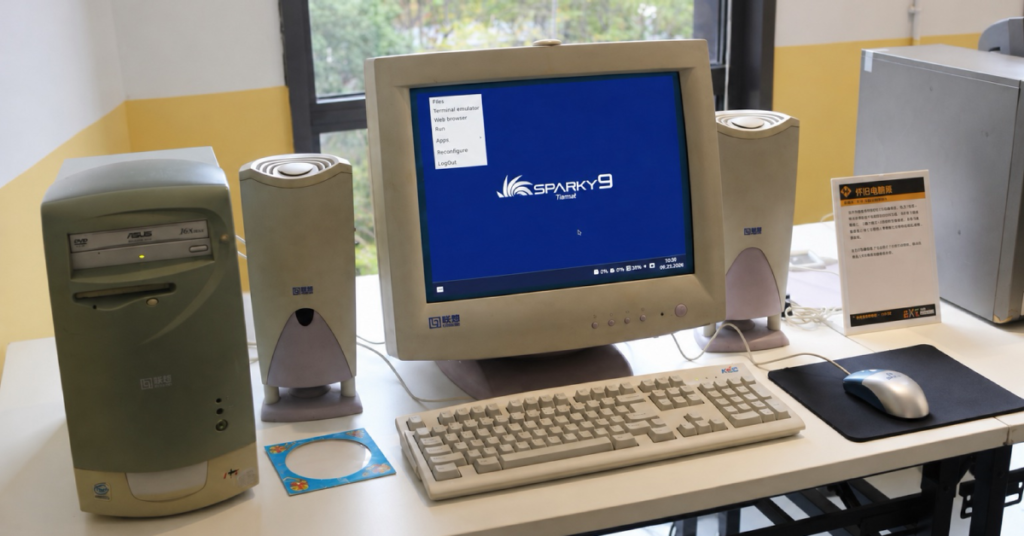

Linux Mint users looking for newer hardware support have something new to download. The project has released updated HWE ISOs for Linux Mint 22.3, and these images come with Linux kernel 7.0.
HWE, or Hardware Enablement, images are particularly useful for people installing Linux Mint on newer computers where the standard kernel may not provide the best hardware support. Existing Linux Mint installations don’t necessarily need to be reinstalled just because a newer HWE ISO exists, of course.

Linux kernel 7.0 is the immediate news, but I actually find some of the other work happening behind the scenes more interesting.
The Linux Mint team is rethinking how the operating system handles kernels. Kernel management has been removed from Update Manager and rebuilt as part of the System Administration tool. Better yet, the new implementation will work with both regular Linux Mint and LMDE.
Instead of making users think primarily about individual kernel versions, Mint will focus on kernel series. Users can choose which series they want to track and decide how many older kernels should remain installed.
Updates for tracked kernel series will continue arriving through Update Manager. Meanwhile, Linux Mint will automatically remove older kernels during a weekly cleanup.
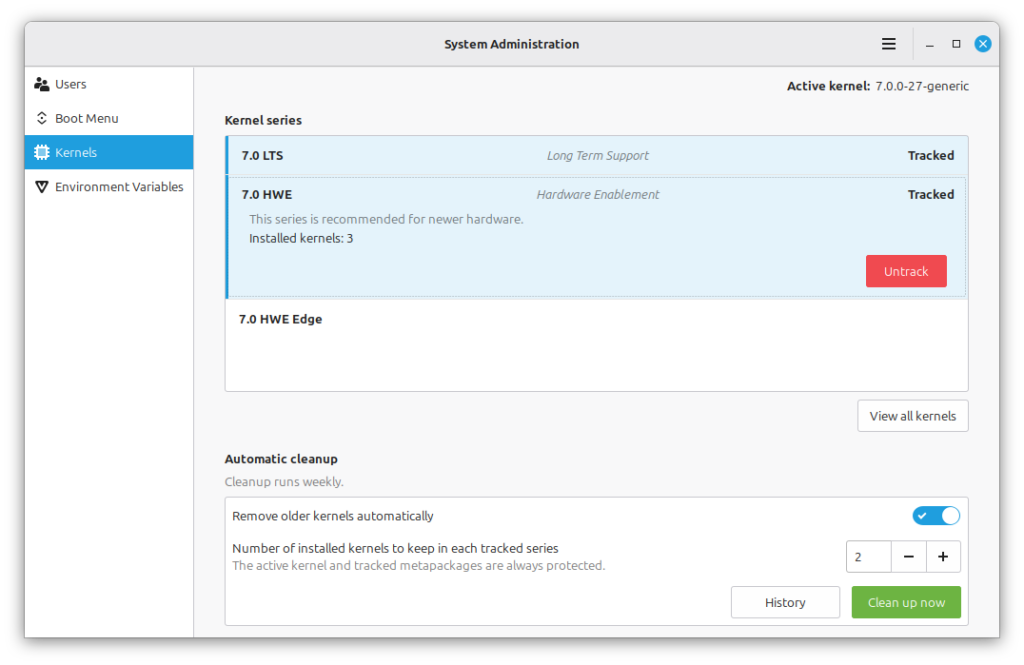
That last part could be particularly useful. Old kernels have a habit of accumulating over time, especially for users who don’t pay much attention to them. They’re useful to keep around temporarily in case a newer kernel causes problems, but keeping a pile of obsolete kernels forever isn’t particularly helpful.
Mint isn’t taking control completely away from the user, thankfully. Manual cleanup will be available for people who want to reclaim disk space immediately, and a history view will show which kernels were removed and when.
Individual kernels can also be marked as protected. A protected kernel won’t be touched during automatic cleanup, giving users a way to preserve a known-good release or something needed for a particular configuration.
Linux Mint will even recognize kernels from unknown or custom series. Those series can be tracked, although Mint warns that it can’t automatically manage the appropriate meta-packages for an unknown series. In that situation, keeping the kernel updated remains the user’s responsibility.
There’s another potentially useful addition coming to the System Administration tool: system-wide environment variable management.
Linux users have traditionally configured environment variables through configuration files or the shell. Mint is working on a graphical page that lets administrators define variables that apply system-wide across graphical and console user sessions.
Experienced Linux users may be perfectly comfortable editing configuration files, but that’s beside the point. One of Linux Mint’s strengths has always been exposing common Linux administration tasks through understandable graphical interfaces. This fits that philosophy nicely.
Cinnamon is getting attention too. The desktop environment now has Fcitx5 support with parity across Wayland and X11. When Fcitx5 is selected under Input Methods, Cinnamon will no longer start ibus-daemon and will instead use its own handler. Users can define a single keyboard layout while handing the rest of the input configuration to Fcitx.
There’s also a new Cinnamon keyboard layout viewer. It replaces the discontinued gnome-kbd viewer.
The Mint developers are improving fullscreen behavior as well. Interacting with the Cinnamon panel while an application is fullscreen should feel more natural, including switching between panel components, closing menus, and opening other applets.
There is an important distinction between what you can download today and what is still coming.
The new Linux Mint 22.3 HWE ISOs with Linux kernel 7.0 are available now. The environment-variable interface, redesigned kernel management, and other improvements discussed by the Mint team remain works in progress and represent a preview of plans for the next Linux Mint release.
Personally, I like where Mint is going with the kernel management changes. Linux distributions shouldn’t require users to become kernel experts just to keep their systems tidy. At the same time, advanced users shouldn’t have useful control taken away from them. Tracking kernel series while allowing individual kernels to be protected sounds like a sensible balance.
Linux Mint has spent years making desktop Linux approachable without completely hiding the operating system underneath. Based on these upcoming changes, that philosophy isn’t going anywhere.
Support independent tech journalism
NERDS.xyz is independently owned and operated. If you enjoy my coverage of Linux, AI, hardware, cybersecurity, and tech culture, consider supporting the site on Ko-fi.
Support NERDS.xyz