Artificial intelligence keeps finding its way into places where you might not expect it. Your web browser? Sure. Your smartphone? Obviously. Your plumbing? Well, apparently that is happening too.
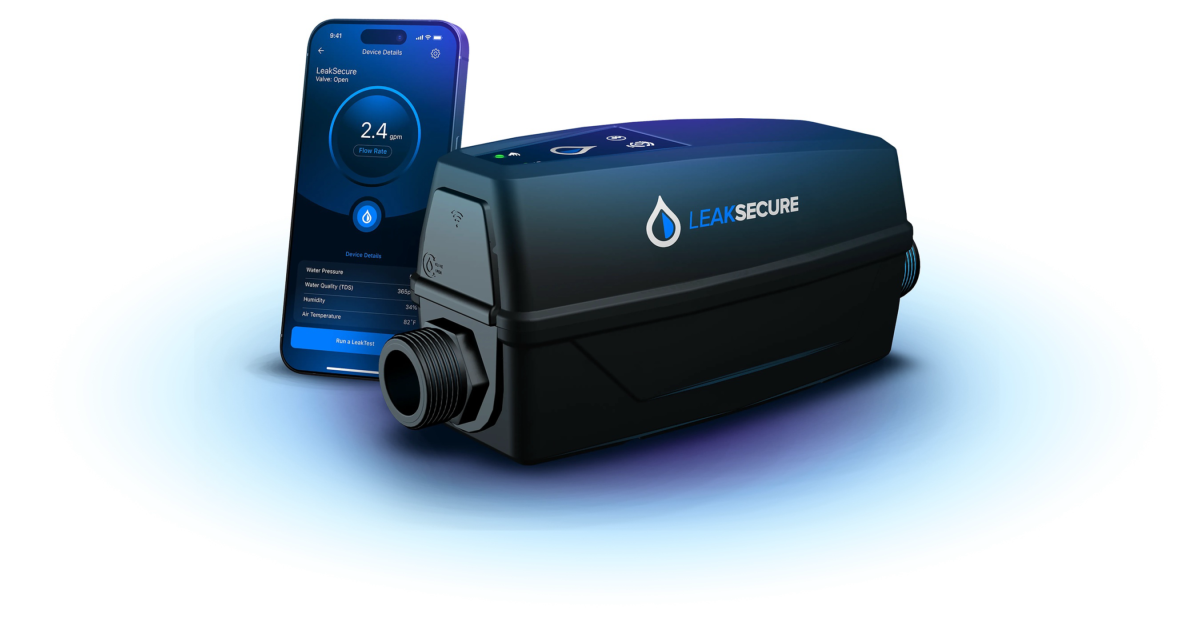
Notation Labs has launched LeakSecure Platform 3.0, a cloud- and AI-native water monitoring platform designed to detect potential problems and help coordinate what happens after something goes wrong. The system combines professionally installed water-monitoring hardware and automatic shutoff technology with mobile apps, cloud services, and tools for plumbers, insurers, and other businesses.
The particularly interesting part is the AI sitting behind all of this. Notation Labs says it is using a commercial deployment of Anthropic’s Claude to help analyze telemetry, support customer-service processes, produce standardized documentation, and help partners work with the information generated by LeakSecure devices.
In other words, Claude is getting involved with your plumbing. Yes, really.
LeakSecure collects real-time information including water flow, pressure, and temperature. Rather than simply sending an alert and calling it a day, Platform 3.0 is designed around what Notation Labs calls a closed-loop alert response.
When an alert occurs, the system can record what happens afterward. That could include whether someone opened the LeakSecure app, closed a valve, started a Leak Test, or did nothing. Depending on the event and how the system has been configured, LeakSecure can then escalate notifications, initiate a protective shutoff, or close the event after the problem has been resolved.
“An alert alone does not prevent damage. The value begins when verified information reaches the right person and leads to the right action,” says Jeff Stebbins, Vice President of Operations at Notation Labs. “LeakSecure Platform 3.0 creates a connected and documented path from detection to customer response to professional intervention. That helps our partners act faster, understand what happened and remain connected with the customer long after installation.”
There are obvious benefits here. A water leak discovered early might be an inconvenience. One discovered hours or days later could mean ruined flooring, damaged walls, mold, and a very unhappy insurance company.
Notation Labs also sees all of that sensor data as useful beyond detecting an active leak. Abnormal water flow, changing line pressure, or falling temperatures could potentially provide warning signs before a larger problem develops. For insurance companies managing many properties, the data could also provide a wider look at risk during freezing weather and other events.
Plumbers aren’t being left out either. LeakSecure Platform 3.0 integrates with ServiceTitan, allowing contractors to incorporate information from installed LeakSecure systems into their existing workflows. That could potentially allow a plumbing company to spot an issue and contact a customer before that person even thinks about calling a plumber.
And then things get even nerdier. Notation Labs says the architecture supports commercial APIs as well as Model Context Protocol extensions. MCP has quickly become an important way of allowing AI systems to interact with outside tools and data. In this case, Notation Labs says it can provide secure, permissioned workflows connecting approved information and actions with partner systems.
The company also has bigger plans for Claude and AI in general. Planned features include predictive risk signals, natural-language access to portfolio information, automated post-event timelines, and API feeds capable of sending verified device information and summaries into other systems.
Those future capabilities are important to distinguish from what LeakSecure Platform 3.0 can do today. Notation Labs explicitly says planned functionality remains under development and could change.
Still, the direction is fascinating. We have spent the past few years talking about AI writing emails, generating pictures, summarizing documents, and answering questions. Connecting an AI model to streams of physical sensor data presents a very different proposition.
It also raises some questions. If AI becomes increasingly involved in interpreting household water data, exactly how much authority should it have? An AI system helping identify an unusual pressure pattern sounds useful. An AI agent eventually being allowed to initiate actions affecting physical infrastructure deserves considerably more scrutiny.
There are privacy questions too. Detailed water usage can reveal information about what is happening inside a home, so customers should understand what information is collected, where it travels, how long it is retained, and exactly which partners can access it.
None of that makes the idea inherently bad. In fact, using AI to recognize a developing plumbing problem before your house turns into an indoor swimming pool sounds considerably more useful than generating another picture of a cat wearing sunglasses.
But as AI escapes the chatbot window and becomes connected to sensors, appliances, and physical systems, the stakes change.
Claude helping figure out why your plumbing is behaving strangely could be genuinely useful. Just make sure the humans still know where the main shutoff valve is.
Support independent tech journalism
NERDS.xyz is independently owned and operated. If you enjoy my coverage of Linux, AI, hardware, cybersecurity, and tech culture, consider supporting the site on Ko-fi.
Support NERDS.xyz