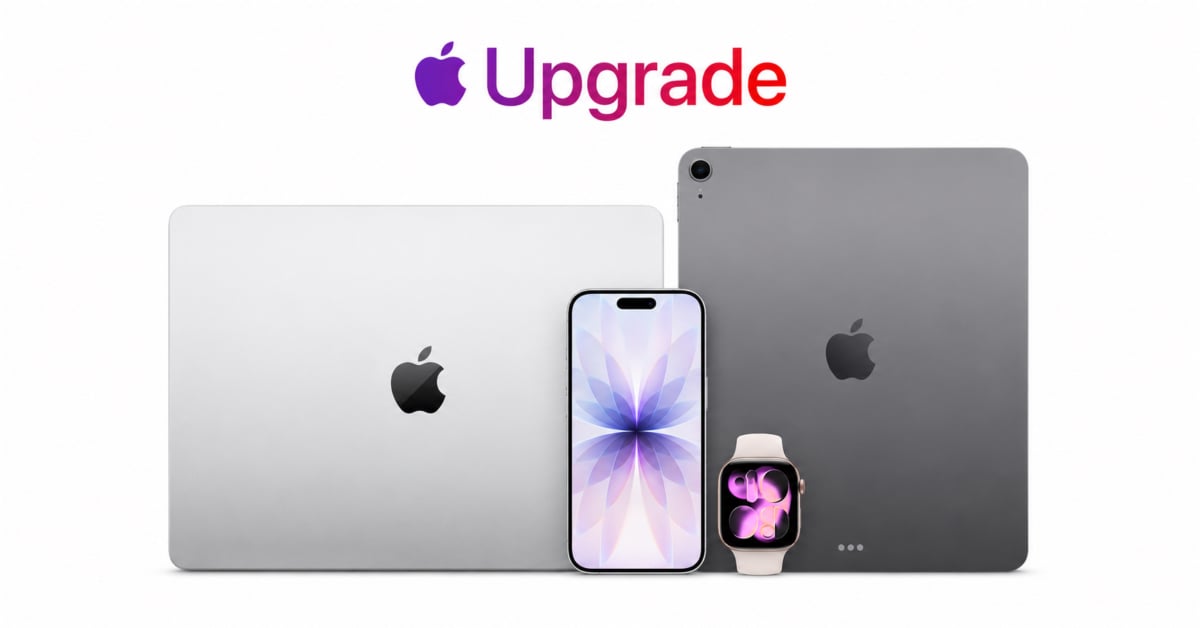
Apple is changing the way some customers buy its products in the United States, but don’t mistake the company’s new Apple Upgrade program for a better financing option by default.
Announced today, Apple Upgrade replaces the company’s long-running iPhone Upgrade Program with a leasing model provided by Klarna. Instead of making monthly payments toward ownership, customers lease eligible Apple devices for 12, 24, or 36 months depending on the product. At the end of the lease, they can upgrade to a newer model, purchase the device with a final payment, or return it and walk away.
On the surface, the monthly prices sound attractive. Apple says iPhone leases start at $17.99 per month, Apple Watch at $11.99, iPad at $11.99, and Mac at $24.99. Customers can also reduce their monthly payments by trading in an existing device and earn 3 percent Daily Cash when paying with Apple Card.
The catch is that this is not financing. It is a lease. When you finance a phone, each payment brings you closer to owning it outright. With Apple Upgrade, you are essentially renting the hardware unless you decide to pay the purchase fee at the end of the lease. If you simply keep making payments without understanding the agreement, you could spend years paying for a device you still don’t own.
The fine print deserves far more attention than Apple’s marketing. Customers who end a lease early may face substantial termination fees. If they don’t upgrade, return the device, or purchase it at the end of the initial lease, the agreement automatically converts to a month-to-month lease for up to six months. During that extension period, monthly payments may increase. If the customer still takes no action, Klarna will charge the purchase fee specified in the lease agreement.
Apple also notes that insurance is not included. If a leased device is lost, stolen, damaged, or returned in unacceptable condition, customers could face additional charges. While AppleCare can be added separately, it is another recurring expense on top of the lease payment.
There are other limitations worth noting. iPhone leases require activation with AT&T, T-Mobile, or Verizon. Customers using prepaid carriers are not eligible, even though the leased iPhones remain unlocked. The program is also limited to qualified U.S. customers who pass Klarna’s approval process.
For people who upgrade every year or two and prefer predictable monthly payments, Apple Upgrade may be appealing. It could also simplify the process of trading in an old device and moving to a new one without worrying about selling hardware privately.
For everyone else, it is worth asking a simple question: is leasing a smartphone really better than buying one?
Modern iPhones routinely receive software updates for five years or more, and many people keep their devices well beyond a typical lease period. Buying a phone outright or using a traditional zero percent financing plan often leaves customers with a valuable asset at the end of the payment term instead of another decision about extending a lease or paying a buyout.
Apple is presenting Apple Upgrade as a more flexible way to get new hardware, and for some buyers it may be exactly that. But flexibility often comes with complexity. Before signing up, customers should read the lease agreement carefully, understand what happens when the term ends, and compare the total cost with financing or purchasing outright.
The low monthly payment may grab attention, but the real cost of leasing is buried in the details.
Support independent tech journalism
NERDS.xyz is independently owned and operated. If you enjoy my coverage of Linux, AI, hardware, cybersecurity, and tech culture, consider supporting the site on Ko-fi.
Support NERDS.xyz